Martyr Seyyed Reza Sabeti was born on September 20, 1977, in Abadan, bringing joy to his family as their fifth child. He was one of the young athletes from Abadan who was employed at the Abadan Port and Maritime Authority. He had gone to the offices of one of the parliament representatives in Tehran to follow up on his affairs.
This young Khuzestani was mercilessly martyred on Wednesday, June 7, 2017, corresponding to the 12th of Ramadan 1438 AH, during the terrorists' attack on the Islamic
The 40th session of the trial of 104 members of the Mujahedin-e Khalq Organization (MEK) was held in Branch 11 of the Tehran Province Criminal Court. The plaintiffs' lawyer, Masoud Maddah, referring to the organization's extensive crimes, described Operation "Chehel-Cheragh" as a document of this group's cooperation with the Iraqi Ba'athist regime and one of the bloodiest crimes against the Iranian people. "In this operation, the MEK terrorist organization attacked the city of Mehran, took
She was born on September 12, 1956, in Firuzkuh County. Her father, Habibollah, was a butcher, and her mother was named Robabeh. Like her mother, she was a housewife. After marriage, she had three sons and three daughters.
She was ultimately martyred on August 26, 1982, in Tehran by elements of the MEK terrorist group due to gunshot wounds to the chest and face.
Masoumeh Eskandari, her daughter who was six years old at the time of the incident, says about her mother's martyrdom:
"On the
In the heart of the ever-green land of Gilan, in the quiet village of Lasht-e Nesha, lived a man from the lineage of sacrificers. Hassan Askari Chafuchahi, born in 1943 into a religious family, from his early youth had the fragrance of spirituality and service in his nature.
He was a student of the school of the Quran and the Ahl al-Bayt (AS), wearing the cloth of the clergy as a sign of servitude and stepping on the path of guiding the people. Simultaneously, by working at the Imam Khomeini
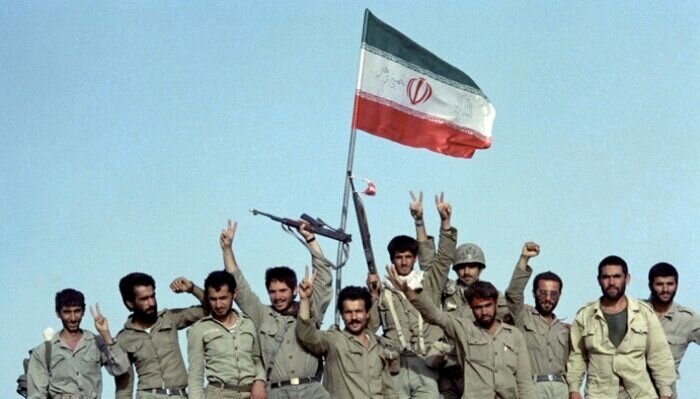
As we mark Sacred Defense Week, re-examining the Iraqi Ba'athist regime's invasion of Iran reveals bitter truths that remain critically relevant. Saddam Hussein, driven by a long-standing hostility that predated the Revolution, was always searching for a pretext to attack. His ambitions were enabled by terrorist groups like the KDPI and Komala, whose mercenary history with the Iraqi regime made them key collaborators. By destabilizing Iran's border regions, these groups, who held no loyalty to
Tahmasb Bahari opened his eyes to the world in 1961 in the village of Kaluraz, Rostamabad. He was studious, which is why after finishing primary school, he came to Rasht to continue his education.
It has been written about him that he was very humble, kind, and modest. Although these qualities are not hard to believe, what immortalized Tahmasb was his love for Imam Khomeini and the message he brought with him.
Tahmasb had become like a moth drawn to the flame of the Imam of Jamaaran following
Martyr Ghahreman Mansoubi, known as Mashhadi Heydar, was born on May 22, 1944, in Rey County. His father was Yahya and his mother was Tavoos. He studied up to middle school. He worked as a pot-seller for some time and then worked as a motorcycle mechanic in Salmas.
Due to his revolutionary activities, he was imprisoned for some time by the Pahlavi regime. After marriage, he had three sons and one daughter. He served at the warfront as a Basij member.
He was ultimately captured by elements of
The exposé by the Zionist newspaper The Times of Israel about Mossad's comprehensive support for the MKO once again revealed the proxy nature of this group in the service of the Zionist regime; although the hasty removal of this report indicates the MKO's fear of further scandal and is another confirmation of their hidden ties with Tel Aviv.
According to Habilian, in August of this year, the Zionist newspaper The Times of Israel, in a report that corroborated documents presented in the trial
After three years of legal pursuit, Iranian judiciary has issued conviction rulings against several commanders of armed Iranian Kurdish groups stationed in the Kurdistan Region of Iraq, and Interpol has issued red notices for their international pursuit. In an exclusive report, the Kurdistan Human Rights Watch stated that these judicial rulings were issued following direct complaints from families of Kurdish victims, supported by forensic evidence and eyewitness testimonies. Dr. Ali Farahmand
The 39th session of the trial of 104 members of the Mujahedin-e Khalq Organization (MEK) was held in Branch 11 of the Tehran Province Criminal Court. In this session, the plaintiffs' lawyer, Hojjatoleslam al-Muslimin Masoud Maddah, elaborated on the terrorist crimes of the MEK, describing the indiscriminate killing of children, women, men, the elderly, the young, and non-combatant civilians as a part of the group's savage crimes. He emphasized that the criminal titles of "efsad-fil-arz,"
The Secretary-General of the Habilian Association stated that the MKO (Mojahedin-e Khalq Organization) terrorist group, by criticizing the principled stance of Iran and some Arab and Islamic countries, has labeled Iran's opposition to the two-state solution as a "betrayal of Palestine."
According to Habilian, Seyed Mohammad-Javad Hasheminejad, Secretary-General of Habilian Association, in an interview with a political correspondent from Fars News Agency, said: "Following the recent United
The spokesperson for the Ministry of Foreign Affairs of the Islamic Republic of Iran, referring to the martyrdom of a number of Iranian athletes in the Zionist regime's attacks on Iran, said: Those who support this war crime are accomplices.
According to Habilian, Esmail Baghaei, the ministry spokesperson, wrote on the social media platform X about the crimes of the Zionist regime: “Remember the names of these innocent athletes: Amir Ali, the teenage taekwondo athlete; Mahdi Pouladvand, an
An Albanian media outlet wrote that Albania has reached a strategic stalemate in how to deal with the terrorist organization Mojahedin-e Khalq (MEK/MKO).
According to Habilian, the Albanian media "BIRN" comprehensively addressed the threats posed by the MKO in Albania, stating that Albania is now grappling with security challenges stemming from the activities of the MKO.
Parts of the report, prepared by "Fation Gjinaj" and "Eni Farhati," noted that the MKO is under investigation for
In the 38th session of the trial of 104 members of the Hypocrites group, the plaintiffs' lawyer emphasized the group's cooperation with hostile governments, including the Zionist regime in the 12-Day War, and presented evidence from the group's internal publications and member confessions. He also referred to the group's role in disclosing Iran's nuclear information and assassinating nuclear scientists, and demanded a verdict of "Corruption on Earth" for the organization's leaders.
The
The annual report on terrorism in Iran, covering terrorist incidents that occurred across the country in 2024, has been published.
According to Habilian, the Iran’s Annual report on Terrorism 2024 documents terrorist activities carried out by different groups against Iran and Iranian citizens, both inside the country and abroad, organized chronologically by day and month.
Compiled, researched, and published by the Habilian Association, the report provides detailed accounts of each incident
The Australian government's recent decision to expel the Iranian ambassador from Canberra, based on accusations linking Iran to fires at a Jewish synagogue and restaurant in Sydney, is a provocative move that demands scrutiny. Why has Australia chosen to escalate tensions with Iran at this moment, and who truly benefits from this action?
The context is revealing. On August 19, Israeli Prime Minister Benjamin Netanyahu launched a sharp critique against Australian Prime Minister Anthony
The news is not a reflection of reality, but rather a representation of it — a construction of events carried out by journalists under specific production conditions and through various formats. In this sense, communication is significant because it produces meaning, and news is the narrative of an event that involves certain elements.
First, the initial decision to include (or not) certain topics in the media agenda.
Then, the voices — that is, the sources. And finally, the grammars or
The issue of Western double standards in defining terrorism is a complex and highly politicized topic, often reflecting geopolitical interests, historical contexts, and ideological biases. The phenomenon of these double standards is not novel, but has roots in the very formation of Western civilization. The ethnocentrism that overwhelms Western civilization has often justified horrific war crimes as a means of progress in the liberal world.
Scholars highlight that terrorism definitions vary
Israeli state terrorism is not an abstract concept. It manifests in concrete, repeated actions: targeted assassinations, indiscriminate bombardments of civilian areas, destruction of essential infrastructure, and the systematic use of siege and blockades to collectively punish entire populations. Whether it is the bombardment of Gaza, the targeted killing of Iranian scientists and military officials, or the repeated violations of Lebanese sovereignty, Israel has demonstrated a consistent
Before addressing, from the perspective of international law, the crimes of the Zionist regime and the possible solutions and legal remedies at the international level, it is important first to examine how this regime was formed and then consider the legal and international consequences that apply to it.
In the history of international law, the drafting of the 1945 UN Charter marked the beginning of what became known as the era of decolonization—an era shaped through the initiative of the

 Martyr Seyyed Reza Sabeti was born on September 20, 1977, in Abadan, bringing joy to his family as their fifth child. He was one of the young athletes from Abadan who was employed at the Abadan Port and Maritime Authority. He had gone to the offices of one of the parliament representatives in Tehran to follow up on his affairs.
This young Khuzestani was mercilessly martyred on Wednesday, June 7, 2017, corresponding to the 12th of Ramadan 1438 AH, during the terrorists' attack on the Islamic
Martyr Seyyed Reza Sabeti was born on September 20, 1977, in Abadan, bringing joy to his family as their fifth child. He was one of the young athletes from Abadan who was employed at the Abadan Port and Maritime Authority. He had gone to the offices of one of the parliament representatives in Tehran to follow up on his affairs.
This young Khuzestani was mercilessly martyred on Wednesday, June 7, 2017, corresponding to the 12th of Ramadan 1438 AH, during the terrorists' attack on the Islamic