
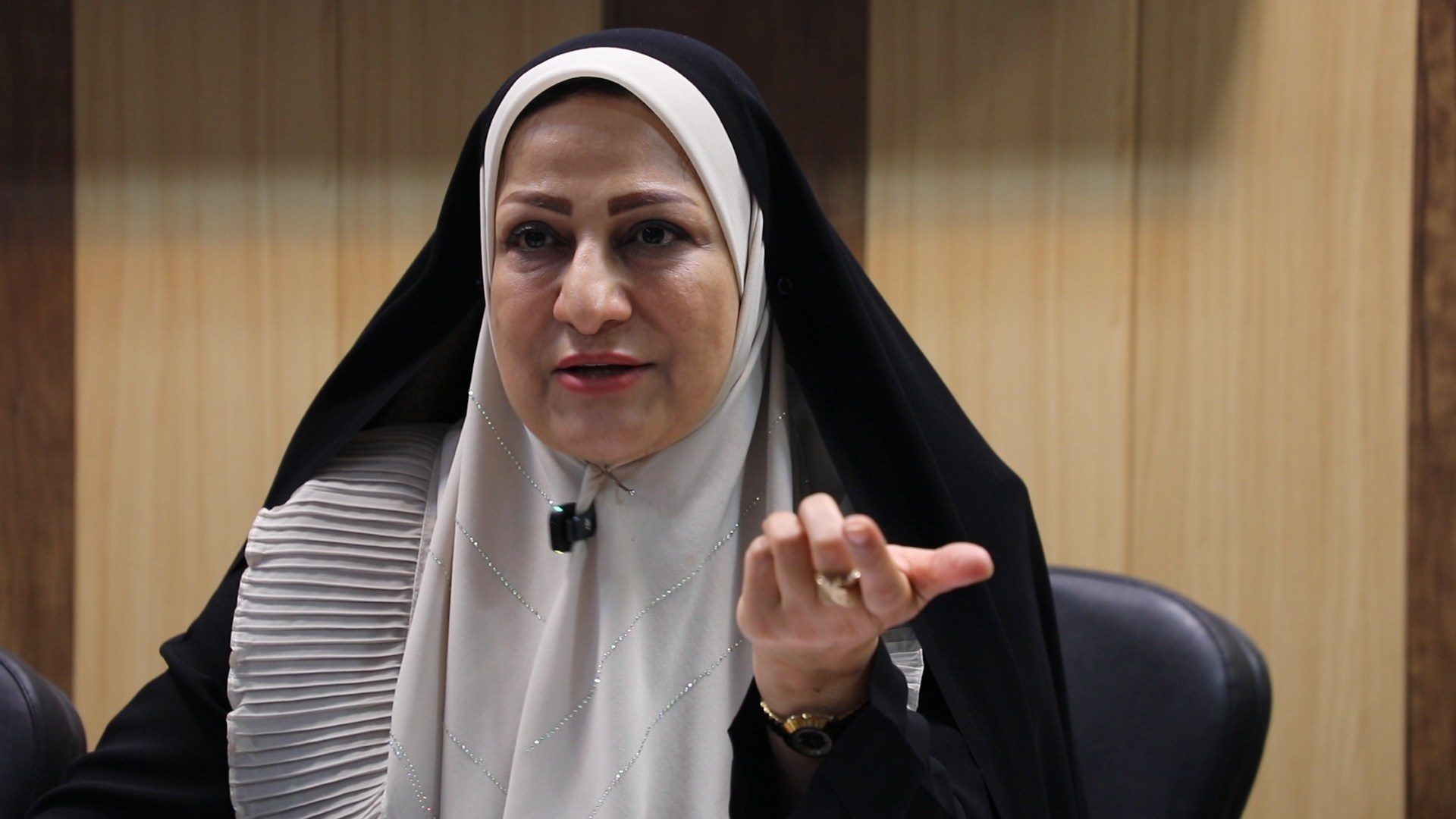
 At the specialized “Children in the Crossfire of Aggression” roundtable, Dr. Mahboubeh Ghavidel Heidari, director of the Bahara Psychology Center in Zahedan, drew on years of clinical experience in Sistan and Baluchestan to recount examples of the depth of the psychological catastrophe terrorism can inflict on children: a mother who washed every banknote after the bombing of the Tharallah bus; a boy who slept in the bathroom at night; a child who dropped out of school for an entire year; and a commander who, every night, dreams that he is being ordered to open fire on his own son.
Dr. Ghavidel Heidari began by describing the distinctive situation of Sistan and Baluchestan, a province that shares 1,800 kilometers of border with two neighboring countries and where, she said, “one could perhaps say that we deal with security issues every day.” Recalling the terrorist attacks on the Grand Mosque and the Ali ibn Abi Talib Mosque in Zahedan, as well as the Chabahar attack, she stressed that the children who were very young at the time have now grown up but continue to struggle with adjustment problems, family difficulties and numerous other forms of harm.
One important point she raised was that the circle of those affected extends far beyond the people present at the scene. “Sometimes even seeing the images is traumatic,” she said. She cited an incident in which Martyr Piri was struck by a burst of 20 to 30 bullets while shopping for supplies, as his children witnessed the entire scene. Although their mother tried to keep the children away from the images, footage of the incident circulated online and they all saw it. She also spoke about children who had been very young when an incident occurred but were nevertheless harmed by scattered accounts and images.
Dr. Ghavidel Heidari highlighted the high prevalence of sleep disorders, anxiety and obsessive fears about parents dying, as well as a sharp decline in academic concentration among children affected by terrorism. “These events completely change the course of children’s lives, and the psychologically unsafe atmosphere they create is as damaging as the incident itself,” she said. She also referred to the “correlation of symptoms,” explaining that the more severe a mother’s symptoms are, the more difficult the child’s condition tends to be.
A subtle but alarming issue she raised was the “intergenerational transmission of unresolved grief.” When traumas accumulate in a region and grief is not properly resolved, she said, these problems are passed on to the next generation. In Sistan and Baluchestan, she emphasized, recurring incidents combined with mounting economic and social pressures cause traumas to accumulate, leaving clinicians to confront “complicated grief” and difficult, intensive treatment needs among children.
Dr. Ghavidel Heidari also pointed to positive capacities within the province, including strong social cohesion, close family bonds and spiritual resources that can help people emerge from these conditions. Nevertheless, she stressed that the public’s sense of insecurity remains extremely high. Recalling a personal experience during a trip, she said her son locked the car doors at a gas station. When she asked why, she realized that the feeling of insecurity had become so deeply internalized that it surfaced even under ordinary circumstances.
She then described a mother who developed such severe obsessive behavior after the Tharallah bus bombing that she washed all the money in the house and refused to go outside. Her child, who was in sixth grade, would take a blanket into the bathroom and sleep there at night, sometimes fainting under the intensity of the psychological pressure. Dr. Ghavidel Heidari also spoke of children who went without food for weeks, ran away from school or dropped out for an entire year.
Referring to the difficult conditions surrounding crisis intervention in the region — including strict security restrictions that sometimes make it impossible for psychologists to gain access — Dr. Ghavidel Heidari described her team’s efforts to provide support. The psychology team used play therapy, art therapy and participation in community gatherings to help children release their emotions, she said. She also noted the positive effect of epic poetry in reducing aggression and giving children a stronger sense of themselves.
In closing, Dr. Ghavidel Heidari stressed the need to establish specialized local teams, design a mental-health support package and create a regular screening system for affected families. Referring to verses 13 and 14 of Surah Nuh, which she said recognize that God has created people differently and affirm individual differences, she noted that one member of a family may be only slightly affected while another is severely harmed, and that support must be capable of helping both. She also said she was prepared to provide officials with full documentation on the condition of affected families and called for far greater attention to the mental health of children affected by terrorism in Sistan and Baluchestan.