
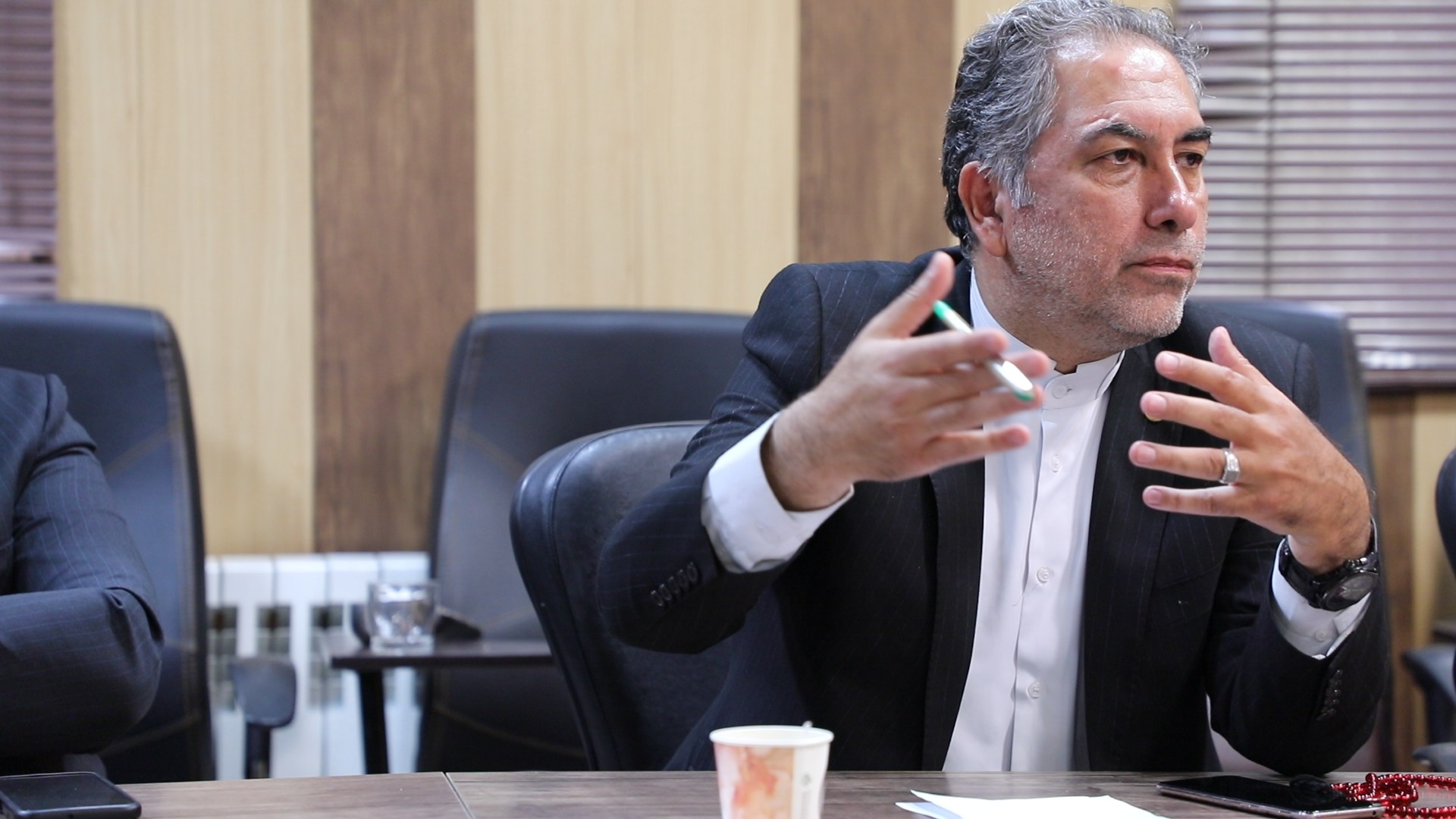
 At the “Children in the Crossfire of Aggression” roundtable, Mehdi Mollazadeh Shahroudi, the son of a cleric assassinated in a terrorist attack, spoke about a painful experience that divided his life into “before and after the incident.” Having watched his father die before his eyes, he said he has completely erased his father’s face from his mind and has no living, moving memory of him. Yet his clearest memory is the day of the assassination — a memory that will remain with him for the rest of his life.
Shahroudi began by pointing to what made his experience distinctive. “In addition to being the child of a martyr of terrorism, I have one particular distinction: my father was assassinated before my own eyes,” he said. His life and the life of his family, he added, were divided into the period before the incident and the period after it.
He then criticized the interventions undertaken at the time. “We should not expect a cure, because this is certainly not something that can be cured, and it continues throughout a person’s life and into later generations,” he said. What can be done, he stressed, is to accept the circumstances in which the person has been placed.
Referring to the situation after the incident in 1981, Shahroudi said that unfortunately no appropriate psychological intervention was provided at the time. He described early marriages among martyrs’ families as the greatest mistake. “Before the incident had even been explained and before the family had reached any stability, they were told to marry, and that subsequent marriage was certain to fail — as, in fact, it did,” he said.
Shahroudi then described the incident’s profound impact on his memory and mental state. “After that incident, I completely erased my father from my mind,” he said. “I do not have his voice, and I do not have an image of him. There are only a few photographs; those images are frozen and framed in my heart, but I have no moving memory of my father. I have never once dreamed of him.” His clearest memory of his father, he stressed, is the day of the assassination, and he will remember it for the rest of his life.
Noting that the site of the incident has remained untouched, Shahroudi said that whenever he passes it, the scene takes shape again before him and the memories come alive. He lamented the absence of psychological support in those years. “Was there anyone who offered help to me personally? No. There was no one,” he said.
Elsewhere in his remarks, he criticized the abandonment of martyrs’ families after a brief period of attention. “In the first days after my father’s martyrdom, we were seated in places of honor at gatherings, we were praised and people treated us with respect,” he said. “But suddenly, we saw that the respect had ended. We were left behind, while society gradually forgot martyrdom and the martyrs and returned to its ordinary life. We were left with financial problems and emotional and psychological problems, while society had simply moved past us, as though we had never existed.”
Shahroudi concluded that emotional, spiritual and psychological support for children affected by terrorism must continue “for the rest of their lives” and that they must not be abandoned. “If support is only temporary and we are moved from inside a greenhouse directly into society, we will certainly be unable to connect,” he said. “We know this from our own experience.”