
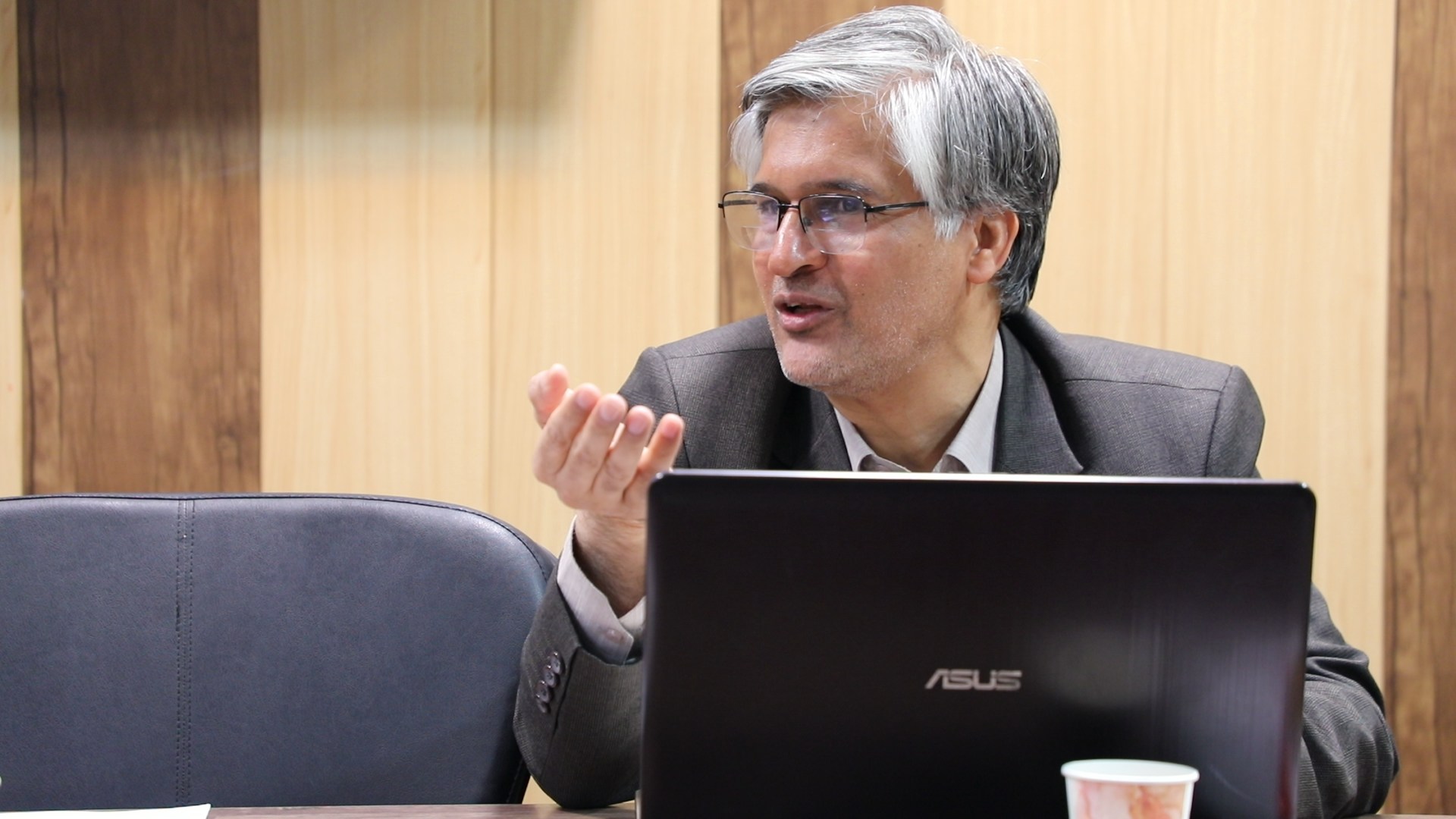
 At the specialized “Children in the Crossfire of Aggression” roundtable, held on June 8, 2026, in cooperation with the Habilian Association, Borsa Media Holding and the Faculty of Education and Psychology at Ferdowsi University of Mashhad, Dr. Seyyed Mohsen Asghari Nekah, head of the university’s Department of Counseling and Educational Psychology, distinguished between “individual terrorism” and “terrorism in children’s communal spaces.” Drawing on Iran’s historical experience of resilience, he stressed the need to develop specialized psychological protocols and to recognize the concept of “post-traumatic growth” alongside immediate intervention in acute cases.
Dr. Asghari Nekah began with a candid admission: that at times in his professional life, he had endured a great deal of pain. This humble opening broke down the formal barrier between speaker and audience and prepared the room to confront a difficult subject. He then pointed to two painful and tangible examples — the bombing of a school in Gaza and an attack on a sports venue in an ordinary city where fasting girls were exercising — to illustrate what he called “the height of human catastrophe in the age of artificial intelligence and technology.” By emphasizing that these places contained “no military base, no military personnel and no strategic target,” he left the audience facing the question of what such attacks were really intended to achieve.
One of the most thought-provoking elements of his remarks was the distinction between “individual terrorism,” for which legal and psychological systems around the world have largely been designed, and the emerging phenomenon of “terrorism in schools and sports venues.” In his view, this new form of terrorism requires legal definitions to be reconsidered because the circle of those harmed extends beyond the victim’s family. Drawing on his clinical observations, he identified three levels of affected people: the victim’s family and peers; children across a city whose surroundings suddenly become a war zone in their minds; and even children who encounter news of the tragedy only through the media. Although this analysis was not the result of an extensive field study, it offered a realistic picture of the hidden dimensions of terror-related trauma.
Dr. Asghari Nekah then sought to redefine the concept of the “child.” In his view, a child is not a passive being or merely a victim, but “the parents’ psychological investment in the future” and “the future of a family and society.” Asking, “Who knows whether one of those children in Minab might have become a future discoverer for humanity, or a doctor who was destined to save thousands of lives?”, he described the killing of a child as “the killing of possibilities and possible futures.” Although this perspective is not entirely new in psychological literature, the way he expressed it in simple and powerful language made it engaging and memorable for a non-specialist audience.
Elsewhere in his remarks, Dr. Asghari Nekah addressed collective resilience in Iran. Recalling the experience of the Sacred Defense and the period of terrorism in the 1980s, he argued that, when confronting trauma, the Iranian people have shown a capacity for growth more often than collapse. In his view, cultural teachings — including the epics of Rostam and Arash — and religious teachings — including the lessons of Ashura and the Quranic verse, “Indeed, with hardship comes ease” — have created a context in which “post-traumatic growth” is not an unfamiliar phenomenon. He immediately emphasized, however, that this collective capacity must never be taken to mean that individual differences can be ignored. “Some children and families are suffering from serious trauma that requires immediate and professional intervention,” he said. This balanced qualification prevented the issue from being reduced to superficial optimism.
In his conclusion, Dr. Asghari Nekah identified three areas of responsibility for psychologists and relevant institutions: developing specialized, locally grounded protocols for intervention in terror-related trauma; maintaining a continuous and systematic presence alongside affected families beyond the first days after an incident; and documenting crimes so they can be presented to the international community. Expressing hope that such meetings would continue and that “media coverage will bring a large group of thinkers and legal experts around the world into the effort,” he brought his remarks to a close. Although his speech did not have the theoretical depth of a major research work, as an opening address at a specialized roundtable it succeeded in conveying the human and psychological dimensions of the tragedy of terrorism against children in clear and approachable language, while paving the way for the speakers who followed.