The U.S. Treasury Department has sanctioned more than 30 individuals and entities linked to Iran in its latest round of measures, continuing its campaign of “economic terrorism,” dubbed “Operation Economic Exclusion,” following its failure on the battlefield.
According to IRNA, the Treasury Department announced the new Iran-related sanctions on Thursday, October 1, 2026.
A notice issued by the department’s Office of Foreign Assets Control (OFAC) listed two individuals and 29 companies and
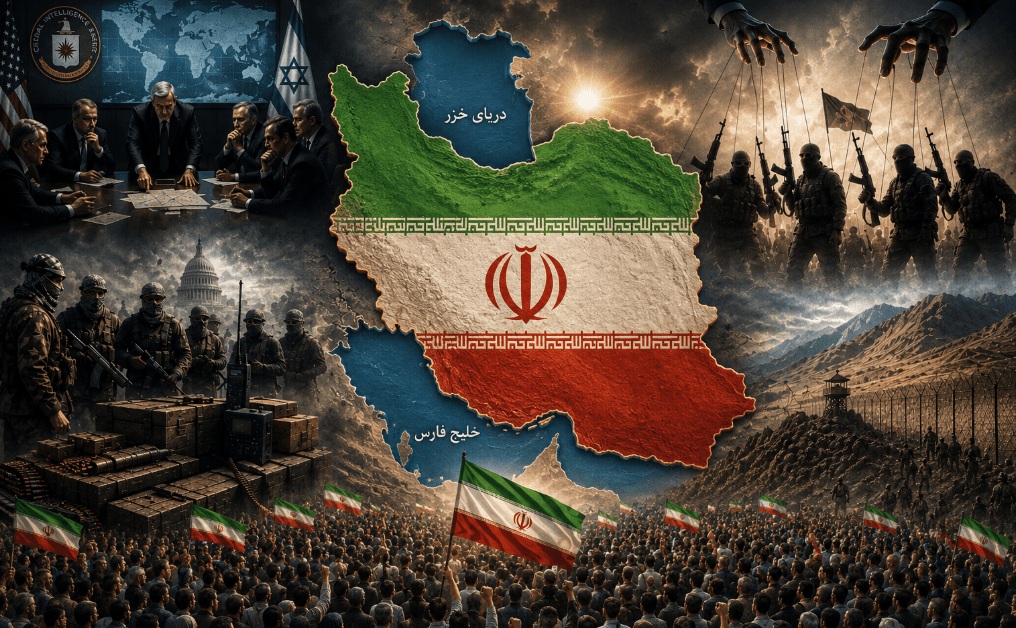
The recent U.S. military aggression against Iran showed that the confrontation has entered a new phase of terrorism. In this phase, Iran’s adversaries are seeking to establish a lasting foothold for terrorism inside the country by opening arms-smuggling corridors from border regions to central cities, exploiting ethnic divisions, and deploying suicide teams under centralized command.
Against this backdrop, the Terrorism Studies Scientific Association at Yazd University held an expert
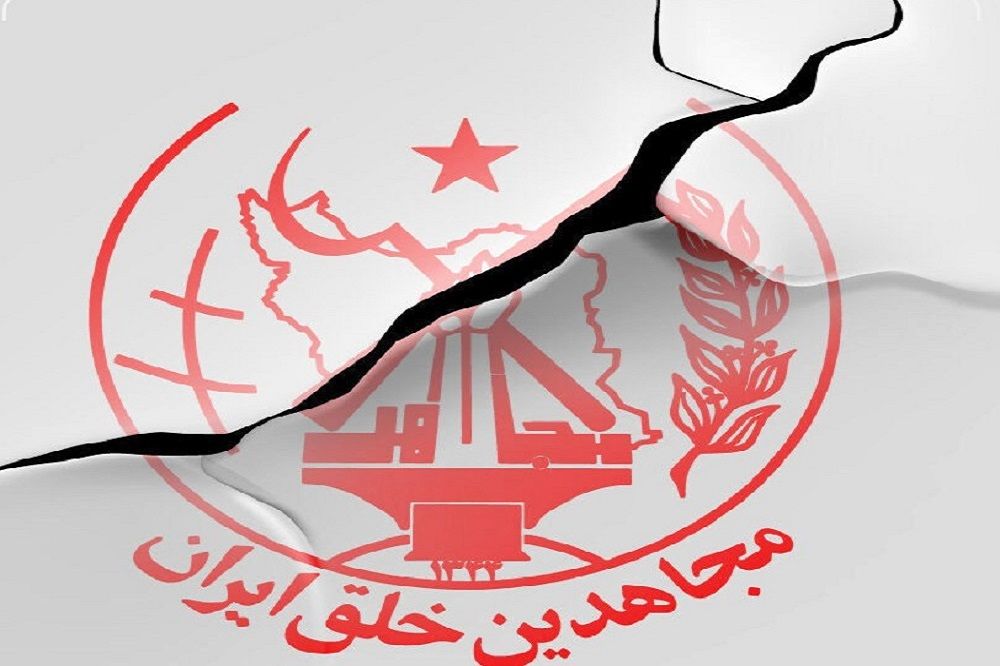
At 5 p.m. on September 18, during a festival held by Brothers of Italy—a neoconservative party descended from the neofascist tradition—the “Courage Award” was presented to Sarvnaz Chitsaz. She chairs what I consider the improbable Women’s Committee of the National Council of Resistance of Iran (NCRI), associated with the Mujahedin-e Khalq (MEK). The award was part of a pro-imperialist event titled “Youth in Revolt: Stories from the Border.”
Marco Scurria, deputy leader of the governing party’s
Discussion of security in Sistan and Baluchestan often begins with borders, armed groups, and security operations. These are real concerns, but lasting security also depends on social relations, how religious communities treat one another, and the ability to manage differences. Dialogue between followers of Islamic schools can help prevent disagreement from becoming violence. This was the central concern of the speech discussed in the article.
Dialogue means more than taking turns to speak. It
Only weeks remain before the 81st session of the UN General Assembly in New York. Amid the side events and protests on Manhattan's streets, a group of Iranian expatriates holds a large, closely coordinated demonstration outside UN headquarters each year, timed to the Iranian president's address.
What looks like a spontaneous protest, the article argues, is an annual, highly publicized operation by a controversial organization with a violent past. Why do Western media and policymakers continue
International law since the Second World War has sought to restrain violence and replace the logic of power with rules. By affirming sovereign equality and prohibiting the threat or use of force, the UN Charter tried to break the cycle of retaliation and war, making force a limited, rules-bound exception. The targeting of national leaders and senior political officials now poses a major question for that legal order.
“Leaders in the Crosshairs” describes more than a security phenomenon. It
At first glance, “victim of terrorism” should not be a contentious term. Governments may disagree over the nature and motives of an armed group, the legitimacy of an operation, or the definition of terrorism itself. Yet someone killed or injured in a bombing, shooting, or other violent attack should not become the subject of that disagreement. Experience over recent decades shows that disputes about definitions can affect how victims are treated. An issue seemingly confined to law and security
History is less a graveyard of past events than a place where old questions continually return.
Every generation revisits the past in search of lessons and in an effort to better understand the road ahead.
Operation Mersad belongs to that category of historical events.
If we regard it merely as the final major military confrontation of the eight-year Iran-Iraq War, we fail to grasp its wider significance.
Mersad is a lesson that must be read repeatedly, because even if an organization is
Iran’s political and social history in the 1960s and 1970s is marked by figures who devoted their lives to political activism and opposition to the Pahlavi monarchy. Among them were individuals whose influence extended beyond political thought into organization and grassroots mobilization.
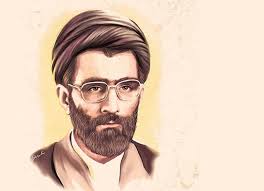
Hojatoleslam Seyyed Reza Kamiab was one such figure. Born in the village of Nowdeh Mirmehrab near Gonabad, he rose from a rural religious upbringing to become an organizer of revolutionary activities and
Mohammad Reza Saadati, a senior member of the Mujahedin-e Khalq (MEK), was arrested on April 26, 1979, while meeting Vladimir Fisenko, a Soviet contact. At the time of his arrest, investigators found a handwritten note concerning negotiations with the Soviet intermediary that contained requests for equipment and expertise associated with organized intelligence work.
Saadati was initially tried and sentenced to 10 years in prison. He was later retried after Iranian authorities concluded that he
Why were armed groups operating along Iran’s eastern borders unable to carry out a significant operation during the latest war, despite what Iranian sources describe as extensive foreign financial, intelligence and logistical support?
The question may offer insight into a less visible dimension of Iran’s intelligence and counterterrorism operations during the conflict.
In the months following the outbreak of hostilities, reports attributed to U.S. sources circulated claims that, if accurate
Iranian analysts have long argued that proposals to fragment Iran along ethnic and regional lines have featured in strategic discussions in the United States and Israel as a means of weakening the Islamic Republic.
According to this interpretation, the latest conflict marked an attempt to move such concepts from strategic planning into practice, with armed separatist groups allegedly being used to create instability inside the country.
The argument is that partitioning Iran has for years been
In recent years, the Iranian nation has been the victim of one of the most complex and organized media and psychological projects; a project that, utilizing Persian-language networks affiliated with hostile governments and foreign psychological warfare rooms, has attempted through systematic disinformation, distortion of realities, extensive negative portrayal (with a pattern of "magnifying weaknesses and eliminating strengths"), promotion of violence, support for street riots and armed groups
In the contemporary world, children and adolescents are more exposed than ever to violence that is neither accidental nor individual, but organized, targeted, and structural. From terrorist operations and blind attacks against ordinary people to war, military aggression, and occupation, it is always the children who are the most defenseless victims of violence. They have no presence in the political decision-making arena, play no role in shaping wars and conflicts, but are the first to lose
Since the victory of the Islamic Revolution in Iran in 1979, various terrorist and armed groups have carried out violent armed acts across the country, resulting in the martyrdom of 23,000 Iranian citizens. Of these, children under 12 number about 500. If we consider children as under 18 based on some definitions, this number rises to about 2,000.
This number is incredibly large and painful for any country and society. By any standard, the death of children—and this significant number in
The Head of the Center for Attorneys, Official Experts, and Family Advisors of the Judiciary stated: "The Islamic Republic of Iran, within the framework of its legitimate right to self-defense, is authorized to exercise effective sovereignty over its territorial waters and manage traffic through the Strait of Hormuz. A U.S. blockade of this strait lacks legal legitimacy and constitutes 'maritime terrorism.'"
Hasan Abdollahianpour, Head of the Center for Attorneys, Official Experts, and Family
More than eleven weeks after the Minab school tragedy, U.S. officials continue to say the matter is "under review." In recent days, Trump has repeatedly echoed the phrase "it is being investigated," as if time itself is expected to draw a curtain over this American atrocity.
One week ago, the U.S. President — caught up in the frenzy of preparing for his trip to China — responded to a question about who was responsible for firing on the Minab school by saying the matter was under investigation
Since the victory of the Islamic Revolution in February 1979, Iran has been continuously engaged in combating the activities of terrorist groups.
Throughout this period, terrorist groups with varying ideologies and agendas—backed by support from certain regional and extra-regional countries—have persistently sought to instill a climate of fear and insecurity in Iranian society through various acts of terror, including the assassination of officials and ordinary citizens, as well as sabotage of
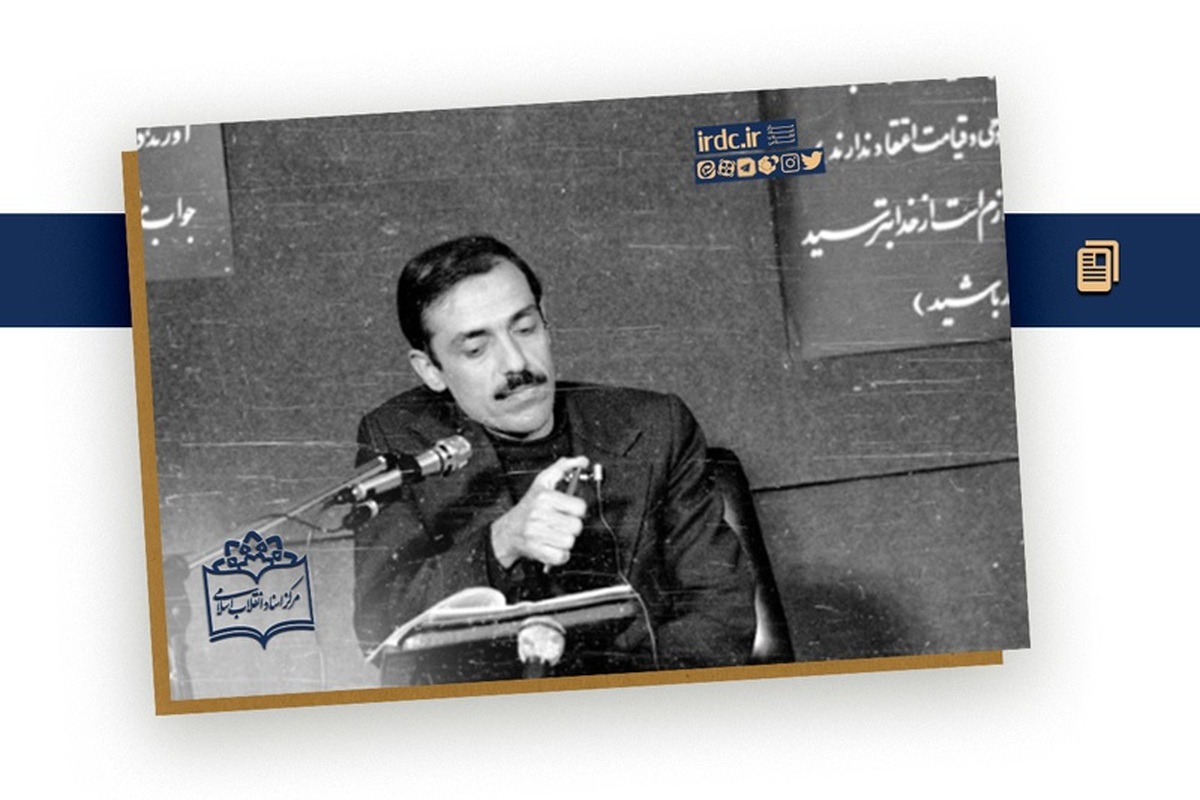
The link between the Forqan Group — which assassinated Ayatollah Morteza Motahhari — and the Mujahedin-e-Khalq (MEK) terrorist organization has drawn attention in the accounts of several political activists. Some, pointing to similarities between the two, suggest that in the early days of the Islamic Revolution, the MEK preferred not to engage in overt terrorist activities and wished to maintain a moderate image. To that end, they argue, the organization used groups like Forqan as a cover.
In the mountains that have for years become an arena of security and ideological rivalries, a lesser-seen reality is repeating itself: the enforced disappearance of Iranian Kurdish citizens within the mechanisms of armed groups.
Data compiled by the Iranian Kurdistan Human Rights Watch, comprising more than 800 documented cases, indicates that this phenomenon is not an exception but a persistent pattern – a pattern that simultaneously challenges the fundamental rights of individuals, the

 The U.S. Treasury Department has sanctioned more than 30 individuals and entities linked to Iran in its latest round of measures, continuing its campaign of “economic terrorism,” dubbed “Operation Economic Exclusion,” following its failure on the battlefield.
According to IRNA, the Treasury Department announced the new Iran-related sanctions on Thursday, October 1, 2026.
A notice issued by the department’s Office of Foreign Assets Control (OFAC) listed two individuals and 29 companies and
The U.S. Treasury Department has sanctioned more than 30 individuals and entities linked to Iran in its latest round of measures, continuing its campaign of “economic terrorism,” dubbed “Operation Economic Exclusion,” following its failure on the battlefield.
According to IRNA, the Treasury Department announced the new Iran-related sanctions on Thursday, October 1, 2026.
A notice issued by the department’s Office of Foreign Assets Control (OFAC) listed two individuals and 29 companies and