
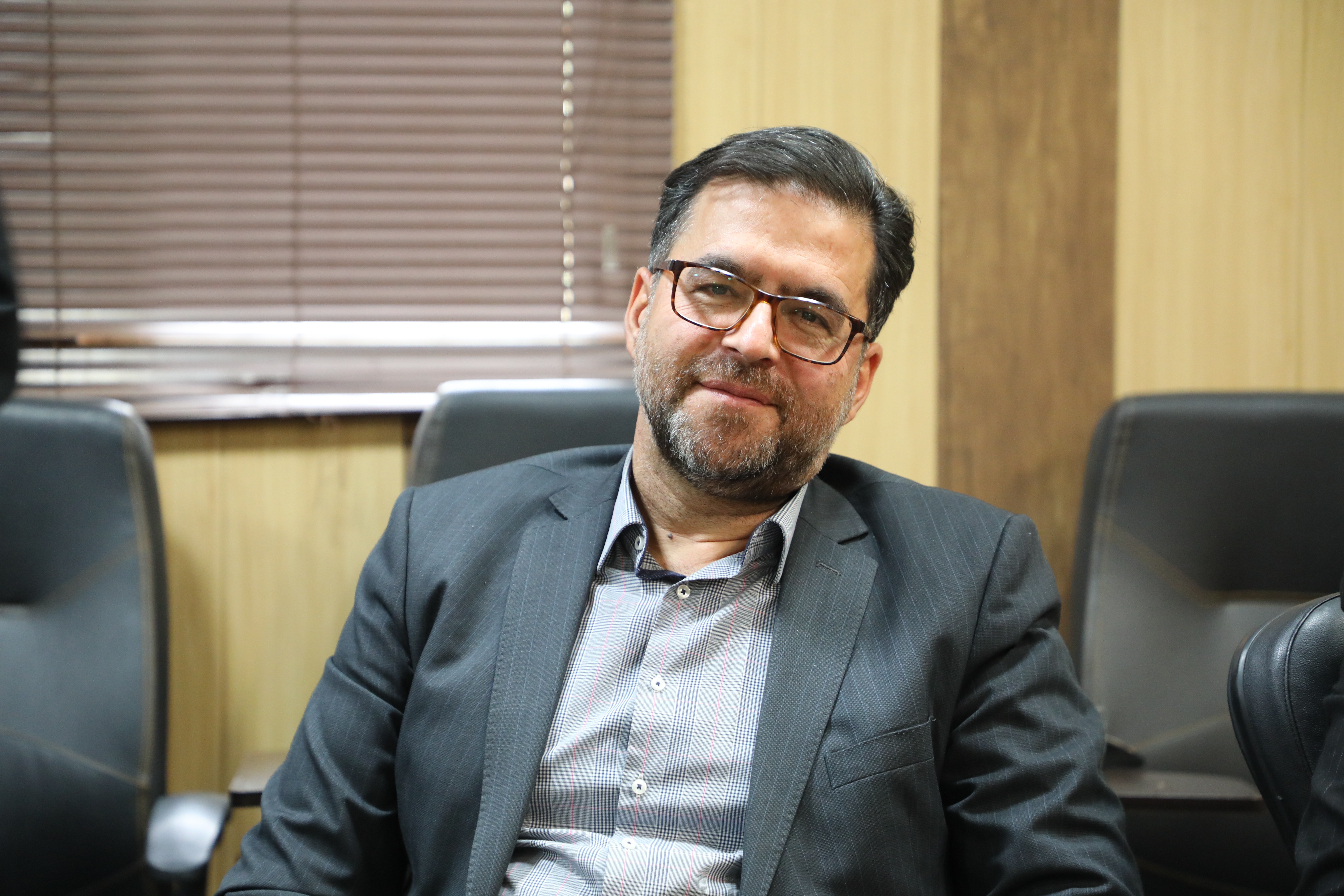
 At the “Children in the Crossfire of Aggression” roundtable, Seyyed Hossein Kamyab, son of Martyr Seyyed Reza Kamyab, who was assassinated by the Mujahedin-e Khalq in August 1981, spoke about his lived experience after his father’s death. Having witnessed the assassination as a child, he said the effects of the trauma have not only remained with him to this day but have also been passed on to his wife and children. Referring to nearly 30 years of efforts to seek treatment, he stressed that the wound of terrorism cannot simply be forgotten and can affect an entire generation.
Kamyab began by describing the moment of the incident. “I was playing ball in the yard. I heard gunshots, three or four of them,” he said. “This was not entirely new to me. Once, when we were at my uncle’s house near Nakhrisi Crossroads, we heard gunfire and were told it was the work of the Mujahedin-e Khalq.” He continued: “I went out into the alley and saw that it was full of people. I went back. Someone knocked on the door. It was a young man. His face was very grim, but his words were extremely blunt. He said, ‘They shot your father too — did you see?’ I asked, ‘What happened to my father?’ He said, ‘They killed your father. You don’t know?’”
Speaking about the incident’s profound effects on the family, Kamyab said: “When someone is assassinated in this way, it really makes no difference who did it or why; an entire generation is affected by the event. We, the children of Martyr Kamyab, suffered emotional and even psychological harm because of it. Those injuries, together with the harm caused by the absence of a father and a guardian, created a wide range of problems for us. I will live with these issues for as long as I am alive, and perhaps even the family I have now will continue to be affected by them.”
He added: “My therapist once asked me, ‘What difficulties have you faced in your life?’ When I explained, the therapist said, ‘Given your circumstances, it is remarkable that you are functioning at the level you are today.’ Other people only see that the Supreme Leader visits our home, or that the president visits our home. They knew nothing about the real problems of our lives or the hardships we were struggling with.”
Kamyab concluded that when one family member is targeted, an entire generation is effectively placed in difficulty. For example, he said, when a single member of a family is targeted, five people and their families may suffer the consequences over a period of 100 years. Citing the figure of 23,000 people killed in terrorist attacks across the country, he stressed that these crimes have left large numbers of people facing psychological and family problems.