
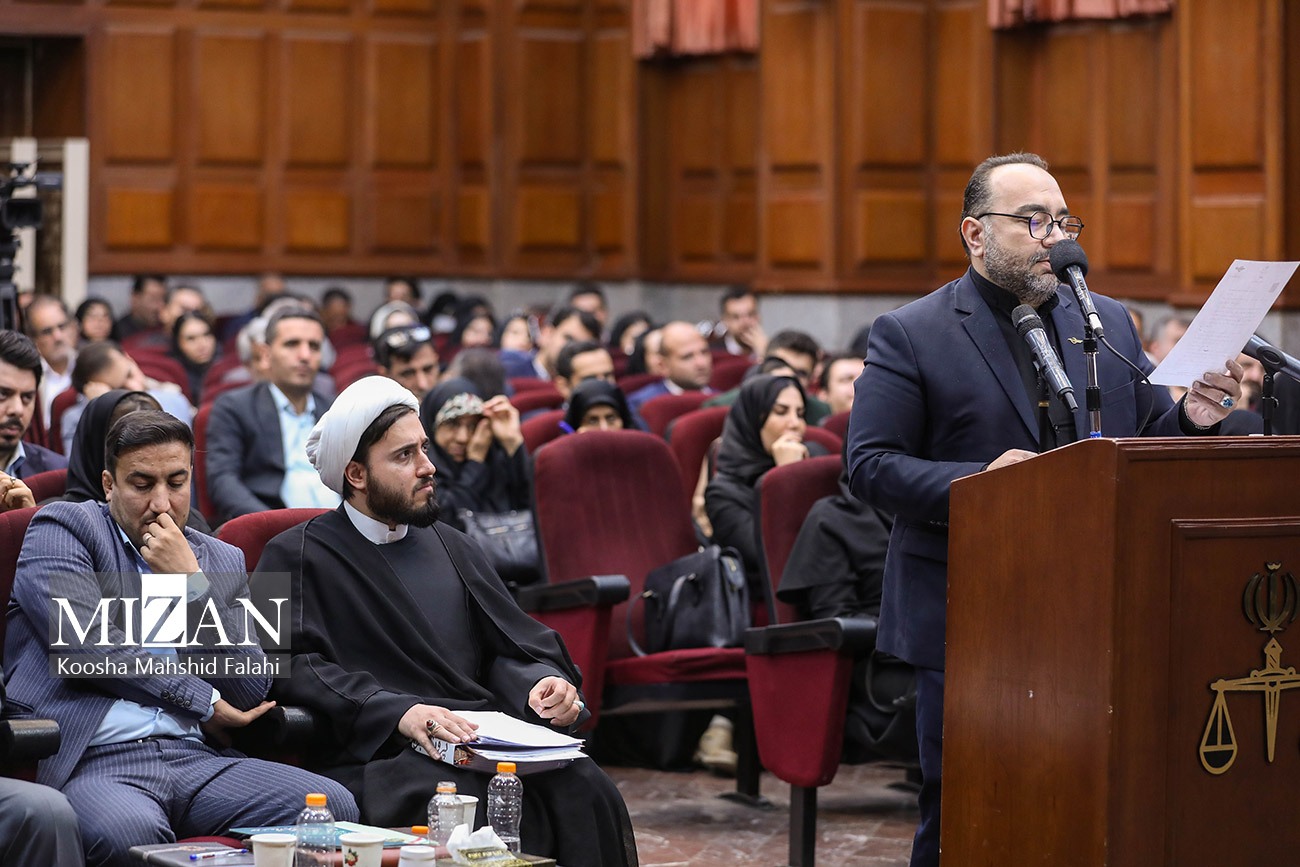
 The 34th session of the trial of 104 members of the Mujahedin-e Khalq Organization (MEK) and its legal nature was held on Tuesday, May 26, in Branch 11 of the Tehran Province Criminal Court, presided over by Judge Hojjatoleslam al-Muslimin Amirreza Dehghani. In this publicly held session, attended by the prosecutor's representative, families of the martyrs, their lawyers, and the defendants' lawyers, Judge Dehghani emphasized the "principle of extraditing the Hypocrites" as a legal duty of European countries.
Citing international counter-terrorism conventions, including the UN Terrorist Bombing Convention and the EU Convention on the punishment of terrorist acts, he stated that terrorism charges are excluded from political crimes, and the accused do not enjoy protection against the extradition of political criminals. The judge warned countries like Germany, France, and the UK that hosting the accused in this case violates their domestic laws and international obligations and will entail criminal responsibility for the officials of these countries.
Subsequently, the plaintiffs' lawyer, Hojjatoleslam Masoud Maddah, referring to the organization's record in hijacking, addressed the case of the hijacking of a Boeing 707 in 1981 for the escape of Masoud Rajavi and Abolhassan Banisadr to Paris. Citing documents including the organization's internal publications and statements by Behzad Moazzi – the flight pilot – he described this act as an example of organized terrorist crimes. Also, the legal representative of the Islamic Republic of Iran Army, detailing three cases of hijacking of military and passenger planes by the organization's operatives, emphasized the prior coordination of these operations with foreign entities and held the MEK responsible for extensive material and moral damages.
The testimony of witnesses and former members of the organization, including Iraj Salehi and Mohammad Reza Goli, was another important part of this session. They pointed to the completely centralized and hierarchical structure of the organization under the absolute leadership of Masoud Rajavi, his cooperation with SAVAK and the security agencies of the previous regime, as well as the planning and execution of terrorist operations and hijackings under Rajavi's direct command. One witness, citing his own observations, reported on the hidden coordination of the organization with the French government regarding these operations.
Furthermore, families of those martyred by this organization, including the brother of Martyr Kazem Hoveyzavi, the wife of Martyr Manouchehr Purhosseinyari, and the daughter of Martyr Javad Sobhani, attended the court, sharing memories and the psychological and social consequences of these assassinations, and emphasized the necessity of a fair trial and punishment for the perpetrators and commanders of these crimes.
In defense positions, the defendants' lawyers objected to the validity of testimony from former members of the organization due to their criminal records and the lack of verification of religious and legal repentance by judicial authorities. However, the court, citing the absence of an explicit legal text prohibiting the testimony of former accomplices and emphasizing the distinction between "repentance" as a mitigating factor and "personal repentance" for verifying witness integrity, did not accept these objections.
Judge Dehghani concluded by announcing the registration of new complaints from the martyrs' families against the accused and invited citizens with claims against the accused to submit their complaints to the judicial authorities.