 In the past two decades, terrorism has emerged not only as a security threat but as a fundamental challenge to the foundations of human rights and the international order. This phenomenon, trampling upon the basic rules of humanitarian law, primarily targets defenseless civilians, and among them, children, as the most innocent group, bear the brunt of this organized violence.
Within this global perspective, our homeland, Iran, as one of the countries that has borne the heaviest burden of terrorism for four decades, is a significant example of this human catastrophe. Since the beginning of the Islamic Revolution, numerous attacks by terrorist and armed groups have led to the martyrdom of over 23,000 defenseless citizens of this land. Among these martyrs, the number of children as innocent victims is deeply shocking.
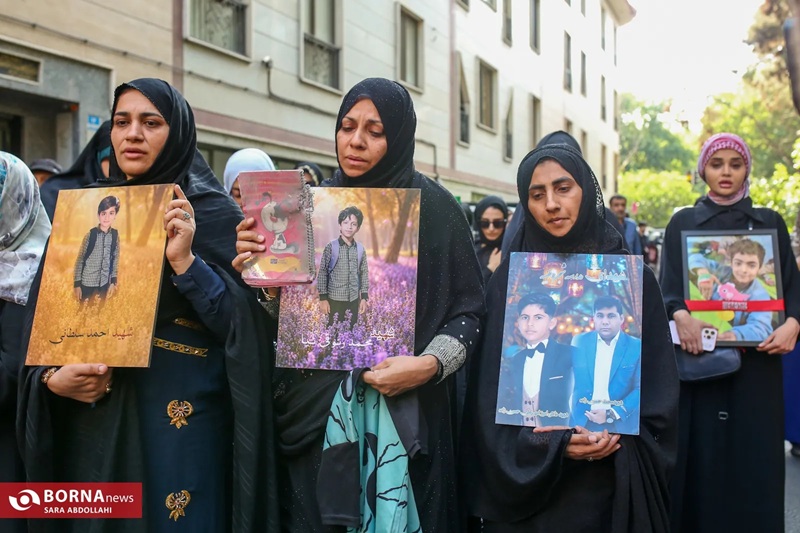
According to official statistics compiled by researchers of the Habilian Association, 2,162 children and adolescents under 17 have been victims of this ominous phenomenon in Iran. Nearly two thousand of these dear ones were boys, and 186 were girls. If we also consider the child and adolescent martyrs of the Imposed War (Iran-Iraq war), the number of child martyrs in Operation Ramadan was 383, and in the 12-day war (with the Israeli regime), it was 47.
Our youngest child martyr, Sana Pordel, was only two months old when she was martyred in her mother's arms by the Jundallah terrorist group, and the most recent case to date is Mohammad Mehdi Iranmanesh, thirteen years old, who was killed in an ISIS attack one year ago.
This statistic peaked in the Solar Hijri 1360s (1980s) at 1,750 cases. Border provinces like Kurdistan (474 child martyrs) and West Azerbaijan (398 child martyrs) had the largest share in this tragedy. The age of 17 shows the highest frequency with 716 martyrs, and the shocking point is the presence of 115 children under 5 years old in these statistics. Regarding the perpetrators, the Komola, KDPI, and MKO cults are respectively responsible for 892, 385, and 275 child martyrs.
Meanwhile, we should not forget the oppressed children of Minab, nor that state terrorism also has many innocent victims. A clear example is the US attack on an Iranian passenger plane in 1988 (1367 SH), which resulted in the martyrdom of 61 children (52 children aged 2-12 and 9 children under 2). Another example is the infamous Epstein case, which unveiled organized child abuse networks and exposed the true face of the false claimants of human rights.
Allow me to paint a human face on these statistics for a moment. Here we speak of children who, with their families' consent, have shared the narrative of their wounds with us:
- Taha, five years old, who no longer sleeps peacefully at night.
- Amir Ali, thirteen years old, who lost eight loved ones in one day.
- Amir Mehdi and Arash, who carry the title of "Youngest Disabled Veteran."
- Roghayeh, Yeganeh, and Artin, who lost the embrace of their mother or father forever.
- Rastin, two years old, who fought for 83 days in the hospital with his small body.
- Zahra, who was hit while in her mother's embrace.
And today, the world's eyes are fixed on Gaza and Lebanon. Children who, under unrelenting fire of war, are victimized daily, and no one is held accountable. These oppressed children are a continuation of the same bitter path that was not uncommon in Iran either.
The result of these events is not just a bitter number or statistic; it is generations of surviving children who have entered adulthood with deep, invisible wounds. Wounds that, if not properly seen and understood today, will turn into deeper crises for the individual and society tomorrow.
The International Day of Innocent Children Victims of Aggression is an opportunity for the international community to return once again to its commitments towards this vulnerable group. Accurately identifying the dimensions of this tragedy is the first step toward effective support. The main question is: How can the scientific community, responsible institutions, and families of victims work together to heal this collective suffering?
Habilian Association, as the voice of the families of terror victims, considers itself a bridge connecting the silent suffering of the victims with the knowledge that can bring healing. Our mission is not only to document this suffering but to turn it into a driving force for producing local, practical solutions. We believe that supporting these children will only be possible through the cooperation of three pillars: the families of victims (as the primary owners of the experience), specialists (as possessors of intervention knowledge), and policy-making and supporting institutions (as facilitators of implementation).
In conclusion, we honor the memory of all innocent children who have been victims of violence and aggression; from the oppressed children of Iran and Minab to the innocent children of Gaza and Lebanon, and hope for the day when no child anywhere in the world tastes the bitter fruit of terror and aggression.
By Seyed Mohammad Javad Hasheminejad, Secretary-General of Habilian Association