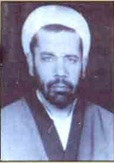
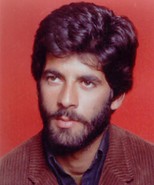
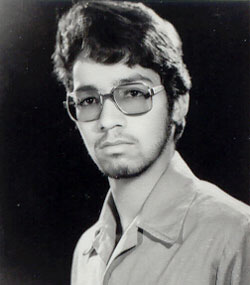
In December 1946, in the land of resilience and honor—the city of Kermanshah—a child was born who was named Ali Mohammad. He was raised in a devout and committed family, but very early in his childhood, he tasted the bitterness of orphanhood, losing his father. Yet this great loss did not break him; on the contrary, it steeled his resolve to build a better future.
Ali Mohammad Majidi endured the hardships of his orphaned years with indescribable perseverance and traversed the path of knowledge
"He would deposit the extra amount he received as director-general in favor of the warriors, and he did this solely for the pleasure of God."
According to Habilian, Hojjatoleslam, martyr Ali Iranmanesh was born in 1932 in Kerman into a poor family that placed little value on worldly wealth. Martyr Mohammad-Javad Bahonar was his maternal cousin. The two friends learned to read the Quran from their grandmother at the age of seven. In 1952, after finishing fifth grade, they left for the Qom
Date of Birth: 1961, Binabaj, Gonabad
Occupation: IRGC member
Date of Assassination: November 9, 1981
Martyr Hassan Binabaji was born in 1981 in Binabaj, Gonabad, into a poor but deeply religious family. From early childhood, he knew poverty and hardship. He completed elementary and middle school with success and went on to study at Navvab Safavi High School. At the height of the Islamic Revolution, he raised his voice against the tyrants of the time and joined street demonstrations alongside
Martyr Mohammad Reza Tavassoli was born on June 29, 1957, in Kashan, Isfahan Province. He held a master's degree and was employed at the Ministry of Defense.
This great martyr was martyred on October 1, 1982, at the age of 25, in Imam Square on Naser Khosrow Street in Tehran Province. The cause of his martyrdom was shrapnel from a bomb planted by the hypocrite group (Monafeqin, referring to the MEK).
On the occasion of the anniversary of the martyrdom of Martyr Mohammad Reza Tavassoli, the
Martyr Taghi Zaroori, Martyr Safar Ali Eidi and Martyr Nasser Ali Ahmadi were ambushed and assassinated by the Mujahedin-e Khalq (MEK) terrorist group at the Rahnamayi intersection in Mashhad on November 5, 1981. The following is the letter written to Martyr Zaroori by his wife:
In memory of my Companion and Confidant
This year too, the scent of spring, the fragrance of hyacinth and apple, remind me of your steadfast stature and hopeful smiles. O Taghi, my other half and confidant in the hard
Martyr Amir Reza Alizadeh was born on October 4, 1976, in the Dabbaghian neighborhood of Rasht. Amir Reza was sincere, kind, straightforward, simple, and unpretentious; all family members loved him. He loved the IRGC; after obtaining his diploma, he entered the Imam Hussein (AS) Officer University of the IRGC, and after that, he spent several months in the Search for Martyrs' Remains operation.
Martyr Amir Reza Alizadeh, the first martyr defending of the shrine (defender of holy shrines in
Behnam was born on May 20, 1963, in the city of Damavand. He continued his studies in the same city and received his diploma in Mathematics from the Sokhan High School.
At the age of 18, he was employed at the Ta'avon-e Sanfi Credit Fund located on Shahid Motahari Street - Takht-e Tavoos. Ultimately, one year later, on May 4, 1982, a number of members of the MKO terrorist group entered the place and, through deceit, introduced themselves as Committee forces, claiming they were looking to
Martyr Firouzi was born on February 6, 1979, in the village of Parchin Bolagh in Malekan County (part of East Azerbaijan province) into a religious family. After completing his education up to a Bachelor's degree, he was employed by the Law Enforcement Force (Faraja) and served in the Urmia Border Regiment.
Due to his brilliant record and dedication, he was appointed as the commander of the Ziaei Border Company. He ultimately received the reward for his valor on June 27, 2017, in an ambush set
Martyr Behzad Hemmati Ghahveh, was born on February 27, 1958, in Kermanshah and completed his education up to a diploma in Sanandaj and Kermanshah. In 1979, after the victory of the Revolution, he entered university. After the temporary closure of universities, he served as the head of the Jihad-e Sazandegi (Construction Jihad) and as the district administrator (Bakhshdar) in Divandarreh.
This great martyr was a first-year university student when he was martyred by the Komala terrorist group
Martyr Seyyed Reza Sabeti was born on September 20, 1977, in Abadan, bringing joy to his family as their fifth child. He was one of the young athletes from Abadan who was employed at the Abadan Port and Maritime Authority. He had gone to the offices of one of the parliament representatives in Tehran to follow up on his affairs.
This young Khuzestani was mercilessly martyred on Wednesday, June 7, 2017, corresponding to the 12th of Ramadan 1438 AH, during the terrorists' attack on the Islamic
She was born on September 12, 1956, in Firuzkuh County. Her father, Habibollah, was a butcher, and her mother was named Robabeh. Like her mother, she was a housewife. After marriage, she had three sons and three daughters.
She was ultimately martyred on August 26, 1982, in Tehran by elements of the MEK terrorist group due to gunshot wounds to the chest and face.
Masoumeh Eskandari, her daughter who was six years old at the time of the incident, says about her mother's martyrdom:
"On the
In the heart of the ever-green land of Gilan, in the quiet village of Lasht-e Nesha, lived a man from the lineage of sacrificers. Hassan Askari Chafuchahi, born in 1943 into a religious family, from his early youth had the fragrance of spirituality and service in his nature.
He was a student of the school of the Quran and the Ahl al-Bayt (AS), wearing the cloth of the clergy as a sign of servitude and stepping on the path of guiding the people. Simultaneously, by working at the Imam Khomeini
Tahmasb Bahari opened his eyes to the world in 1961 in the village of Kaluraz, Rostamabad. He was studious, which is why after finishing primary school, he came to Rasht to continue his education.
It has been written about him that he was very humble, kind, and modest. Although these qualities are not hard to believe, what immortalized Tahmasb was his love for Imam Khomeini and the message he brought with him.
Tahmasb had become like a moth drawn to the flame of the Imam of Jamaaran following
Martyr Ghahreman Mansoubi, known as Mashhadi Heydar, was born on May 22, 1944, in Rey County. His father was Yahya and his mother was Tavoos. He studied up to middle school. He worked as a pot-seller for some time and then worked as a motorcycle mechanic in Salmas.
Due to his revolutionary activities, he was imprisoned for some time by the Pahlavi regime. After marriage, he had three sons and one daughter. He served at the warfront as a Basij member.
He was ultimately captured by elements of
The spokesperson for the Ministry of Foreign Affairs of the Islamic Republic of Iran, referring to the martyrdom of a number of Iranian athletes in the Zionist regime's attacks on Iran, said: Those who support this war crime are accomplices.
According to Habilian, Esmail Baghaei, the ministry spokesperson, wrote on the social media platform X about the crimes of the Zionist regime: “Remember the names of these innocent athletes: Amir Ali, the teenage taekwondo athlete; Mahdi Pouladvand, an
Martyr Jom'eh Sheikhi was born in 1954 in Dehloran County, Ilam Province. He lost his mother during childhood and worked alongside his honorable father to support the family, engaging in farming from a young age. In 1979, when the Iranian people's revolutionary spirit reached its peak, he joined the masses in rising up against the hated Pahlavi regime.
Following the victory of the Islamic Revolution, and during the period when the Dehloran Gendarmerie was vacated, he voluntarily served at
Kobra Mohammadpour was born on March 21, 1946, in the city of Sanandaj, Kurdistan Province. Her mother was a housewife, and her father was self-employed. Due to the lack of educational facilities and the cultural conditions of the time, she was unable to pursue formal education and instead devoted herself to managing her household.
In her youth, she married Ahmad Bani Bashar, and together they had five children—three sons and two daughters. Kobra Mohammadpour was always a devoted wife and a
Hojjatoleslam Mohammad Hossein Fakhr Bonab, was born on June 26, 1938, in the city of Bonab, East Azerbaijan Province, into a religious family. After completing preliminary Islamic studies, he entered the Talebieh Seminary in Tabriz and later the Qom Seminary. Following years of study under esteemed scholars and completing advanced courses in Islamic jurisprudence and principles, he returned to his hometown and began preaching the radiant teachings of Islam in the cities of Maragheh and Bonab.
He was born on December 12, 1931, in the village of Marom, a district of Bandar Abbas. His father, Lotfali, was a laborer. Gholamabbas learned to read, write, and recite the Qur’an. In 1959, he got married and had one son and four daughters.
In defense of the Islamic Revolution and its values, he served as a member of the Islamic Revolutionary Committee.
On April 17, 1985, in Bandar Abbas, he was assassinated by members of the Mujahedin-e Khalq (MEK) terrorist group. He was killed after being
Martyr Mohammad Ghanbarian, a defender of the holy shrines, was born on April 25, 1971, in Shahroud, Semnan Province. Two of his brothers, Ahmad and Mahmoud Ghanbarian, were martyred in 1979 and 1982, respectively.
Mohammad was raised in a devout and martyr-nurturing family. After completing high school, he began working at the Saderat Bank branch in Semnan. In 2014, when he learned that enemies were threatening the holy shrines of Hazrat-e Zaynab (peace be upon her) and Hazrat-e Ruqayya

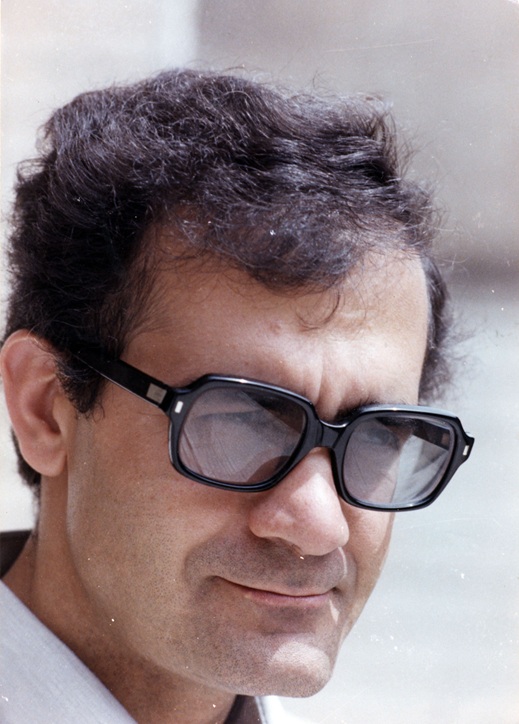 In December 1946, in the land of resilience and honor—the city of Kermanshah—a child was born who was named Ali Mohammad. He was raised in a devout and committed family, but very early in his childhood, he tasted the bitterness of orphanhood, losing his father. Yet this great loss did not break him; on the contrary, it steeled his resolve to build a better future.
Ali Mohammad Majidi endured the hardships of his orphaned years with indescribable perseverance and traversed the path of knowledge
In December 1946, in the land of resilience and honor—the city of Kermanshah—a child was born who was named Ali Mohammad. He was raised in a devout and committed family, but very early in his childhood, he tasted the bitterness of orphanhood, losing his father. Yet this great loss did not break him; on the contrary, it steeled his resolve to build a better future.
Ali Mohammad Majidi endured the hardships of his orphaned years with indescribable perseverance and traversed the path of knowledge