
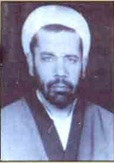
 "He would deposit the extra amount he received as director-general in favor of the warriors, and he did this solely for the pleasure of God."
According to Habilian, Hojjatoleslam, martyr Ali Iranmanesh was born in 1932 in Kerman into a poor family that placed little value on worldly wealth. Martyr Mohammad-Javad Bahonar was his maternal cousin. The two friends learned to read the Quran from their grandmother at the age of seven. In 1952, after finishing fifth grade, they left for the Qom seminary. Bahonar stayed in Tehran for further studies, while Iranmanesh returned to Kerman.
Martyr Iranmanesh joined the Islamic Revolution by exposing the true nature of the Pahlavi regime and played an effective role in the struggles of the people of Kerman. On December 5, 1978, he was arrested and imprisoned. In 1980, he was appointed Director-General of Education for Kerman Province.
The MEK and blind-hearted enemies could not tolerate his valuable services and tireless efforts in spreading the Islamic Revolution. On February 16, 1987, they assassinated him.
Here are several accounts from the friends, comrades, and family of martyr Hojjatoleslam Sheikh Ali Iranmanesh:
Batons
The martyr's son says: During the Revolution, our house was always bustling with people. Revolutionaries and fighters used our home as a base. Whenever SAVAK agents raided the neighborhood, people would take refuge in our house. One day around noon, I saw thick smoke rising from the Jame Mosque. There was also the sound of gunfire. That day, my father and Uncle Hossein were in the Jame Mosque. News came that the mosque had been set on fire. My father arrived home; it was clear he had been beaten with batons.
That afternoon there was another clash. At midnight, our neighbor threw several wooden sticks and batons into our courtyard and said, "Because there's so much coming and going here, SAVAK might attack. Keep these for defense." We hid the batons.
The Director-General's Salary
Ahmadi, a comrade of the martyr, recalls: Usually a director-general receives extra allowances or special payments, but martyr Iranmanesh never took that money or those checks for himself. He deposited them in favor of the warriors, and he did this only for the pleasure of God.
Hosting Complainants
The martyr's wife says: It was late, and we were asleep when we suddenly heard a minibus stop near the house, followed by the doorbell. Haji Agha went and opened the door. He saw a group of teachers from Jiroft who had come to complain about the education officials in their county and were on their way to Tehran. Mr. Iranmanesh was already aware of the matter. With a smile on his face, he welcomed them and showed great patience.
Condition for His Daughter's Marriage
The martyr's daughter says: My father was a very important support in my life, and I always benefited from his guidance. Regarding my marriage, the only criterion he mentioned was piety and faith. Contrary to what relatives expected, he set just one volume of the Holy Quran as my mahr (dowry). He added one more condition: that I continue my studies to whatever level I am capable of.
Fridays
The martyr's wife recalls: On Fridays, he would ask us to take the children out for a walk so he could perform his Friday worship with peace of mind. He would usually sit under the shade of a tree and recite supplications and recommended prayers. His daily work and position as director-general never interfered with his worship; on the contrary, he became even more committed to performing recommended acts. By the time we returned home, we would still see him engaged in prayer and supplication.
Weeping for a Martyr
Kimiai, a friend of the martyr, says: One day, martyr Iranmanesh came to me and said, "There are several martyrs at the Martyrs' Paradise. Let's go there and offer condolences to their parents." We went. There were many martyrs there; their bodies were torn apart.
A corpse was left in a corner. Together with martyr Iranmanesh, we picked it up to take it outside. I said, "May God help the parents of this martyr. How tall and strong he is."
As soon as I said this, I saw martyr Iranmanesh put down the coffin and begin to cry. Then the friends pulled back the shroud, and I saw it was my own son. At that moment, martyr Iranmanesh comforted me. He himself led the funeral prayer for my son.
"Does anyone need anything?"
Mohsen Iranmanesh, the martyr's son, recounts: One or two days before his martyrdom, my father—who was in his third year of high school at the time—advised me, "Whatever field you choose, try to advance in Islamic studies as well." On the day of his martyrdom, he woke us up for the morning prayer. After praying, he joked with us and then said to me, "Are you going to get bread?" I said yes. He even emphasized, "Get a lot of bread; maybe we'll have guests." I left the house and went by car. As I was leaving, at the end of the alley, I saw two men who appeared to be repairing a motorcycle. When I returned, I saw them again. I passed by and came home. I ate breakfast. When my father was leaving, he went to the hall door, then turned back and said, "Fatemeh, do you need anything?" He took a few steps, turned again and said, "Mohsen, do you need anything?" He walked a few more steps, turned back once more and said, "Does anyone need anything?" He said goodbye and left. A few minutes later, we heard gunfire. My mother said, "I think they have martyred your father." When we went into the alley, we saw that both my father and his driver, Mr. Khandani, had been martyred. The motorcyclists had been lying in ambush.
Black Fabric
The martyr's son says: A few days before his martyrdom, my father was happier and more playful than ever. In his final days, he bought black fabric and had black shirts sewn for all of us. He had never done anything like that before.