The Mujahedeen-e Khalq terrorist group has claimed responsibility for the assassination of more than 10 members of Iranian Revolutionary Guards in Sardasht, a city in and the capital of Sardasht County, West Azerbaijan Province, in 1983.
According to Habilian Association database (Specialized Center of Research on the MKO's Crimes), the MKO terrorist group has made the confession in a news published in No. 136 of the Journal of Mujahid, the group’s main press organ during early years of the
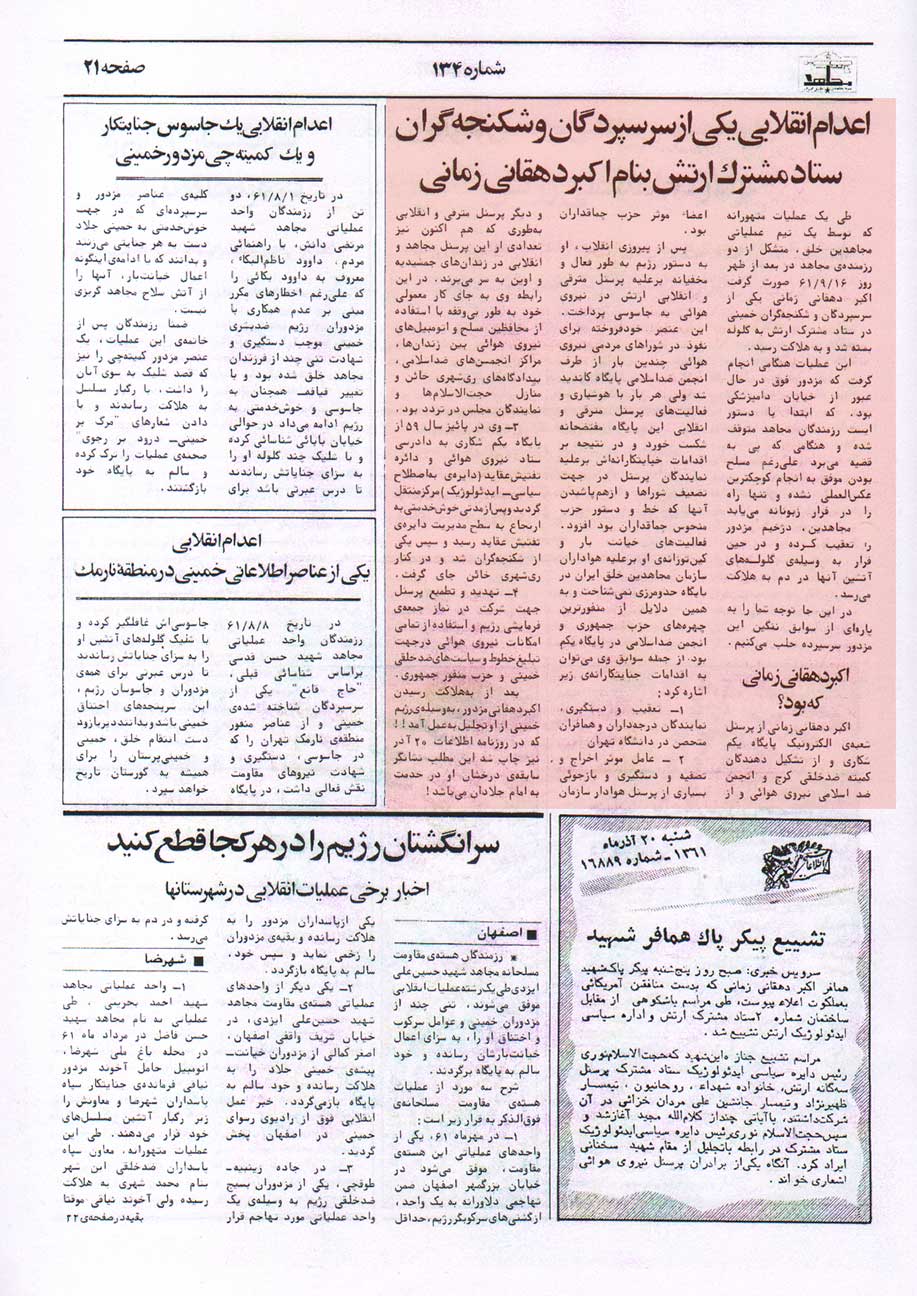
The Mujahedeen e-Khalq terrorist group has claimed responsibility for some terrorist operations in Iran in 1982.
According to Habilian Association database (Specialized Center of Research on the MKO's Crimes), the MKO terrorist group has made the confessions in No. 134 of the Mujahid Journal, the group’s main press organ during early years of the 80s.
According to a news that the MKO’s publication has referred to it as a document for its bravely operations, the terrorist group has conducted
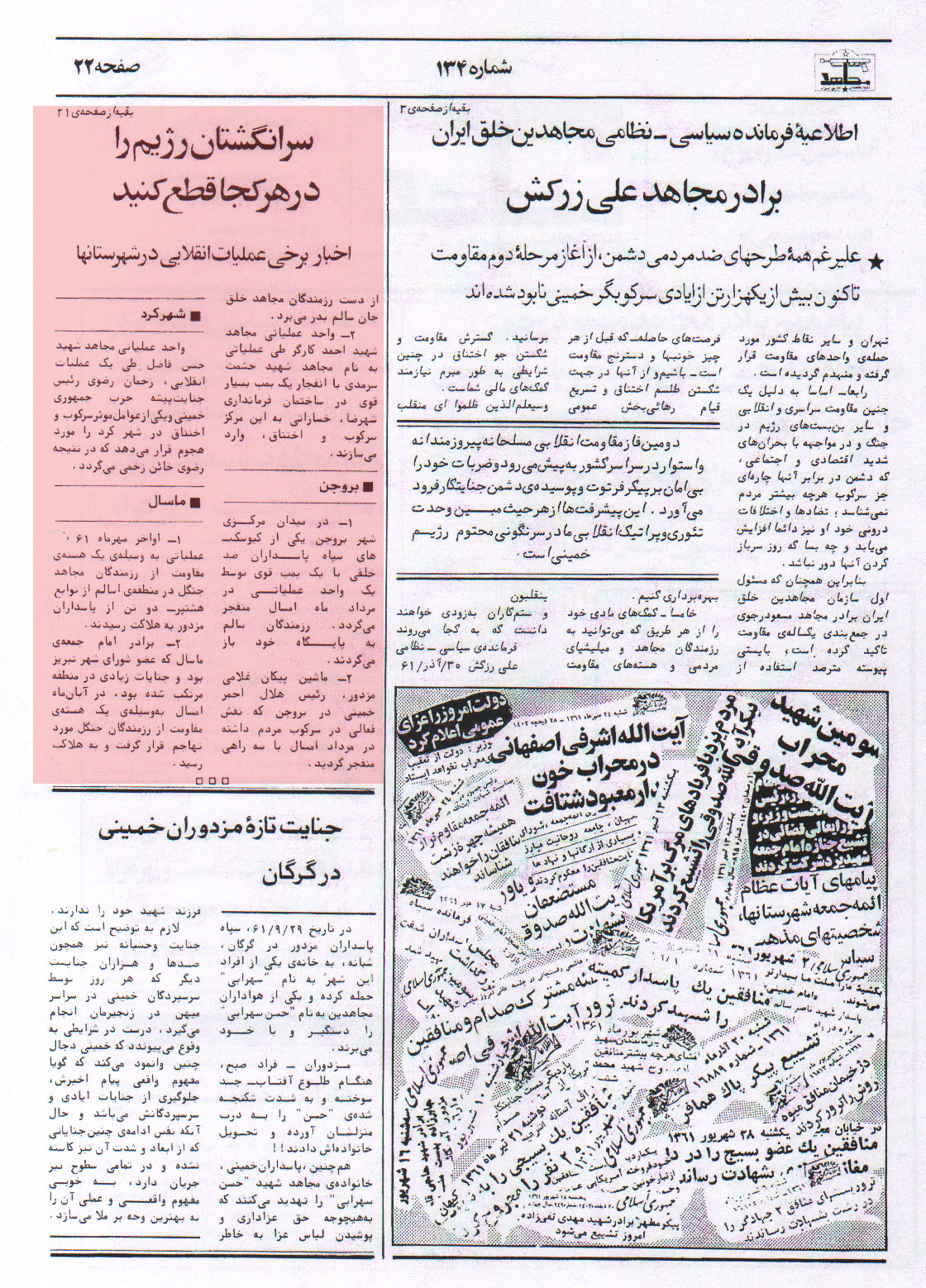
The Mujahedeen e-Khalq terrorist group has claimed responsibility for assassination of more than one thousand Iranian people in 1982.
According to Habilian Association database (Specialized Center of Research on the MKO's Crimes), the MKO terrorist group has made the confession in No. 134 of the Mujahid Journal, the group’s main press organ during early years of the 80s.
According to this news that the MKO’s publication has referred to it as a document for its bravely operations, during the
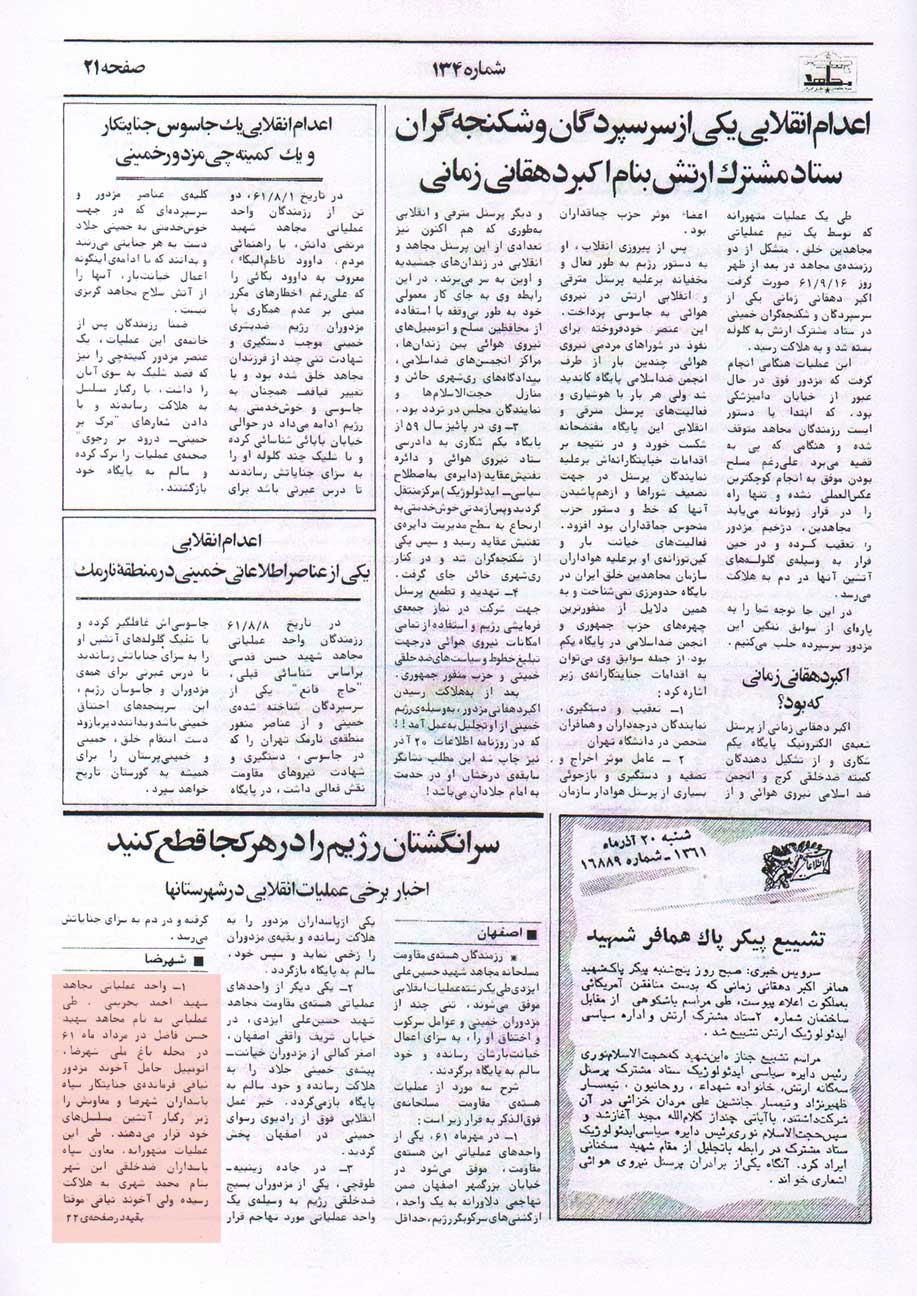
The Mujahedeen e-Khalq terrorist group has claimed responsibility for the assassination of IRGC deputy commander in Shahreza, a city in and the capital of Shahreza County, Isfahan Province, in 1982.
According to Habilian Association database (Specialized Center of Research on the MKO's Crimes), the MKO terrorist group has made the confession in No. 134 of the Mujahid Journal, the group’s main press organ during early years of the 80s.
According to this news that the MKO’s publication has
The Mujahedeen e-Khalq terrorist group has claimed responsibility for the assassination of a Navy Officer in Tehran, in 1982.
According to Habilian Association database (Specialized Center of Research on the MKO's Crimes), the MKO terrorist group has made the confession in No. 134 of the Mujahid Journal, the group’s main press organ during early years of the 80s.
According to this news that the MKO’s publication has referred to it as a document for its bravely operations, on December 07
The Mujahedeen e-Khalq terrorist group has claimed responsibility for the assassination of shopkeeper and a committee member in Tehran, in 1982.
The Mujahedeen e-Khalq terrorist group has claimed responsibility for the assassination of a carpenter in Tehran, in 1982.
According to Habilian Association database (Specialized Center of Research on the MKO's Crimes), the MKO terrorist group has made the confession in No. 134 of the Mujahid Journal, the group’s main press organ during early years
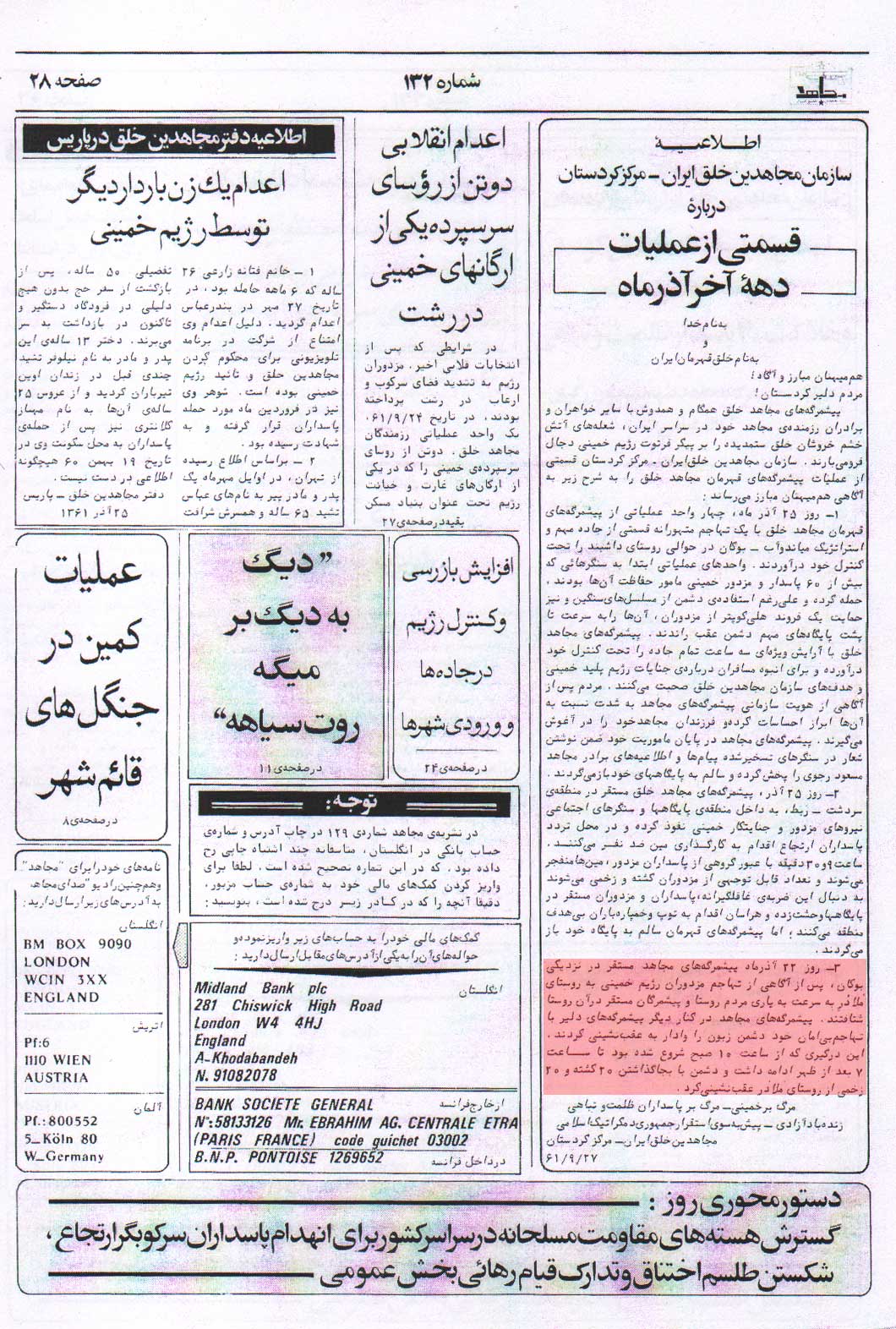
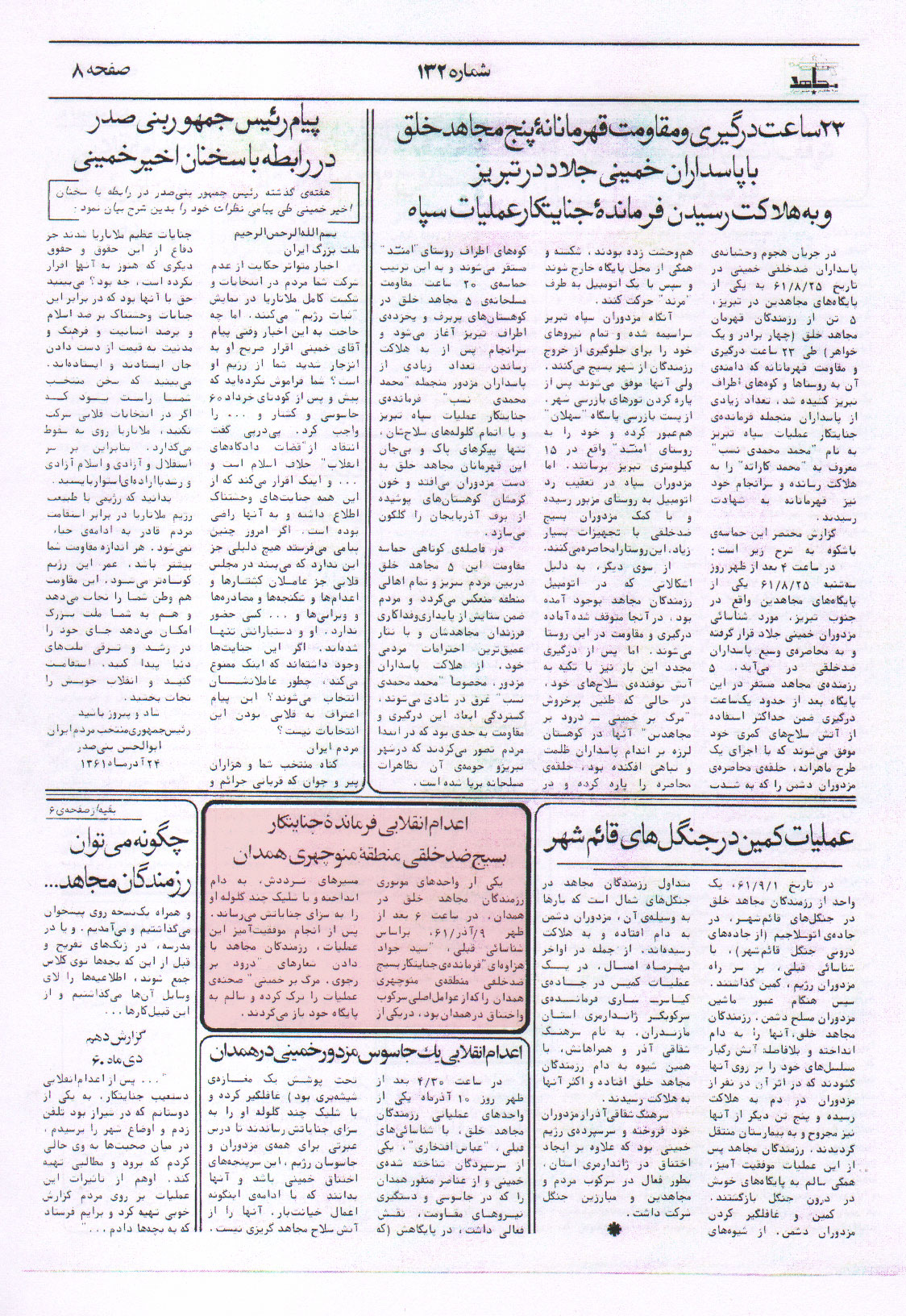
The Mujahedeen-e Khalq terrorist group has claimed responsibility for 20 Iranian military forces in Bukan, a city in and the capital of Bukan County, West Azerbaijan Province, in 1982.
According to Habilian Association database (Specialized Center of Research on the MKO's Crimes), the MKO terrorist group has made the confession in a news published in No. 132of the Journal of Mujahid, the group’s main press organ during early years of the 80s.
According to the confession, on December 13
The Mujahedeen-e Khalq terrorist group has claimed responsibility for destroying a border post and killing 30 IRGC forces in Sardasht, a city in and the capital of Sardasht County, West Azerbaijan Province, in 1982.
According to Habilian Association database (Specialized Center of Research on the MKO's Crimes), the MKO terrorist group has made the confession in a news published in No. 133 of the Journal of Mujahid, the group’s main press organ during early years of the 80s.
According to the
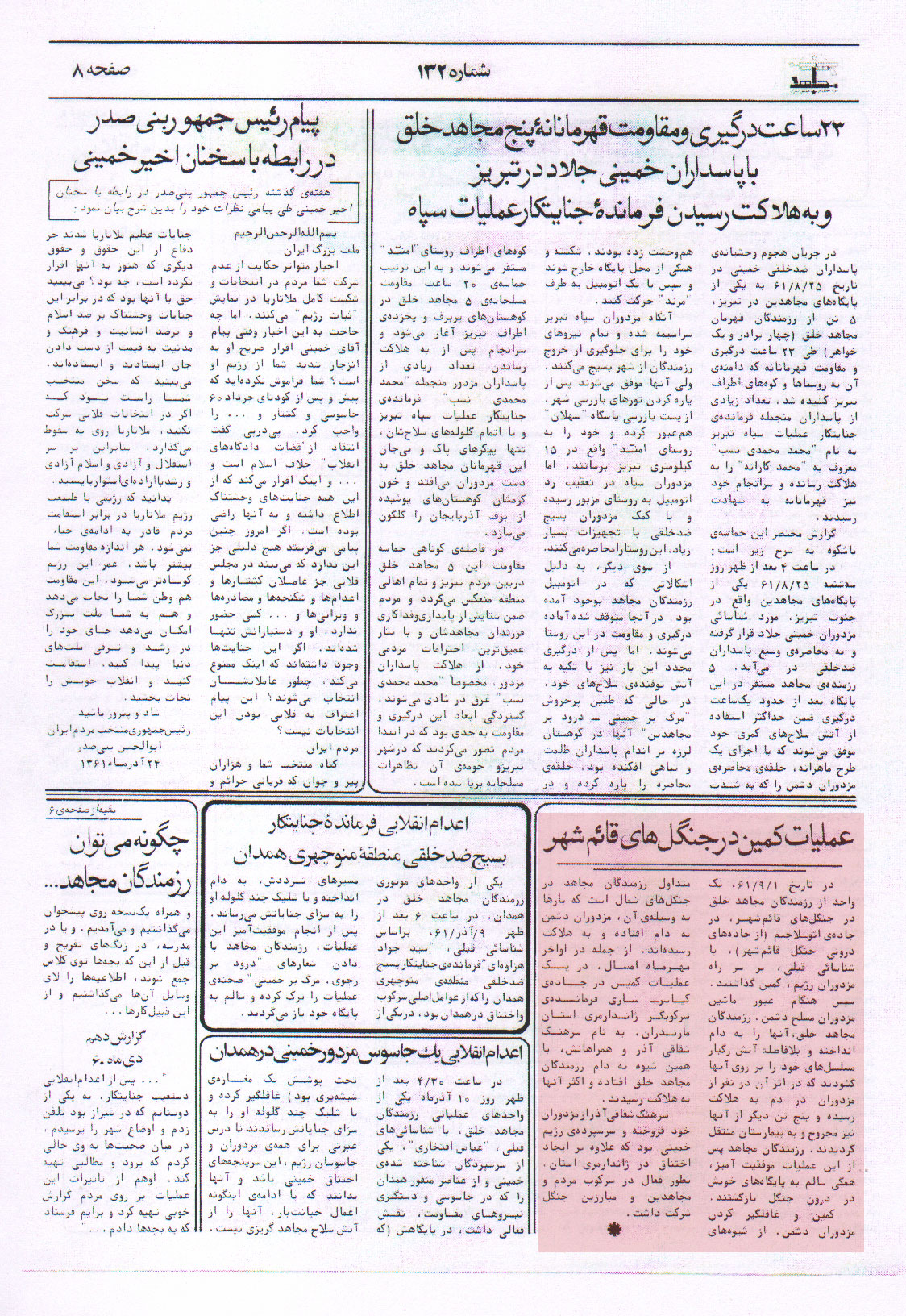
The Mujahedeen-e Khalq terrorist group has claimed responsibility for killing a significant number of IRGC members during an explosive operation in Sardasht, a city in and the capital of Sardasht County, West Azerbaijan Province, in 1982.
According to Habilian Association database (Specialized Center of Research on the MKO's Crimes), the MKO terrorist group has made the confession in a news published in No. 132 of the Journal of Mujahid, the group’s main press organ during early years of the
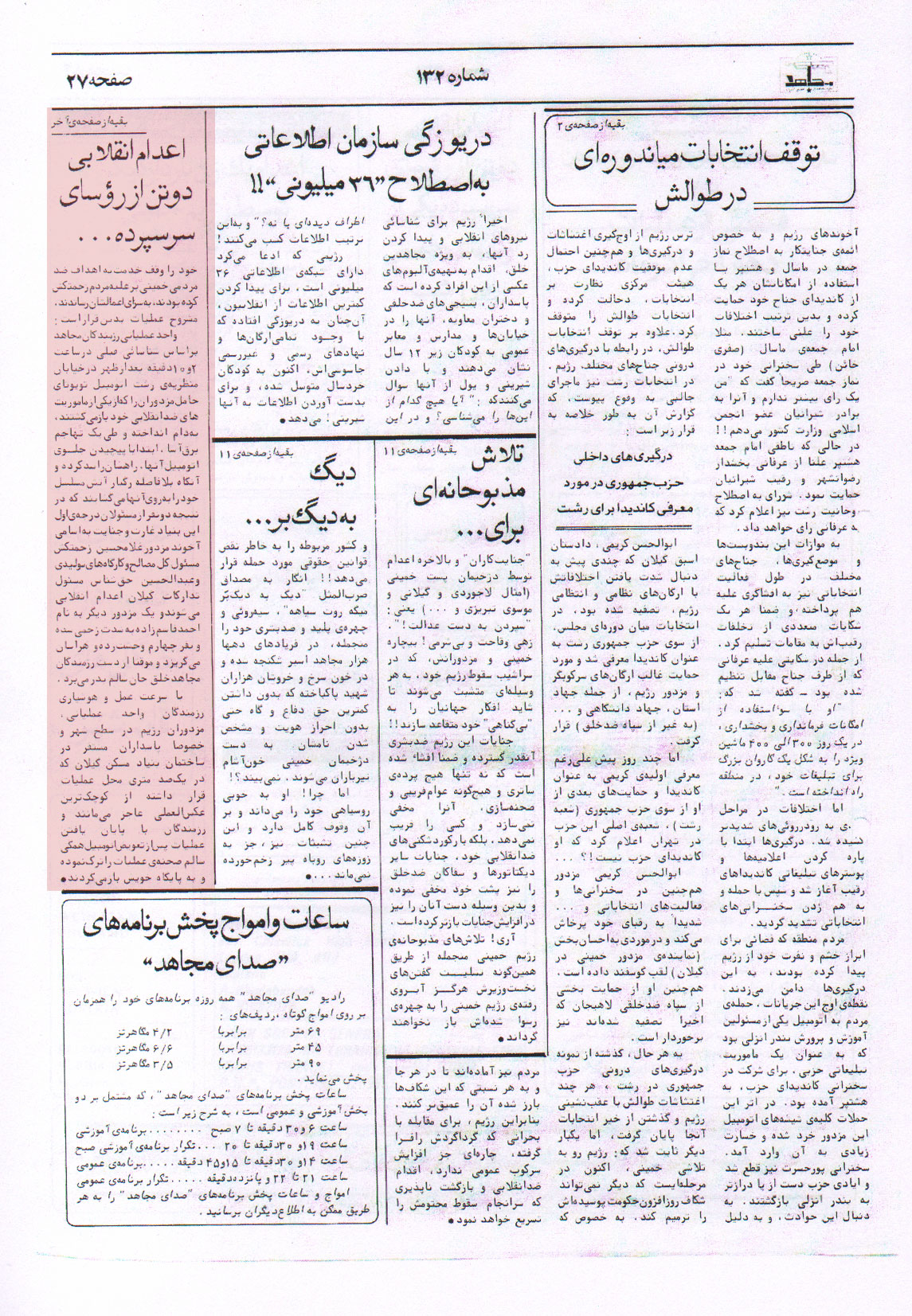
The Mujahedeen-e Khalq terrorist group has claimed responsibility for the assassination of two members of the Housing Foundation* of Gilan in 1981.
According to Habilian Association database (Specialized Center of Research on the MKO's Crimes), the MKO terrorist group has made the confession in a news published in No. 132 of the Journal of Mujahid, the group’s main press organ during early years of the 80s.
According to the confession, on December 13, 1982, an operational unit of MKO in an
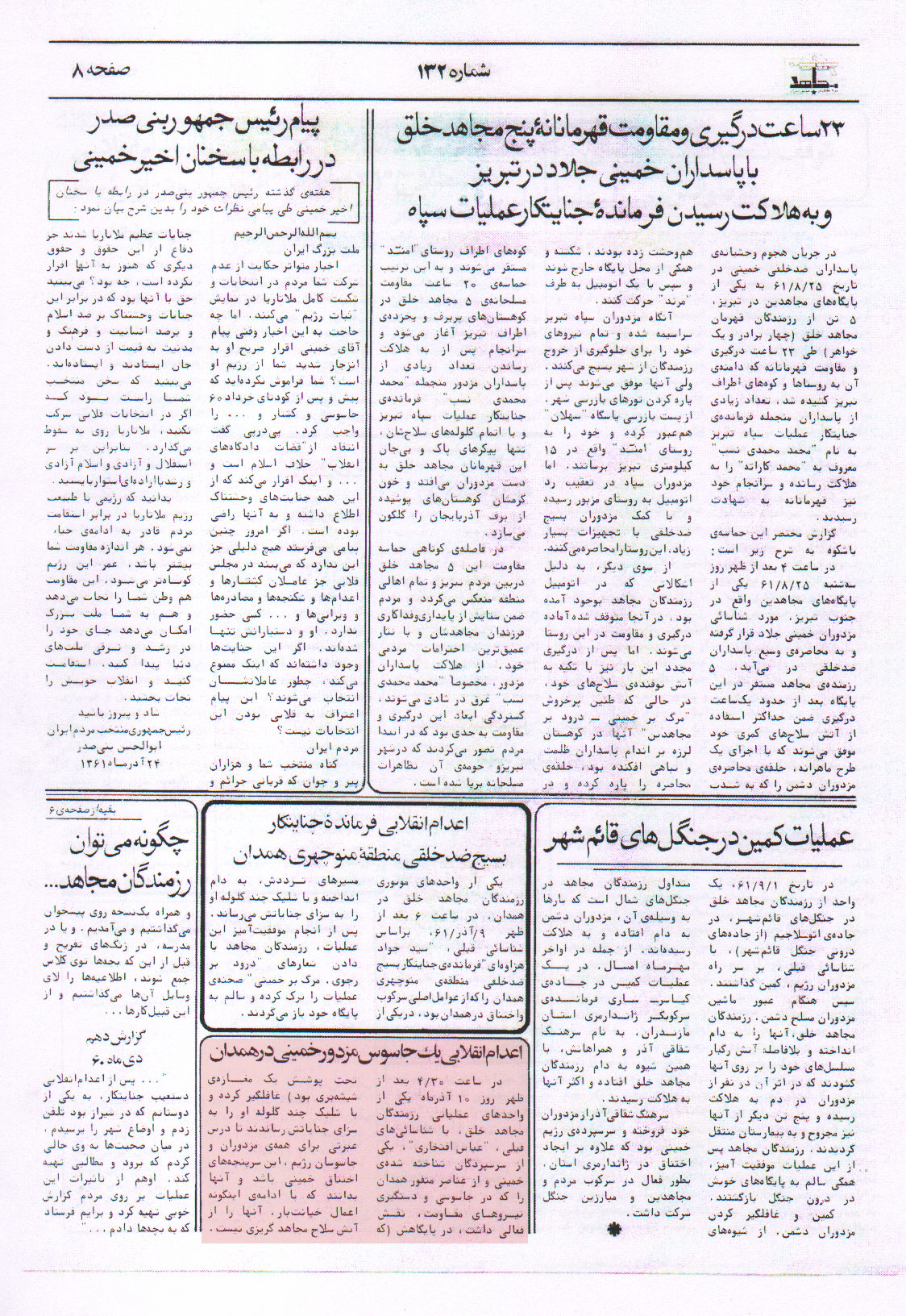
The Mujahedeen e-Khalq terrorist group has claimed responsibility for the assassination of a glazier in Hamedan, in 1982.
According to Habilian Association database (Specialized Center of Research on the MKO's Crimes), the MKO terrorist group has made the confession in No. 132 of the Mujahid Journal, the group’s main press organ during early years of the 80s.
According to this news that the MKO’s publication has referred to it as a document for its bravely operations, on December 1, 1982
The Mujahedeen-e Khalq terrorist group has claimed responsibility for the assassination of Gendarmerie commander of Mazandaran in 1982.
According to Habilian Association database (Specialized Center of Research on the MKO's Crimes), the MKO terrorist group has made the confession in a news published in No. 132 of the Journal of Mujahid, the group’s main press organ during early years of the 80s.
According to this confession, in October 1982 )late Mehr 1361 in Persian calendar) an MKO unit
The Mujahedeen e-Khalq terrorist group has claimed responsibility for the assassination of head of Basij Force in Manouchehri District of Hamedan, in 1982.
According to Habilian Association database (Specialized Center of Research on the MKO's Crimes), the MKO terrorist group has made the confession in No. 132 of the Mujahid Journal, the group’s main press organ during early years of the 80s.
According to this news that the MKO’s publication has referred to it as a document for its bravely
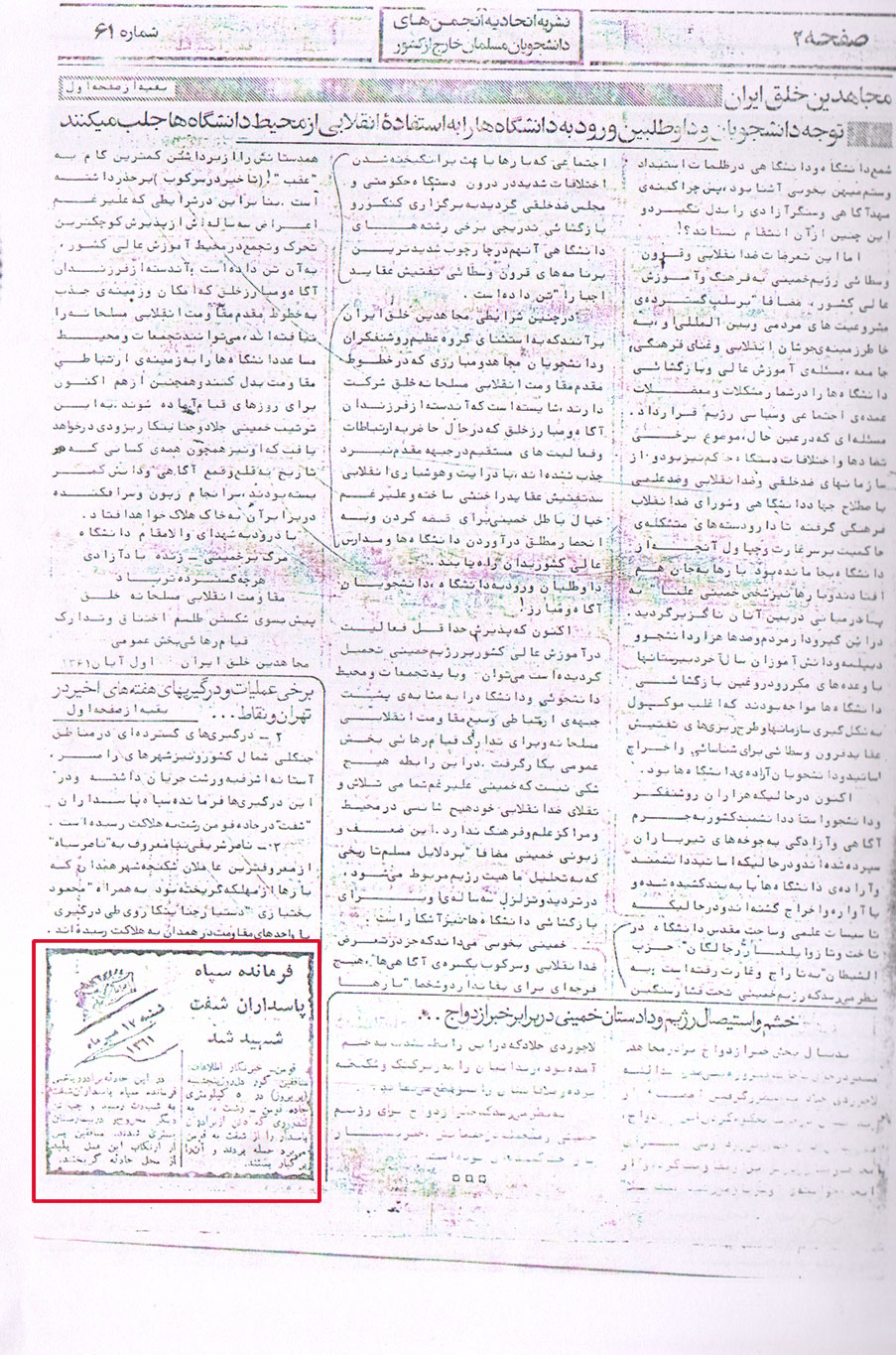
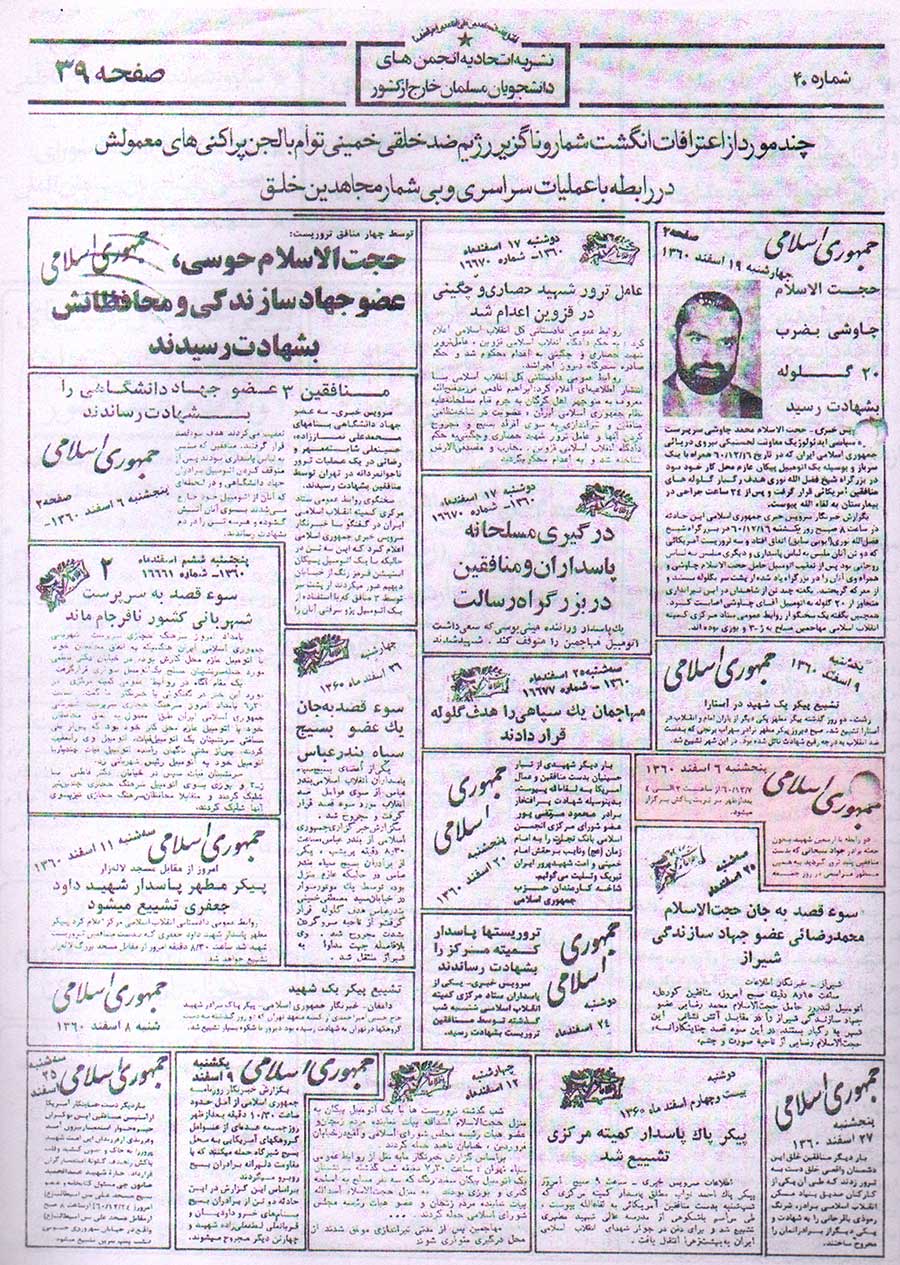
The Mujahedeen e-Khalq terrorist group has claimed responsibility for the assassination of an IRGC commander in Shaft, the capital of Shaft County, Gilan Province, in 1982.
According to Habilian Association database (Specialized Center of Research on the MKO's Crimes), the MKO terrorist group has made the confession in No. 61 of the Journal of Muslim Student Associations’ Union Abroad, one of the group’s press organs during early years of the 80s.
According to this news that the MKO’s
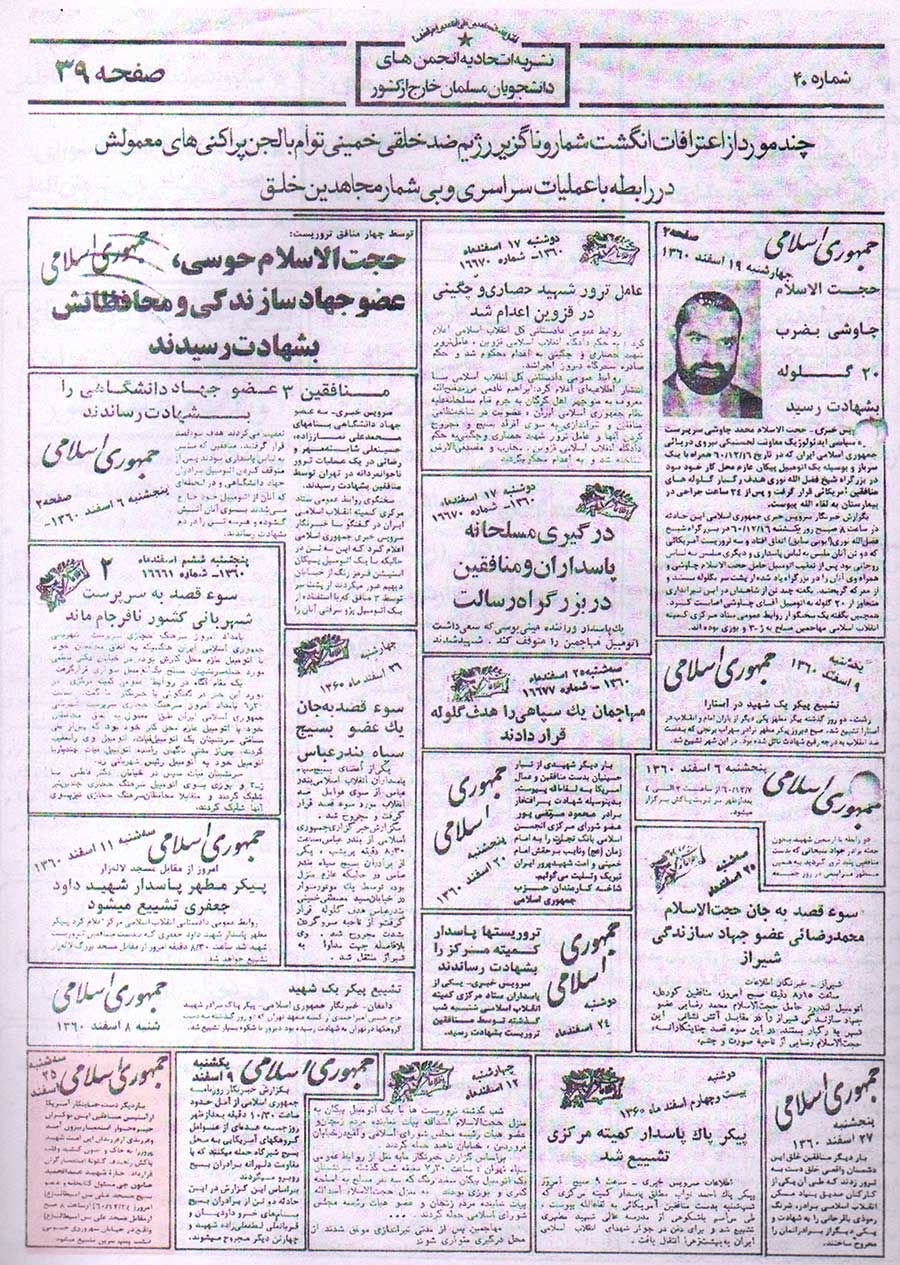
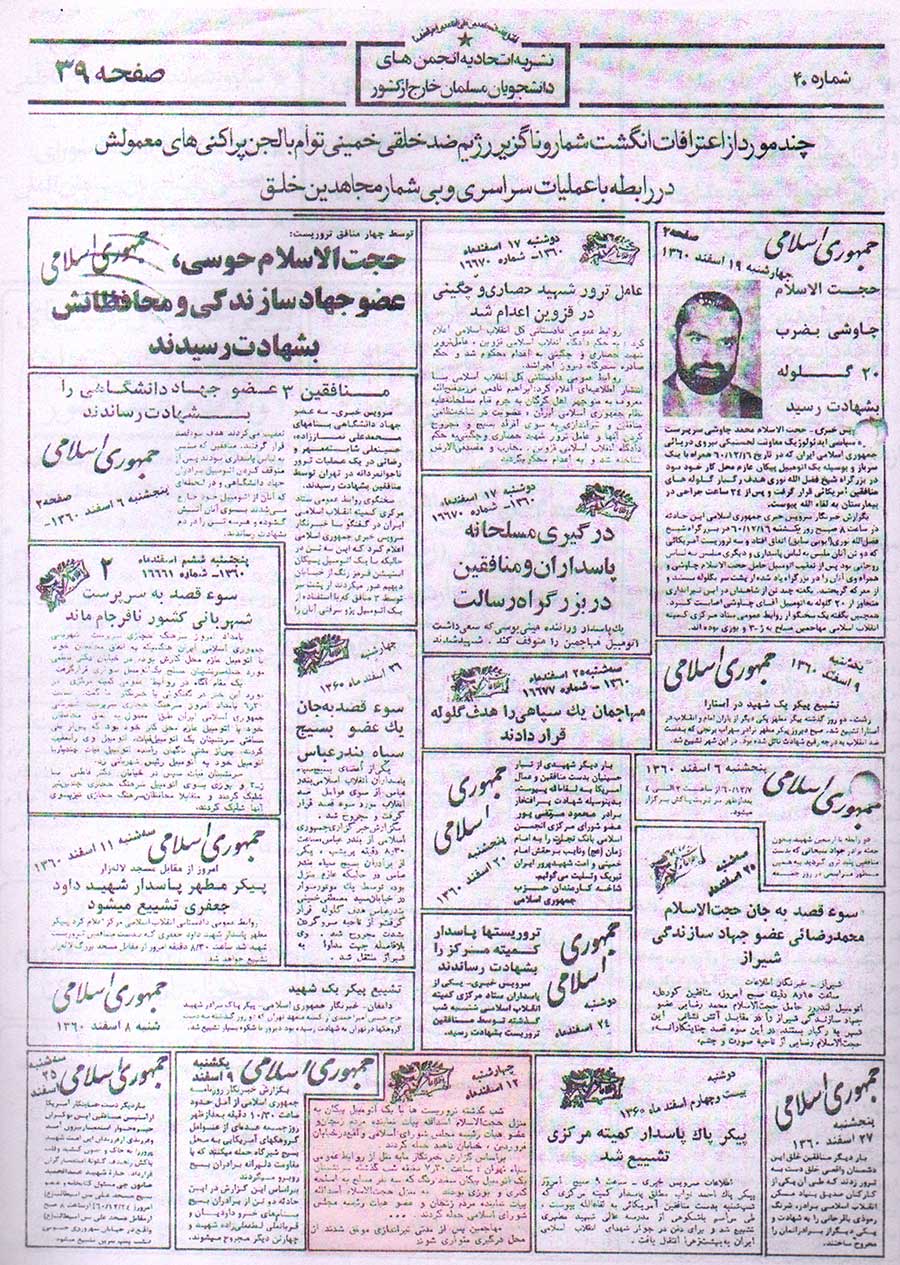
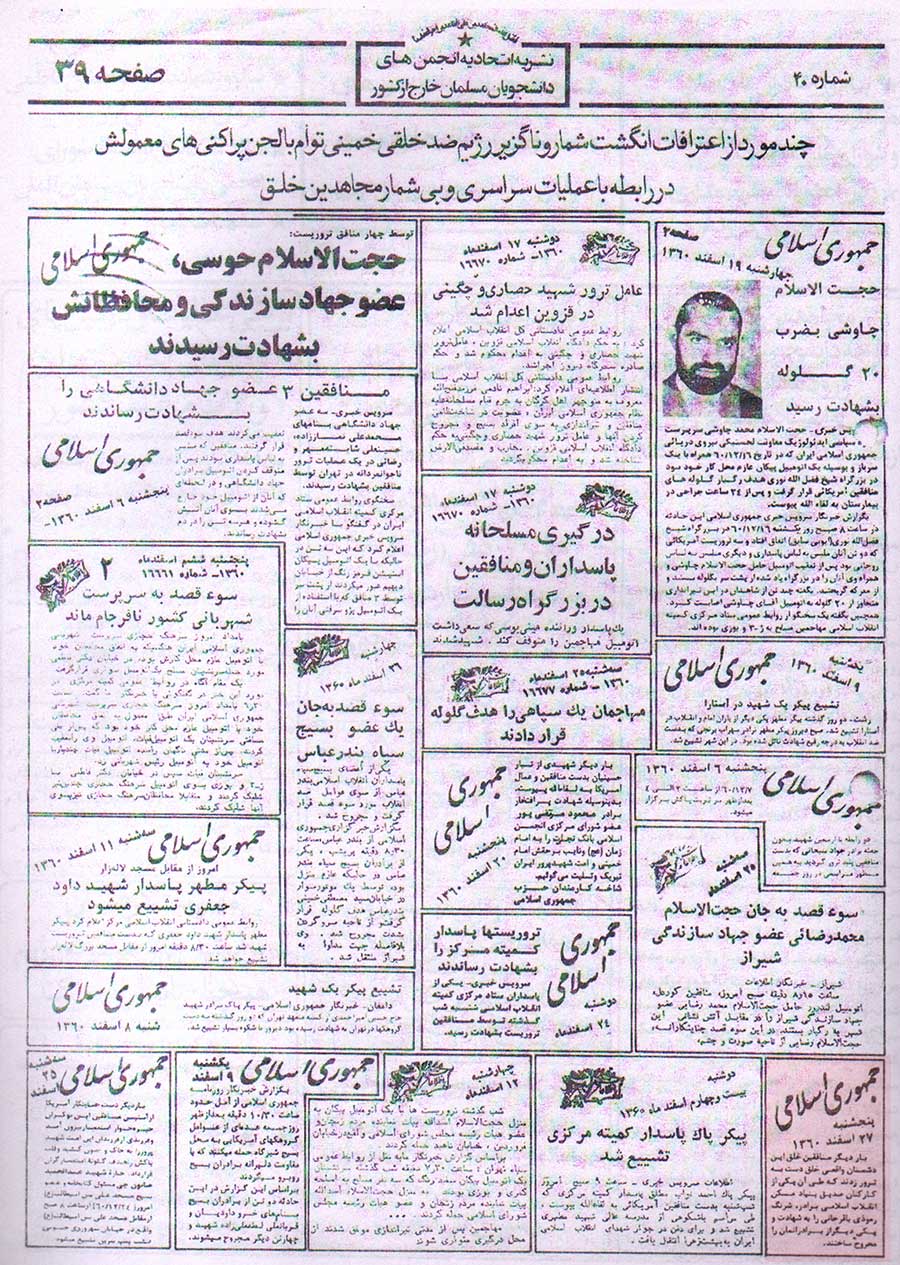
The Mujahedeen e-Khalq terrorist group has claimed responsibility for the assassination of a mosque's librarian in Tehran, in 1982.
According to Habilian Association database (Specialized Center of Research on the MKO's Crimes), the MKO terrorist group has made the confession in No. 40 of the Journal of Muslim Student Associations’ Union Abroad, one of the group’s press organs during early years of the 80s.
At that issue, the journal's editors have collected some news about the MKO’s
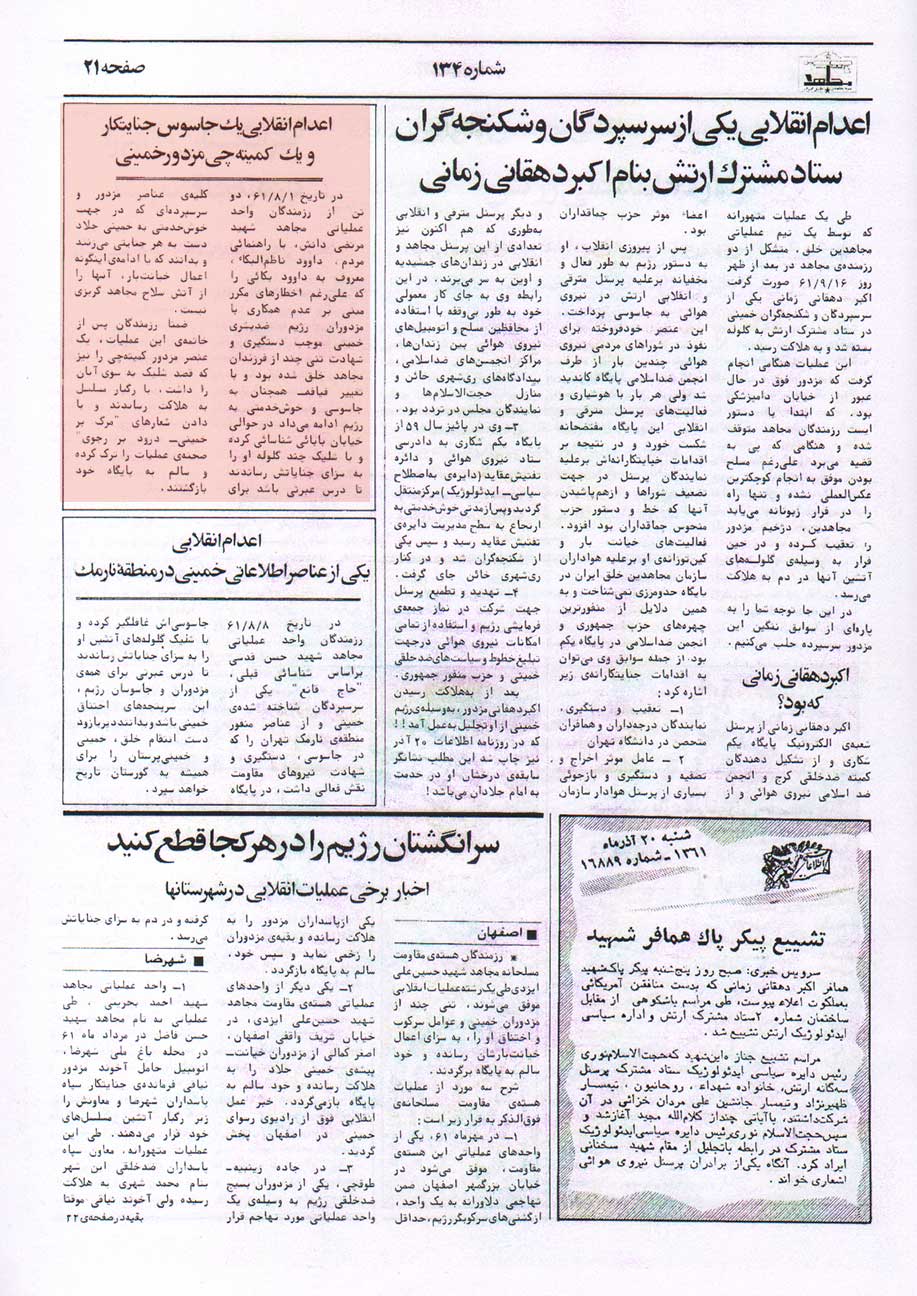
The Mujahedeen e-Khalq terrorist group has claimed responsibility for assassination of Hojatoleslam Bayat-Zanjani, former Iranian parliamenter and board member of Majlis, in 1982.
According to Habilian Association database (Specialized Center of Research on the MKO's Crimes), the MKO terrorist group has confessed to this crime in No. 40 of the Journal of Muslim Student Associations’ Union Abroad, one of the group’s press organs during early years of the 80s.
At that issue, the journal's
The Mujahedeen e-Khalq terrorist group has claimed responsibility for the assassination of a member of Housing Foundation (Persian: Bonyad-e Maskan) of Islamic Revolution, an Iranian post-revolutionary organization devoted to housing activities in rural and underserved areas, in 1982.
According to Habilian Association database (Specialized Center of Research on the MKO's Crimes), the MKO terrorist group has made the confession in No. 40 of the Journal of Muslim Student Associations’ Union
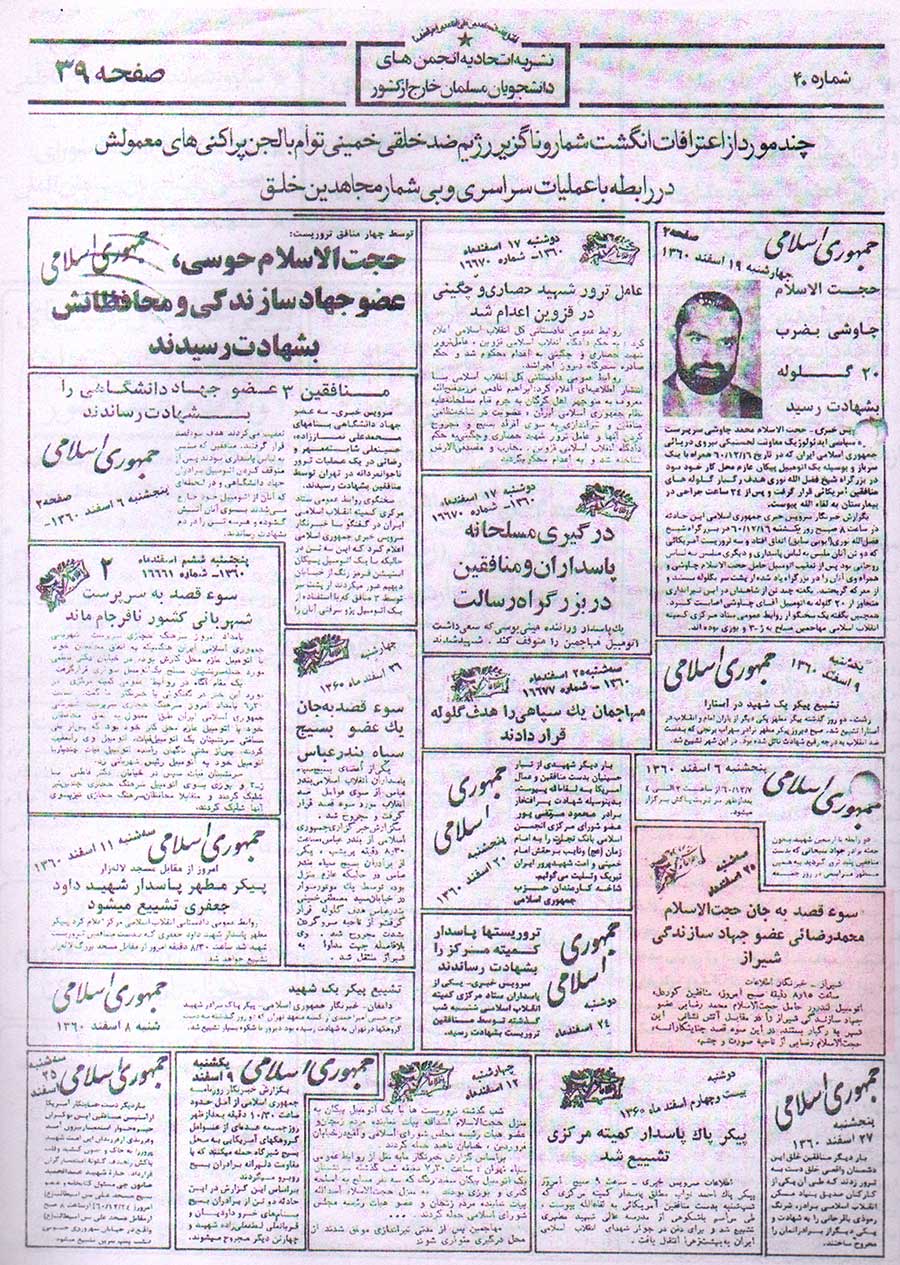
The Mujahedeen e-Khalq terrorist group has claimed responsibility for the assassination of a member of Jihad of Construction (Persian: Jahād-e Sāzandegī), an Iranian post-revolutionary volunteer organization devoted to constructive activities in rural and underserved areas, in 1982.
According to Habilian Association database (Specialized Center of Research on the MKO's Crimes), the MKO terrorist group has made the confession in No. 40 of the Journal of Muslim Student Associations’ Union
The Mujahedeen e-Khalq terrorist group has claimed responsibility for the assassination of a shopkeeper in Tehran in 1982.
According to Habilian Association database (Specialized Center of Research on the MKO's Crimes), the MKO terrorist group has made the confession in No. 40 of the Journal of Muslim Student Associations’ Union Abroad, one of the group’s press organs during early years of the 80s.
At that issue, the journal's editors have collected some news about the MKO’s operations in
The National Consortium for the Study of Terrorism and Responses to Terrorism (START) was established in 2005 as a US Department of Homeland Security Center of Excellence based at the University of Maryland, tasked with utilizing state-of-the-art theories, methods, and data from the social and behavioral sciences to improve the understanding of the origins, dynamics, and social and psychological impacts of terrorism.
In 2009, START was recognized by DHS for outstanding contributions to the

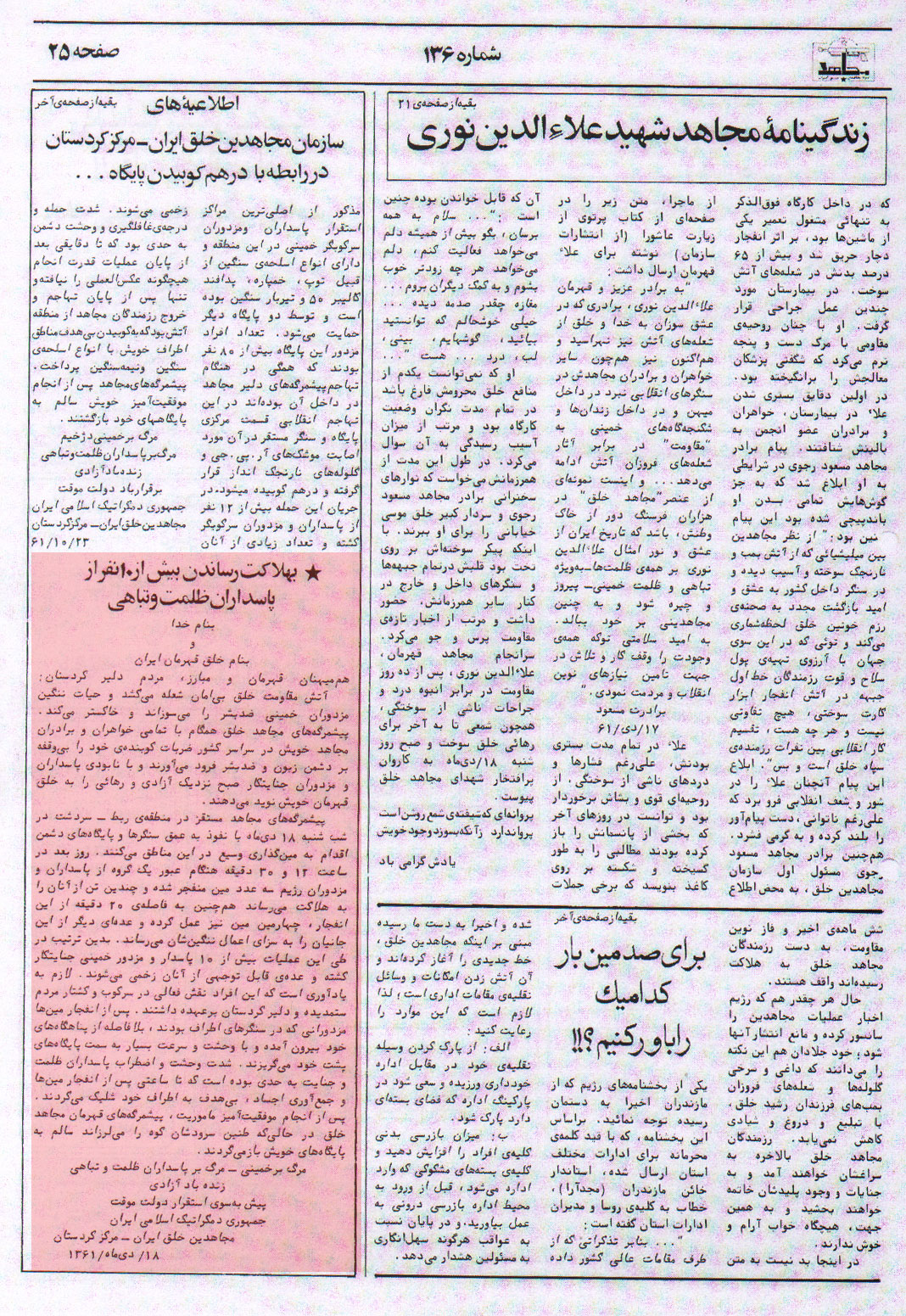 The Mujahedeen-e Khalq terrorist group has claimed responsibility for the assassination of more than 10 members of Iranian Revolutionary Guards in Sardasht, a city in and the capital of Sardasht County, West Azerbaijan Province, in 1983.
According to Habilian Association database (Specialized Center of Research on the MKO's Crimes), the MKO terrorist group has made the confession in a news published in No. 136 of the Journal of Mujahid, the group’s main press organ during early years of the
The Mujahedeen-e Khalq terrorist group has claimed responsibility for the assassination of more than 10 members of Iranian Revolutionary Guards in Sardasht, a city in and the capital of Sardasht County, West Azerbaijan Province, in 1983.
According to Habilian Association database (Specialized Center of Research on the MKO's Crimes), the MKO terrorist group has made the confession in a news published in No. 136 of the Journal of Mujahid, the group’s main press organ during early years of the