In an era where digital technologies and artificial intelligence are redefining the boundaries of war, terrorist factions, with the support of foreign powers, have become complex tools for hybrid-cognitive warfare against national security. The twelve-day war between Iran and the Zionist regime was a unique scene of the simultaneous use of artificial intelligence, advanced psychological operations, and media terrorism, in which opposition factions, using the latest digital techniques, designed
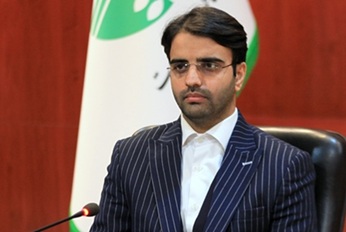
Forty days after the savage attack by the Zionist regime on the country's soil, Dr. Seyyed Hossein Mousavifar, a professor of international law at Ferdowsi University of Mashhad, in an exclusive interview with Habilian, analyzed this action from the perspective of international law. He described this attack as a clear example of "organized state terrorism" and a "war crime," emphasizing the need to strengthen domestic and international legal mechanisms to counter such actions.
Organized
Mark Dankof, a former U.S. Senate candidate and a political commentator, shares his views on the Israeli's aggression and the broader geopolitical struggle shaping the Middle East in an exclusive interview with Habilian Association. Dankof attributes Israel’s actions to a deeply rooted ideology of racial supremacy and expansionism, arguing that its military campaigns in Gaza, Lebanon, and Iran are part of a larger Zionist vision for global dominance. He explores the complicity of Western powers
Sharmine Narwani, an analyst of West Asian geopolitics, offers an analysis of Israel’s recent military escalations in an exclusive interview with Habilian Association. She frames the Israel’s actions as part of a desperate, last-ditch campaign by the collapsing unipolar world order to maintain global dominance through violence and proxy wars. Narwani describes Zionism as a racist, expansionist ideology driving the first genocide of the 21st century, and identifies Israel as a proxy tool in the
Marco Pondrelli, an Italian geopolitical analyst and editor of Marx21, offers a sharp and un-flinching assessment of the Israeli regime’s military actions across the region in this interview.
Framing these attacks as part of a broader strategy to crush the Axis of Resistance and suppress sovereign states like Iran, he characterizes the Israeli state as fundamentally expansionist, built on terrorism, and engaged in what he calls a genocidal war in Gaza. Pondrelli denounces the hypoc-risy of
Faezeh Mohammed, an Omani writer and journalist, has condemned the terrorist acts carried out by the Israeli regime, calling them a blatant violation of international law and human rights. She said these state-sponsored terrorist attacks expose the true face of the Israeli regime. According to Mohammed, Israel’s reliance on assassination as a method of elimination reflects its core policy: to directly destroy any political or military threat to its existence. Speaking about the targeting of
Ursula Asta, a geopolitical analyst from Argentina, views the actions of the Zionist regime in West Asia as part of a broader project aimed at preserving Western hegemony and preventing the decline of the U.S.-led unipolar world order. In this interview, she emphasizes the political fragility of the Israeli regime and the prominent role of neoconservatives in the U.S. political structure, arguing that the regime’s resort to war and targeted assassinations against Iran stems not from genuine
Robert Fantina, a Canadian-American author, activist and journalist, says the Israeli regime’s acts of aggression—from targeted assassinations to large-scale bombing campaigns—are made possible by unwavering American support.
He challenges the narrative of Israeli “self-defense,” condemning the regime’s genocidal war crimes in the Gaza Strip and its recent unprovoked and unlawful aggression on Iran, which claimed the lives of nearly 1,000 people, including military commanders and
Finian Cunningham, a prominent journalist from Northern Ireland and two-time recipient of the Serena Shim Award for Uncompromising Integrity in Journalism, delivers a scathing critique of Western complicity in Israeli crimes in this interview. He describes the Israeli regime as one founded on a racist, expansionist ideology that sustains itself through genocide and aggression, and identifies the United States as a direct enabler—arming and shielding Israel from international accountability.
An Australian human rights advocate denounced the global community’s silence on the Israeli regime’s aggression against Iran, saying the Western states fully understand that the attack on a sovereign nation has violated the international law.
In an interview with Tasnim, Yahya Al-Hadid, the head of the (Persian) Gulf Institute for Democracy and Human Rights in Australia, said the Zionist regime seeks to eliminate any potential threat to its existence and therefore resorts to brutal killings of
In a searing critique, Italian political analyst Silvia Boltuc denounces Israel's attacks on Gaza, Lebanon, and Iran as part of a calculated strategy for energy control and regional dominance. In an exclusive interview, she condemns the civilian massacres, Western complicity, and the dangerous nuclear risks, urging accountability and an end to geopolitical cynicism.
Silvia Boltuc, Founder and Managing Director of SpecialEurasia offers a geopolitical analysis of Israel’s aggressive behavior in
Giuliano Bifolchi, Research Manager at SpecialEurasia and an expert in intelligence analysis, security, and Islamic history, examines in this exclusive interview the Zionist regime’s ongoing acts of aggression in the Middle East—from targeted assassinations to attacks on civilian infrastructure in Iran, Gaza, and Lebanon. Drawing on his knowledge of geopolitical dynamics, Dr. Bifolchi discusses the strategic motivations behind Israel’s military actions, the role of Western complicity, the
Daniele Perra, an Italian geopolitical analyst, views the recent Israeli aggressions against Iran from a strategic perspective, considering them part of a broader Zionist project to reshape the Middle East in favor of its absolute hegemony.
Tehran - ISNA - According to him, this project advances under the shadow of religious extremism and the dream of a "Greater Israel from the Nile to the Euphrates," with Iran seen as the last major obstacle to its realization. Highlighting the aggressive—not
An Italian researcher has described the Zionist regime’s attack on Iran under the pretext of countering its nuclear program as a mere excuse, asserting that the action is neither consistent with international law nor based on technical grounds.
Maria Morigi, a writer, archaeologist, and scholar of the history of religions from Italy, in an interview with Mizan News Agency, critically examined the conduct of the Zionist regime, describing it as lacking any moral or ideological foundation.
She
An Italian political analyst denounced the Israeli regime’s systematic use of targeted killings as egregious proof of state-sponsored terrorism.
Giulio Chinappi, an Italian political writer and analyst, said the Zionist regime is systematically using targeted assassinations, collective punishment, and military aggression to suppress resistance and assert total dominance across the region.
The following is the full text of an interview with the Italian researcher.
Q: These days, the world is
Muhammad Murtaza, a Pakistani researcher in international relations and Project Manager at the Pak Institute for Peace Studies, believes the Israeli regime is pursuing a dual strategy against Iran: one, to create political instability and insecurity inside the country; and two, to instill a broader sense of national insecurity.
According to him, over the years, the Israeli regime has established a complex network of spies and operatives inside Iran to carry out acts of sabotage in parallel
On the occasion of the International Day of Families, celebrated on May 15, we reflect on the important role of families in shaping individuals and societies, and more particularly, in preventing extremism and terrorism. In an exclusive interview with Muhammad Murtaza, a regional connectivity, security, and violent extremism specialist, and a Project Manager at the Pakistan Institute for Peace Studies, we talk about how family structures, values, and socio-economic conditions predispose
In this interview, Dr. Shahpar Shahraki, a psychiatrist, neurologist, and political psychology researcher, explores the psychological underpinnings of terrorism. She argues that the identity of victims is irrelevant to terrorists—what matters is the public’s attention and the message conveyed through violence. From the interplay of personality, ideology, and environment to the surprising ordinariness of extremists, the following conversation offers a nuanced perspective on what drives such
On the occasion of the International Day for the Prevention of Violent Extremism as and When Conducive to Terrorism, we spoke with Morteza Simiyari, an expert on West Asian affairs, to examine the dynamics of violent extremism in region.
This interview was conducted on the occasion of the International Day for the Prevention of Violent Extremism as and When Conducive to Terrorism, designated by the United Nations General Assembly in Resolution 77/243 to be observed annually on February 12. The
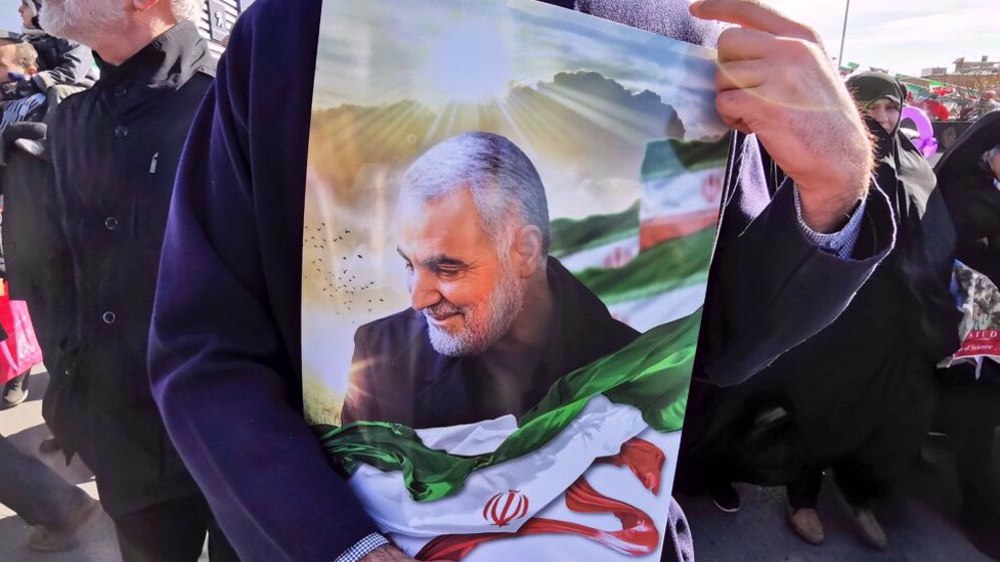
The terror assassination of senior Iranian anti-terror commander General Hajj Qassem Soleimani by global arrogance was an act of US state terrorism that ignited much of the world with anti-American anger, according to an American writer and journalist.
Yuram Abdullah Weiler, who has been a relentless critic of US global hegemonic aspirations and specifically Washington’s policy toward Iran, made the remarks in an interview with the Press TV website on Tuesday, on the third anniversary of the

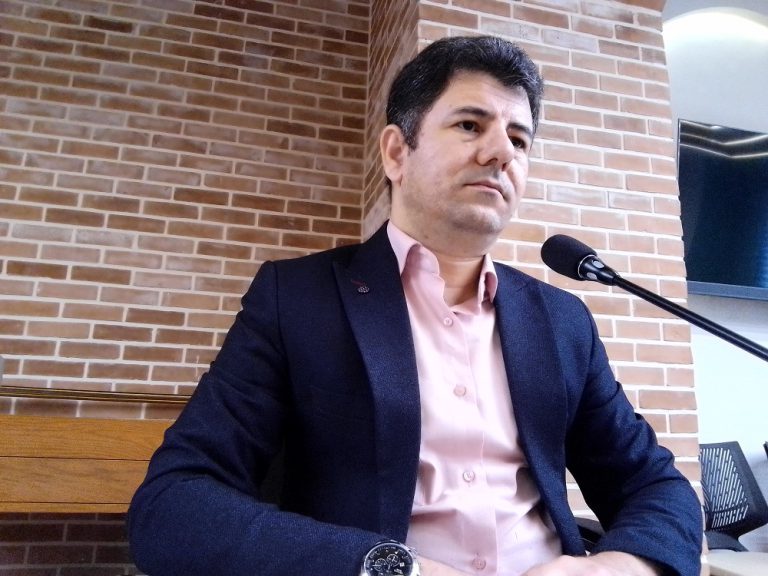 In an era where digital technologies and artificial intelligence are redefining the boundaries of war, terrorist factions, with the support of foreign powers, have become complex tools for hybrid-cognitive warfare against national security. The twelve-day war between Iran and the Zionist regime was a unique scene of the simultaneous use of artificial intelligence, advanced psychological operations, and media terrorism, in which opposition factions, using the latest digital techniques, designed