
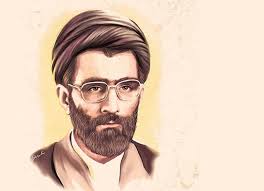
 Iran’s political and social history in the 1960s and 1970s is marked by figures who devoted their lives to political activism and opposition to the Pahlavi monarchy. Among them were individuals whose influence extended beyond political thought into organization and grassroots mobilization.
Hojatoleslam Seyyed Reza Kamiab was one such figure. Born in the village of Nowdeh Mirmehrab near Gonabad, he rose from a rural religious upbringing to become an organizer of revolutionary activities and, following the 1979 revolution, a member of Iran’s newly established political institutions.
A student and close associate of Ayatollah Ali Khamenei, Kamiab played a significant role in building networks of political and religious activists in cities including Mashhad, Kerman and Qazvin.
This article, published on the anniversary of his assassination, reviews key stages in Kamiab’s political and intellectual development and examines the circumstances that eventually made him a target of the Mujahedin-e Khalq (MEK) in 1981.
From a Village School to the Seminary
Seyyed Reza Kamiab was born in the summer of 1950 into a religious family in Nowdeh Mirmehrab, a village in the Gonabad region of northeastern Iran.
His father, Seyyed Ali, was a farmer, local religious figure and respected member of the community whose home frequently served as a place where residents sought advice on religious and social matters.
Growing up in this environment introduced Kamiab from an early age to religious life, community responsibility and opposition to injustice.
At the age of 13, he began formal religious studies. After completing introductory studies in Arabic literature and Islamic jurisprudence in Gonabad, he moved to Mashhad to continue his education at the city’s prominent seminaries.
He became known among his peers as a disciplined and academically ambitious student. His room at the seminary was reportedly not only a place for studying traditional religious texts but also a gathering point for discussions about contemporary political developments in Iran and the wider Muslim world.
A Political Awakening Amid Disaster
A major turning point in Kamiab’s life came after the devastating earthquake that struck the Kakhek and Ferdows regions in September 1968.
As a young seminarian, Kamiab volunteered for relief work and spent approximately two months assisting survivors, helping clear rubble, distribute supplies and support displaced families.
It was during those relief efforts that he first became closely acquainted with Ayatollah Ali Khamenei, who had also traveled to the region to organize public assistance.
The relationship developed into a lasting political, intellectual and personal association. Khamenei later officiated Kamiab’s marriage ceremony.
Kamiab and several fellow seminarians subsequently encouraged Khamenei to establish Quran interpretation classes in Mashhad. According to accounts from the period, the sessions went beyond conventional religious instruction and became venues for discussing Islamic political thought, political activism and responses to Marxist and eclectic ideological currents.
SAVAK, the Pahlavi-era security service, closely monitored the classes and repeatedly sought to shut them down.
Despite those restrictions, the relationship between teacher and student continued through meetings in mosques, private homes and other locations.
Open Confrontation with the Pahlavi State
Kamiab’s association with Khamenei and other prominent clerical activists in Khorasan, including Seyyed Abdolkarim Hasheminejad and Abbas Vaez-Tabasi, gradually transformed him from a religious student into an active political organizer and public speaker.
His early political activities intensified around the time of the 2,500th anniversary celebrations of the Persian monarchy.
Opponents of the Pahlavi government viewed the lavish celebrations as an attempt to promote pre-Islamic nationalism while ignoring economic inequality and political repression.
Kamiab’s sermons during this period drew the attention of SAVAK. He increasingly used religious gatherings to criticize the monarchy and discuss political issues.
When leading clerics were imprisoned or exiled, Kamiab sometimes assumed their public religious responsibilities, including leading congregational prayers at Imam Hassan Mojtaba Mosque in Mashhad.
Taking the Message Beyond Mashhad
Kamiab believed political activism should not remain confined to major centers such as Mashhad or Tehran.
He therefore traveled extensively across the country, combining religious preaching with political organization.
In northern cities including Gonbad-e Kavus and Aliabad-e Katul, his speeches reportedly attracted both large audiences and the attention of the security services.
One of the most significant chapters of his political activity, however, took place in Kerman Province.
Kamiab traveled to Kerman in late 1977 and again in September 1978, during a period of rapidly escalating anti-government unrest.
In speeches delivered at local mosques, he openly criticized the Pahlavi monarchy and argued that an Islamic political system should replace it.
Among the venues where he spoke was Qaem Mosque, where he held discussions with a relatively small group of young activists.
One of those who later recalled attending the sessions was Qassem Soleimani, who decades later became commander of the Islamic Revolutionary Guard Corps’ Quds Force.
In his autobiographical writings, Soleimani recalled:
“In the late 1970s, I regularly attended Kerman’s Grand Mosque, Qaem Mosque for Mr. Haghighi’s Quran lessons, and Fatemieh Takyeh, which was almost a permanent gathering place for me. Toward the end of 1977, a cleric named Seyyed Reza Kamiab came to Kerman and began holding discussions at Qaem Mosque. Only a small number of people attended. His meetings were relatively limited.”
Kamiab’s speeches nevertheless gained a wider following and contributed to growing political mobilization in Kerman.
Following the October 1978 attack on Kerman’s Grand Mosque, SAVAK documents reportedly identified Kamiab as one of three prominent figures helping organize anti-government activity in the province and issued orders for his arrest.
Organizing the Revolutionary Movement in Khorasan
As political unrest intensified in 1978, opposition networks in Khorasan became more organized.
Kamiab, working with Khamenei and other revolutionary clerics, helped establish and organize the Association of Combatant Clergy of Khorasan.
The group issued political statements, coordinated strikes and helped organize demonstrations, particularly in Mashhad.
Kamiab also participated in major sit-ins and protests, including the occupation of Shahreza Hospital—later renamed Imam Reza Hospital—in Mashhad.
Security forces eventually moved against demonstrators there.
Accounts of the period describe Kamiab as an important intermediary among clerics, physicians, university figures, merchants and workers.
SAVAK reportedly planned to arrest him alongside other leading revolutionary figures in Mashhad, but the plan was not successfully carried out.
After the Revolution: Confrontation with the MEK
Following the overthrow of the Pahlavi monarchy in 1979, Kamiab became involved in several institutions of the new Islamic Republic.
He worked in the ideological-political section of the military, participated in the Islamic Revolution Committees and became active in the Islamic Republican Party.
Following the June 28, 1981 bombing of the Islamic Republican Party headquarters in Tehran, voters in Mashhad elected Kamiab to parliament in a by-election.
His supporters regarded the result as evidence of his strong local political base.
Why Was Kamiab Assassinated?
Kamiab was assassinated on July 30, 1981, approximately one month after the Islamic Republican Party bombing.
Iranian accounts attribute the attack to the Mujahedin-e Khalq.
Several factors have been cited to explain why he became a target.
1. Organizational Ability and Social Influence
Kamiab was not merely a cleric or public speaker. He had demonstrated an ability to establish political networks, mobilize local communities and communicate with different social groups.
From the MEK’s perspective, such organizational skills posed a significant obstacle at a time when the group had entered into armed confrontation with the Islamic Republic.
2. Close Ties to Revolutionary Leadership
Kamiab had longstanding ties with Ayatollah Khamenei and other senior revolutionary clerics in Khorasan.
The MEK’s armed campaign in the early 1980s included attacks on senior political figures and individuals regarded as important links within the new political establishment.
Kamiab’s position placed him within that network.
3. Role in Consolidating New Institutions
His activities in the Islamic Republican Party, the military and revolutionary committees made him one of the figures involved in consolidating the post-revolutionary political order.
That role made him a natural target for an organization seeking to undermine the institutions of the Islamic Republic.
4. Ideological Confrontation
Kamiab was also a vocal critic of the MEK’s ideology.
Religious figures opposed to the organization accused it of combining Islamic terminology with Marxist and other ideological influences.
Kamiab’s command of Islamic theology and his public-speaking abilities made him an effective ideological opponent.
According to accounts attributed to his family, the MEK regarded him as an influential intellectual and political organizer. He had reportedly received repeated telephone and written threats before his assassination.
Assassination in Mashhad
On July 30, 1981, Kamiab was traveling in a Paykan automobile near the intersection of Rah-Ahan Boulevard—later renamed Shahid Kamiab Boulevard—and Khajeh Rabie Street, now Ayatollah Ebadi Street, in Mashhad.
Gunmen opened fire on the vehicle, striking him in the shoulder and body.
Kamiab was killed at the age of 31.
Following a large funeral procession in Mashhad, he was buried in the Dar al-Zohd portico of the Imam Reza Shrine.
For his supporters, Kamiab’s death came to symbolize both the violence of the turbulent early years after the revolution and the political cost borne by figures involved in establishing the new system.
His political and organizational legacy continues to be remembered by those who regard him as an important figure in the revolutionary movement in Khorasan.
By Dr. Javad Navaian Roudsari