
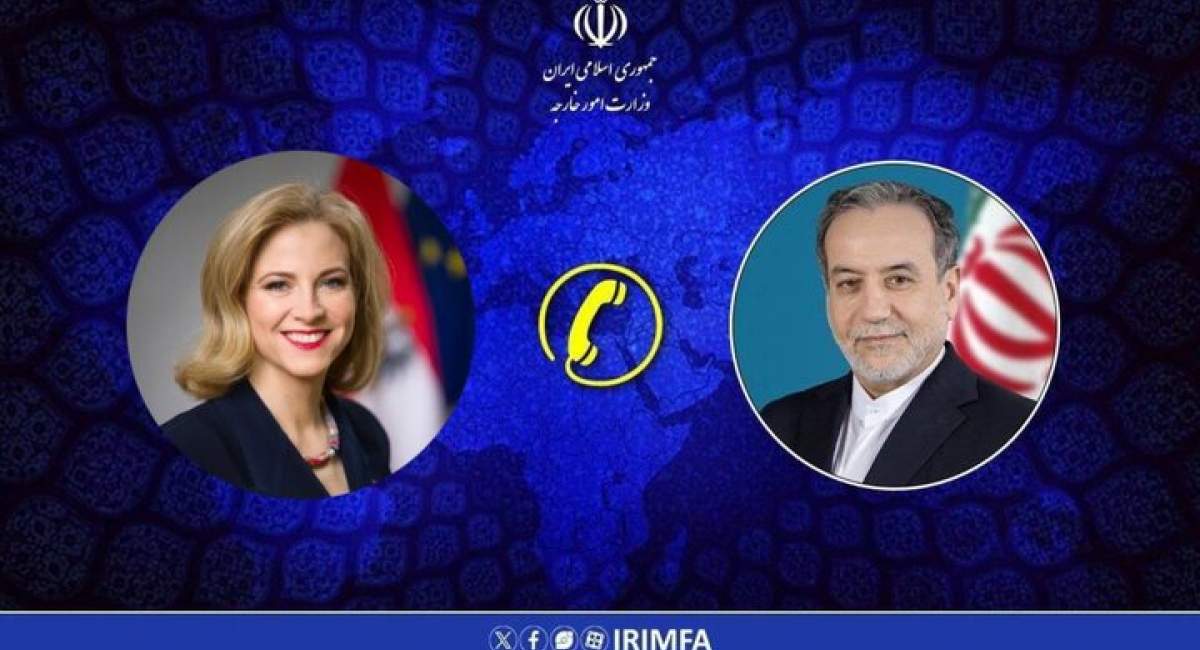
 Iranian Foreign Minister Abbas Araghchi has condemned what he described as the European Union’s “interventionist” approach toward Iran and its support for anti-Iranian terrorist elements during a telephone conversation with his Austrian counterpart.
According to Jahan News, Araghchi and Austrian Foreign Minister Beate Meinl-Reisinger discussed bilateral relations as well as recent regional and international developments.
During the call, Araghchi briefed his Austrian counterpart on regional developments, including Iran-Oman talks aimed at establishing mechanisms for the future management of the Strait of Hormuz.
He argued that the current tensions were the result of what Tehran considers unlawful U.S. and Israeli military action against Iran.
Araghchi said Iran had entered the diplomatic process in good faith and that an agreement to end the war had been signed on June 18. He accused the United States of subsequently violating the agreement by imposing what he described as a maritime blockade on Iran and carrying out extensive attacks on Iranian military and civilian targets.
Those actions, he said, had escalated regional tensions and contributed to instability in the Strait of Hormuz.
The Iranian foreign minister also referred to continuing Israeli military operations in Gaza and Lebanon, criticizing what he described as the European Union’s passive response and the broad support provided to Israel by several European governments.
He argued that this support had contributed to the continuation of Israeli occupation and what Tehran describes as genocide in the occupied Palestinian territories, and called on the European Union to reassess its policies toward West Asia.
Araghchi also condemned what he described as the EU’s interventionist stance toward Iran and its support for anti-Iranian terrorist elements.
Meinl-Reisinger, for her part, outlined Austria’s position on regional developments and emphasized the importance of restoring stability and security through diplomatic means and returning regional conditions to normal.