 From the early years following Iran’s 1979 revolution, the Mujahedin-e Khalq (MEK) sought to expand its political influence and ultimately seize power. The organization became involved in political infiltration, assassinations and armed attacks before later aligning itself with Saddam Hussein’s Iraq during the Iran-Iraq War.
Rather than strengthening the MEK’s position inside Iran, these developments severely diminished what remained of its domestic support base.
Against this backdrop, in July 1988, the organization launched what would become its largest military offensive into Iranian territory. The MEK called the operation Forough-e Javidan, or Eternal Light, and its leadership anticipated a rapid advance toward Tehran.
The offensive began at around 4 p.m. on Monday, July 25, 1988, from the Khosravi border crossing.
MEK forces advanced with Iraqi air support and heavy artillery fire, moving through Qasr-e Shirin and Kerend-e Gharb before reaching the outskirts of Islamabad-e Gharb in less than six hours.
One of the darkest and less frequently discussed aspects of the offensive concerns allegations of attacks on civilians along the route.
As reports of the MEK advance spread, fear swept through towns and villages in the area. Unarmed civilians began fleeing their homes in search of safety, but a number of them were caught in the fighting.
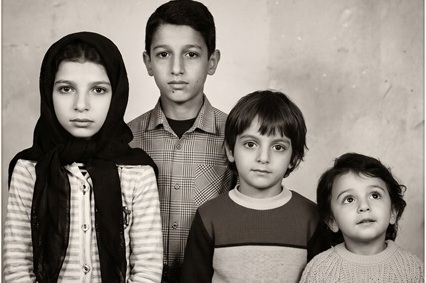
Among the most tragic cases was that of the Sharifi family. The family lived in the village of Aliabad, roughly 10 kilometers from Islamabad-e Gharb. As the sound of gunfire and approaching armored vehicles grew closer, they got into their car and attempted to escape, like many other residents of the area.
According to accounts of the incident, MEK fighters opened fire on the vehicle despite its civilian occupants.
Four children from the same family were killed:
Noushin Sharifi, 3
Marzieh Sharifi, 8
Ali Akbar Sharifi, 12
Soudabeh Sharifi, 14
Their father, Alireza Sharifi, was a local caretaker.
The deaths of the four children remain among the most painful civilian stories associated with the MEK’s 1988 offensive in western Iran.