
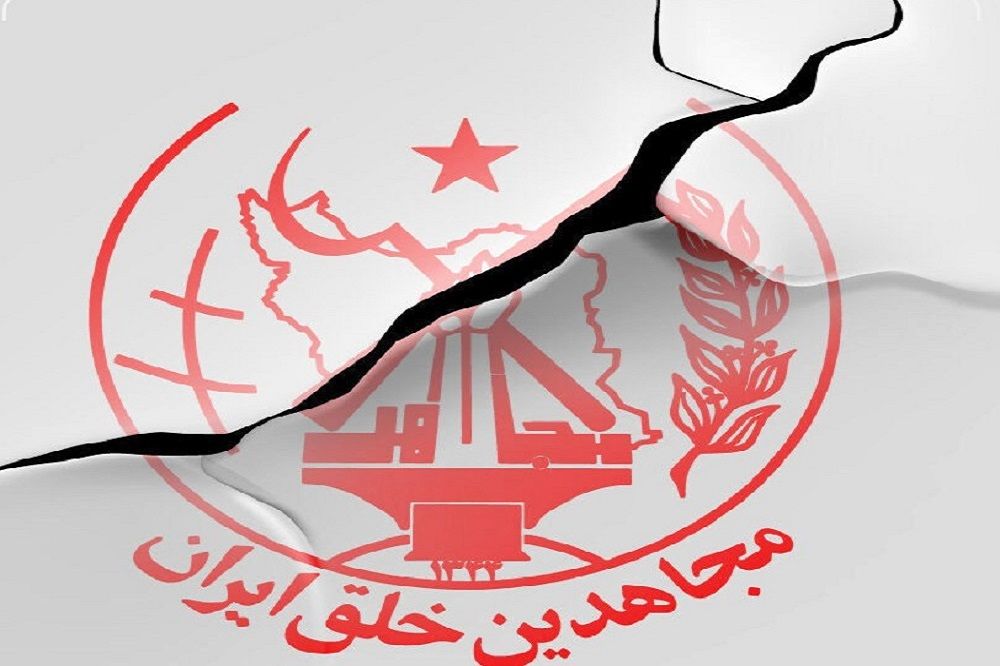
 History is less a graveyard of past events than a place where old questions continually return.
Every generation revisits the past in search of lessons and in an effort to better understand the road ahead.
Operation Mersad belongs to that category of historical events.
If we regard it merely as the final major military confrontation of the eight-year Iran-Iraq War, we fail to grasp its wider significance.
Mersad is a lesson that must be read repeatedly, because even if an organization is defeated, the patterns of duplicity and infiltration associated with it can survive.
On July 27, 1988, the Islamic Republic confronted an organization that had moved beyond political opposition and become part of Saddam Hussein’s war machine.
At that point, the issue was no longer political competition or even ideological confrontation. The organization had aligned itself with a foreign army at war with Iran.
Military defeat could cripple such an organization, but surgery alone is not the entirety of medicine.
The same principle applies to social, cultural and security challenges.
We should not imagine that crushing one destructive organization automatically closes the door on the conditions that allowed it to emerge.
Political history repeatedly demonstrates that organizations can die while patterns of behavior return, provided the social and political conditions that sustained them remain in place.
Names change. Faces change. But an untreated disease may return with different symptoms.
For that reason, perhaps the more important question today is not simply how to discuss the MEK, but how to understand the broader phenomenon of duplicity, infiltration and false loyalty.
In the 1980s, that phenomenon manifested itself through weapons, bombings and assassinations.
If it were to re-emerge today, however, it would not necessarily use the same tools. The nature of conflict has changed.
Today, the battlefield is often the public mind rather than the street. The target may be institutional credibility rather than the human body. Instead of physical assassination, the objective may be to discredit and remove valuable individuals from public life.
A society that systematically cuts down its most capable figures will eventually find itself politically directionless.
No country is governed by institutions alone. Countries also need nationally respected figures—individuals who can embody public confidence at critical moments and serve as bridges between society and the state.
If such assets are gradually exhausted through constant attacks, accusations and exclusion, little will remain to rely upon in moments of crisis.
This is one of the problems we face today. Some of Iran’s prominent figures were physically eliminated by hostile actors. Others have been damaged by our own words and actions.
The result is a shortage of broadly trusted national figures capable of serving as common points of reference.
Perhaps when we attacked respected individuals in the past—and perhaps even when we do so today—we failed to recognize that we were destroying reserves of social trust that might one day be urgently needed.
Whatever the intention, the result can be the same.
Infiltration has consequences. Even with good intentions, we have sometimes confused outward conformity with genuine commitment and created conditions in which those skilled at appearances can advance more easily than those with independent minds.
We established a single mold and expected everyone to fit it. That, ironically, can make infiltration cheaper and easier.
Mohammad Reza Kolahi, Massoud Keshmiri and others accused of major acts of infiltration looked, on the surface, little different from genuine revolutionaries.
Their rhetoric could even be more radical. That should serve as a warning. An adversary can learn how to manufacture people who look alike.
What is far more difficult is cultivating honest, independent and responsible individuals. Such independence may at times be mistaken for disloyalty, but genuine commitment should ultimately be judged by conduct rather than appearance.
A culture obsessed with appearances provides fertile ground for duplicity.
It emerges when outward form replaces substance and loyalty to a template replaces loyalty to truth.
The danger is that individuals may display every outward sign of conformity while, in practice, weakening the very system they claim to support.
This is perhaps the most complicated form of duplicity because it is difficult to detect from outside and can inflict greater damage from within.
Iran has already paid a considerable price for this kind of infiltration. Even today, careful observation shows that individuals with respectable appearances can sometimes damage some of the country’s most credible figures.
They may even influence flawed decision-making, producing outcomes that foreign adversaries could not achieve through direct intervention. That is why vigilance remains essential.
The underlying phenomenon can take root even if not a single member of the old MEK organization were left alive. What Iran therefore needs is a victory larger than Mersad itself.
The greater victory would be to eliminate the conditions that allow duplicity and infiltration to reproduce themselves. Sustainable security is not produced by military strength alone.
It depends on a society in which destructive networks cannot easily organize, talent is not sacrificed to narrow-mindedness and differences of opinion do not lead to the elimination of valuable national figures.
By Gholamreza Bani-Asadi