
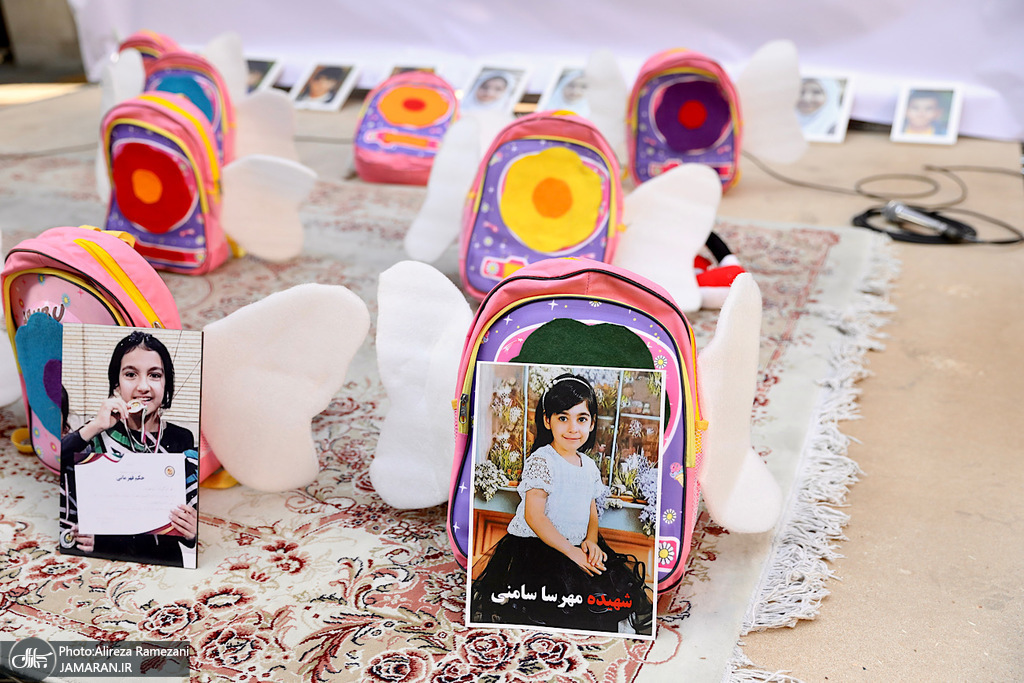
 Dr. Fatemeh Azarkhordad, university professor, psychologist, and counselor, speaks with Habilian about the signs, consequences, and strategies for dealing with the trauma of terror in children.
Dr. Azarkhordad, as a first question, why is terror and violence more damaging and profound for a child than for an adult?
Let me start with a basic principle. A child is just beginning to understand the world. According to Erikson's theory, the first sense that forms within them is "trust" or "mistrust" toward the world around them. An infant, when hungry and fed, or when frightened and held in warm arms, learns that "the world is a safe place."
Now let's introduce violence and terror into this equation. What kind of world is built for a child who witnesses their father's assassination or hears an explosion at school? A world that, in an instant, becomes an unsafe, terrifying place full of hidden threats. The foundation of trust is destroyed before it is even built.
For adults, violence is hard, but they at least have a previous image of "security" in their minds. For a child, however, a single incident can define the entire meaning of life as "insecurity." And that is where the depth of the tragedy becomes clear.
How does this damage manifest in a child's behavior and emotions? What signs should families take seriously?
Based on available studies and statistics, children who are victims of terror or war experience a wide range of symptoms.
The most common are nightmares. Research shows that up to 84 percent of these children suffer from nightmares. Then there is aggression—biting, hitting, destroying things, or restless screaming. Or conversely, withdrawal and isolation, which can be a sign of depression—seen in up to 55 percent of cases in some studies.
But the most significant and common disorder is Post-Traumatic Stress Disorder (PTSD). This disorder affects between 35 and 79 percent of children who are victims of terror. A child with PTSD constantly relives the event in their mind, perceives any loud noise as a new threat, is afraid to go to school, and wakes up screaming from nightmares at night.
In the recent 12-day war, some unofficial reports suggested that over 90 percent of those involved suffered from acute psychological disorders. For children, that figure is certainly higher, as they have fewer tools to process such experiences.
Are these damages only short-term, or do they have long-term effects as well? Can the structure of a child's brain also change?
That is a very important question. Unfortunately, I must say these damages are never short-term. Trauma changes not only behavior and emotions but also the structure of the brain.
Research shows that about 15 to 30 percent of children who are victims of terror suffer from memory and learning impairments. Their concentration diminishes, they forget previously learned material, and they lose the ability to learn new information. Additionally, anxiety disorders are seen in 30 to 70 percent of these children.
But the more shocking point is the long-term effects into adulthood. Studies show that individuals who experienced terror or severe violence in childhood are 3.5 times more likely to suffer from depression, 4 times more likely to struggle with addiction, and 12 times more likely to attempt suicide than the global average.
These statistics show that the wound of terror is not a superficial one that heals quickly. Its depth reaches the very fabric of the human brain and psyche, and if left untreated, it can accompany a person for years and decades.
In your notes, you referenced accounts from survivors that are very bitter and real. Could you share some of them so that the audience can feel the depth of this tragedy?
Certainly. These narratives are always more profound to me than any statistic. Let me share a few examples with you.
A 10-year-old child, a survivor of a terrorist attack, told us: "I still hear the sound of the bomb in my head, as if I'm still trapped in the school basement." That is a short sentence, but it contains everything we need to know about PTSD. Years later, that sound is still in their mind.
Arteen, one of the survivors of the Shah Cheragh terrorist incident, recounted: "The worst sound for me is gunfire. At night I dream that they're shooting at me. I miss my mom. She wishes she could go back to the quiet days before the attack." His older sister, Fatemeh, also told us: "Arteen screams at night and is afraid of the dark. We live together, but the wounds are deep."
Another survivor, who as a child experienced the explosion at the Seyyed al-Shohada Hosseinieh in Shiraz, told us ten years after the incident: "That night I was playing with my sister. Suddenly there was smoke everywhere and screaming. My sister is gone... Every time I hear an explosion, my body goes weak. I wish I could forget."
And a 30-year-old survivor, who lost his father when he was seven, said this: "At first everything seemed normal. But years later, the nightmares began. Terrorism doesn't just destroy life—it destroys childhood."
Another point I should mention is that out of 12 adult survivors we invited for interviews, none agreed to speak. That in itself is a very important clinical sign. It means these individuals are so damaged that they cannot even speak about the experience. This reflects a lack of assertiveness, an inability to express oneself, and a deep psychological wound that remains with them.
Sometimes we see some of these survivors appear outwardly successful—they become doctors or engineers. Does that mean they are psychologically healthy?
No, definitely not. That is a dangerous and mistaken belief. Outward success never equates to psychological well-being.
You might see a survivor who has become a doctor or engineer, has a good job, a house, and a car. But what is happening beneath the surface of their life?
In my clinical practice, I have repeatedly seen individuals who appear very successful on the outside but are internally struggling with low self-esteem. They don't like themselves; they see themselves as worthless. They lack assertiveness; they cannot express their needs and expectations. They have problems in social relationships; they cannot trust others or build deep, lasting friendships. And most importantly, they carry a chronic sense of insecurity—as if they are always waiting for a disaster.
I always say in counseling sessions: "When there is no self-esteem, outward success has no value." You can be a doctor but not enjoy life. You can be an engineer but wake up from nightmares at night. Outward success is merely a bandage over a wound that has festered beneath.
If a family is faced with a child who has been a victim of terror or war, where should they begin? What can they do?
That is a very good question. Based on international trauma intervention protocols, we design interventions at three levels. But the most important and impactful stage is Level One, which takes place within the first 24 to 72 hours after the incident.
At this stage, the actions are simple but vital:
First: Psychological first aid—hold the child, give them a sense of security, speak to them in a calm voice. Remove them from the scene of the incident.
Second: Address their immediate needs—water, food, warm clothing, a safe place to sleep.
Third: Provide safe, unstructured play. Let the child play freely. For a child, play is like talking for an adult.
Fourth: Try to maintain their daily routine. If they always slept at 9 p.m., keep that schedule. If they had a habit of playing with a specific toy, provide it for them.
Fifth: Connect the child to support resources (psychologist, social worker), and have parents or caregivers accompany them as much as possible.
At Level Two, more specialized interventions are carried out, such as trauma-focused cognitive-behavioral therapy, where we help the child express their feelings (rather than saying "don't cry") and identify and correct dysfunctional thoughts. Techniques such as art therapy, play therapy, sand tray therapy, and even animal-assisted therapy are also used at this level.
At Level Three, long-term interventions are carried out, including medication (when needed), survivor peer groups, meaning-centered therapy, and ongoing social support.
But a key point: the best treatment is prevention. If a child experiences a secure attachment style in their early years—knowing that a kind and responsive adult is always there for them—they will have greater resilience even when faced with war and terror. This is based on John Bowlby's attachment theory and Viktor Frankl's meaning-centered therapy. A secure parenting style is the most fundamental protective shield against the psychological damage caused by terror and violence.
If you could deliver a final message to the audience of this special feature, on the occasion of the International Day of Innocent Children Victims of Aggression, what would you say?
I would say: Trauma affects not only the moment of the incident but the entire developmental trajectory of a child. Successful interventions, in addition to managing acute symptoms, must work to rebuild the child's "cognitive lens" toward the world, others, and themselves.
This cannot be accomplished by any one party alone. It requires the cooperation of three pillars: the families of victims (who are the primary owners of the experience and the pain), psychology professionals (who possess the knowledge of intervention), and policy-making and support institutions (who must provide the infrastructure).
Habilian Association, as the voice of the families of terror victims, sees itself as a bridge between the silent suffering of victims and the specialized knowledge of healing.
In conclusion, we honor the memory of all the children who have been victims of terror and aggression—from Sana, just two months old, to Amir-Ali, 13 years old—and we hope that one day, no child anywhere in the world will taste the bitter experience of terror and war.