
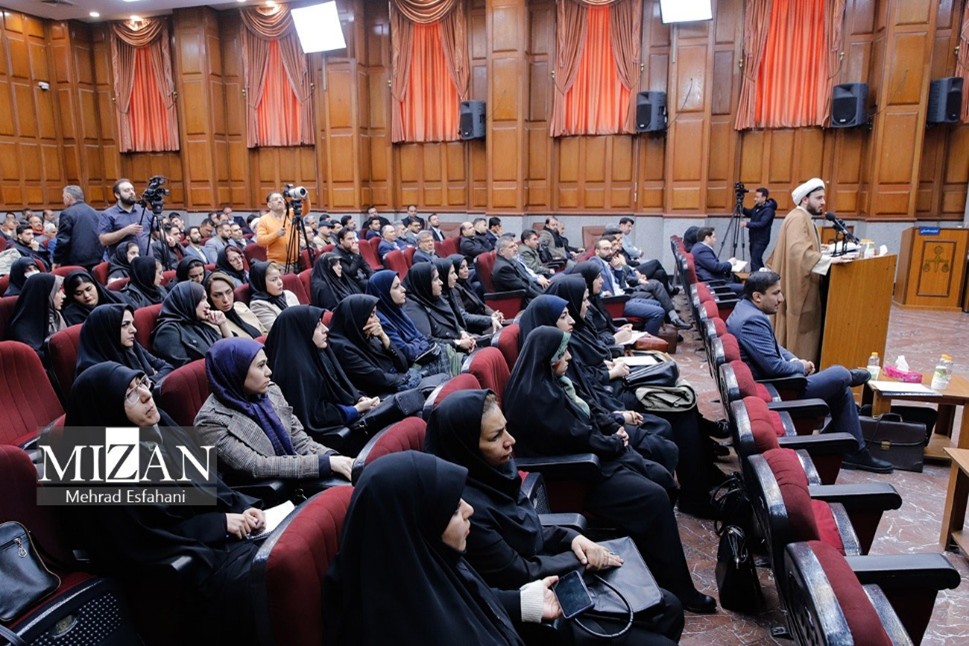
 In the 53rd session of the trial concerning the charges against 104 members of the Mujahedin-e Khalq Organization (MEK), also known as the Monafeqin, held on February 3, 2026, at Branch 11 of the Criminal Court of Tehran Province, the court continued its examination of the group’s long history of terrorist activities. Presided over by Judge Amirreza Dehghani, with advisors Morteza Turk and Amin Naseri, the session featured testimony from a defected member of the organization who drew direct parallels between the MEK’s actions during the 1981 unrest (30 Khordad 1360) and their role in the recent disturbances in Iran.
The plaintiffs’ lawyer, Hojjatoleslam Madah, presented detailed evidence of the MEK’s systematic terrorist operations, including the “Eternal Light” (Forough Javidan) operation, during which thousands of civilians and security personnel were killed or injured. He emphasized that the group’s claim of “political motives” cannot justify the massacre of innocent civilians, including children, and called for the application of charges such as moharebeh and ifsad fil-arz. The lawyer argued that the MEK operates as a structured terrorist organization in which even members in supportive roles are complicit due to their awareness of the group’s criminal objectives.
A defected member testified about the internal dynamics of the MEK, describing how members were isolated, subjected to psychological pressure, and forced to obey orders without independent will. He recounted how Massoud Rajavi used brainwashing techniques, ideological indoctrination, and fear to control members, and provided examples of how the group collaborated with Saddam Hussein’s regime during the Iran-Iraq War. The witness also highlighted the MEK’s media propaganda and its efforts to portray its violent actions as legitimate political resistance.
The session reinforced the plaintiffs’ demand for full accountability, portraying the Mujahedin-e Khalq not as a political opposition but as a criminal entity with a persistent record of violence against Iranian civilians. The court scheduled the next hearing while emphasizing the need for precise documentation of victim numbers and the MEK’s command structure.