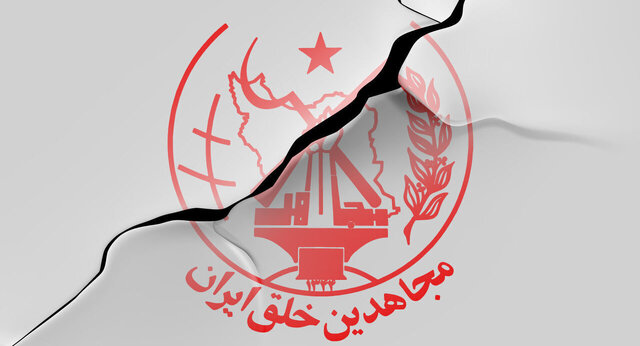
 The name Carlo Ciccioli first appeared in publicly released reports by the Mojahedin-e Khalq Organization (MEK) on December 29, 2009. As chairman of the Italian Committee of Parliamentarians and Citizens for a Free Iran—a lobbying group established with MEK support—Ciccioli issued a statement criticizing the Iranian government and, while repeating MEK claims and rhetoric, accused Tehran of suppressing protesters.
Exactly two months later, Ciccioli participated in a hearing held jointly by the Foreign Affairs Committees of the Italian Senate and Chamber of Deputies, attended by Italy’s foreign minister. The meeting focused on the status of the MEK in Iraq, efforts to remove the group from terrorist lists, Iran’s nuclear file, and sanctions against Iran.
On July 7, 2010, acting as a member of the Italian Parliament and chairman of the so-called Parliamentarians for a Free Iran committee, Ciccioli issued a statement coinciding with the MEK’s annual gathering in Paris. In it, he expressed support for the MEK and its leader, Maryam Rajavi, and described Camp Ashraf in Iraq—where MEK members were housed and which for decades served as a center for planning and dispatching operatives for terrorist attacks and bombings inside Iranian cities—as a symbol of a free Iran.
These are only some examples of the extensive and unusual support this Italian parliamentarian has provided to a notorious organization that spent years on international terrorist lists and remains firmly embedded in the historical memory of the Iranian people. Rather than focusing his efforts on representing Italian voters and improving their conditions, Ciccioli has devoted years to offering comprehensive and questionable support to the MEK.
In late September 2010, following an MEK campaign against Iranian President Mahmoud Ahmadinejad and during Ahmadinejad’s visit to New York to address the United Nations General Assembly, Ciccioli took what was seen as an unjustifiable step by publicly opposing the presence of Iran’s elected president at the United Nations.
On January 24, 2011, Ciccioli and two other members of parliament, disregarding centuries of historical relations between Iran and Italy, called for Rome to sever ties with Tehran—a move that echoed the demands of the MEK and appeared intended to satisfy the organization.
Ciccioli is among the Italian politicians who have attended the MEK’s annual summer gatherings in Villepinte, near Paris, with airfare and hotel expenses fully paid by the organization. At these events he has spoken on the group’s behalf and engaged in lobbying activities. For example, in July 2012 he attended an MEK gathering in Paris and from there wrote to Ban Ki-moon, then Secretary-General of the United Nations, and former U.S. Secretary of State Hillary Clinton, urging them to support the MEK.
Ciccioli’s unusual relationship with the MEK has continued uninterrupted since 2009. Most recently, on April 22, 2026, he joined a number of European parliamentarians—including fellow Italian Member of the European Parliament Leoluca Orlando—at an event attended by Maryam Rajavi, where he publicly expressed support for both the organization and its leader.
Leoluca Orlando, another Italian politician, also has a long record of supporting the MEK. Although his history of involvement may not be as extensive as Ciccioli’s, his first known public support for the group appears to date back to early March 2008. At that time, a number of Italian parliamentarians sent a letter supporting the organization, then based at Camp Ashraf in Iraq, to the Iraqi president and the commander of U.S.-led multinational forces in Iraq.
Camp Ashraf was a vast tract of land in eastern Iraq that Saddam Hussein granted to the MEK during the 1980s to serve as one of its military bases. Following Saddam’s fall—the loss of the MEK’s principal ally and patron—the group’s remaining military and human resources were concentrated there by necessity.
In December 2017, while serving as mayor of Palermo, Orlando participated in and spoke at a conference organized by the National Council of Resistance of Iran (NCRI), the political wing and front organization of the MEK. The MEK’s website, describing Orlando as one of its oldest supporters, published portions of his remarks in support of the group’s leadership.
Although reports of Orlando’s support for the MEK disappeared from the organization’s media outlets for several years for unclear reasons, since 2025 there has been a noticeable resurgence in his activities supporting what the author describes as Saddam’s former private army. His appearance alongside Rajavi at two events in the European Parliament that year, a speech delivered at another parliamentary session in early April 2026, and his endorsement of the MEK in a letter sent to the President of the European Council in late April 2026 all indicate his renewed role in promoting the organization.
The questionable connections between Italian politicians and the MEK are not limited to Carlo Ciccioli and Leoluca Orlando. These two are merely examples of politicians who have become lobbyists for a controversial foreign organization with a troubled history. Giulio Terzi, Emanuele Pozzolo, Stefania Ascari, Lucio Malan, Elisabetta Zamparutti, Marco Scurria, Fabio Rampelli, Naike Gruppioni, Carlo Cottarelli, and Antonio Stango are among the Italian political figures who, in recent years, have devoted an extraordinary amount of attention to supporting this controversial armed group.
This level of support and investment of time on behalf of an unaccountable organization with opaque financial resources—one that many in the West describe as a closed cult—should, be a matter of concern for the Italian media and public opinion. The opening of judicial investigations could help shed further light on the nature of these individuals’ relationships with the MEK.
Previously, numerous reports had emerged concerning substantial financial payments made by the MEK to its supporters in the United States. Among the most notable cases were those involving political figures such as John Bolton and Rudy Giuliani, who were reported to have received hundreds of thousands of dollars from the organization for lobbying on its behalf.
For this reason, understanding the true nature of these relationships in Italy, as well as the political and security implications of supporting a controversial organization with a contentious history and an anti-Iranian agenda, deserves closer scrutiny.