
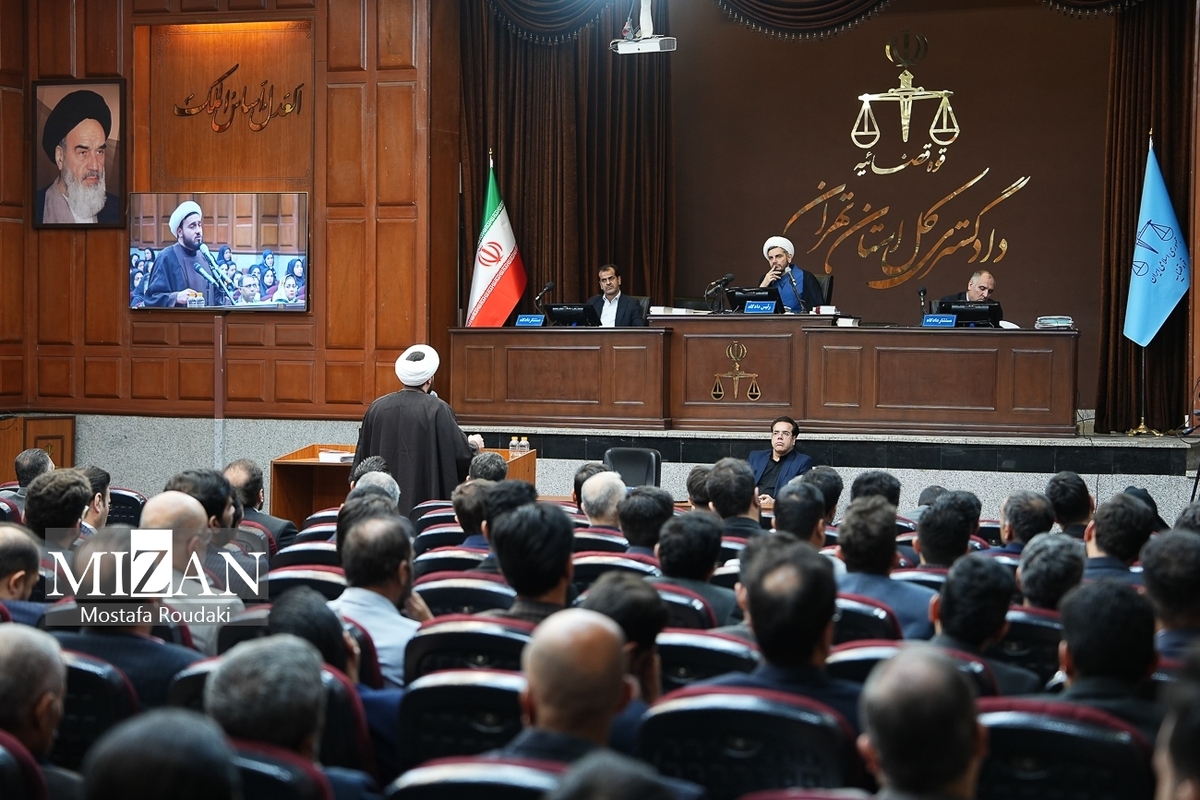
 The 51st session of the criminal court examining charges against 104 members of the Mujahedin-e Khalq (MEK) convened in Tehran, focusing on the group's alleged atrocities committed at a hospital in Islamabad-e Gharb. Presiding Judge Amir Reza Dehghani opened the session with a direct address to the media, emphasizing the critical role of journalists in recording "historical truth" and bridging the gap between the courtroom's legal findings and the public's conscience. He stated that the trial is not merely a legal procedure but a necessary step in documenting the group's violent history for future generations.
The core of the hearing centered on the testimony and legal analysis regarding the MEK's attack on the Imam Khomeini Hospital during their 1988 military incursion. Legal experts and prosecutors presented evidence that the group used medical facilities for military purposes, disrupted health services, and gathered civilians in the hospital courtyards to use as shields or targets. The prosecution argued that these actions constitute a "material breach" of international humanitarian law, specifically citing the violation of the Geneva Conventions which protect medical units and non-combatants during conflicts.
Dr. Khaghani Isfahani, a legal expert present at the court, detailed how the group’s actions fit the criteria for war crimes and crimes against humanity. He highlighted the "execution of the wounded" and the explicit orders given by MEK commanders to take no prisoners—often using terms like "cleansing" to describe their operations. Isfahani argued that shooting injured patients and medical staff, or issuing orders that imply the elimination of everyone in a facility, satisfies the material elements of international crimes, regardless of whether the victims were civilians or wounded combatants receiving care.
Concluding the session, the court reiterated that the MEK operated not as a legitimate party to a conflict but as a terrorist entity with a specific intent to cause mass casualties. The judge and legal experts stressed that the group's "systematic cruelty," including the terrorizing of patients and personnel, violates fundamental principles of necessity and proportionality in international law. The proceedings underscored the judiciary's resolve to hold the group accountable under both domestic and international legal standards for what was described as a "heinous massacre" of vulnerable individuals.