
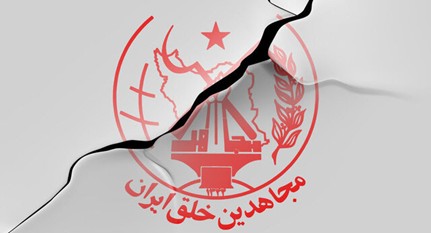
 All regional developments and equations over the past year have shown that the Mujahedin-e Khalq (MEK), as a dangerous terrorist cult, has even exhausted its usefulness for neoconservative and militarist American politicians who once tried to use the group as a tool and lever against Iran after the occupation of Iraq. The organization now has an expiration date for U.S. officials.
The Mujahedin-e Khalq Organization (MEK), a terrorist group with a complex history, has long been a subject of debate among American politicians. Founded in 1965, it initially fought the Pahlavi regime with a mixed ideology of revolutionary Islam and Marxism. After the 1979 Islamic Revolution, it became one of the fiercest opponents of the Islamic Republic. While some American politicians have supported the group as a tool against Iran, significant criticism has also come from other U.S. politicians and official institutions.
All regional developments over the past year have demonstrated that the Mujahedin, as a terrorist and dangerous cult, is considered spent even by neoconservative and militarist American politicians who sought to use it as a pressure factor against Iran following the occupation of Iraq. The following provides a comprehensive review of these criticisms, their reasons, and the related political context.
American politicians have openly and explicitly criticized the Mujahedin. Here are some examples:
1. Robert Hunter, former U.S. Ambassador to NATO
Robert Hunter has explicitly described the Mujahedin as a terrorist group and believes its name should be returned to the U.S. State Department’s list of terrorist organizations. He pointed to the group’s history of violent activities, including the assassination of American citizens in Iran in the 1970s. Hunter criticizes the group for its terrorist past and lack of legitimacy as a popular movement, calling American politicians’ support for it misguided.
2. Ned Price, State Department Spokesperson (in Biden administration)
In November 2022, the U.S. State Department issued a statement declaring that it does not recognize the Mujahedin as a democratic movement or representative of the Iranian people. Ned Price confirmed this position, noting that although the group was removed from the terrorist list in 2012, Washington does not consider it a reliable force to represent the Iranian people’s demands. Reasons include the group’s cooperation with Saddam Hussein during the Iran-Iraq War, allegations of human rights abuses within the organization, and its cult-like nature.
Some members of the U.S. Congress and critics of warmongering policies, particularly progressive Democrats such as Barbara Lee and others, have criticized support for the Mujahedin. They argue that the group’s violent past and lack of popularity among Iranians make it an unsuitable option, and that such support serves anti-Iranian policies rather than democracy in Iran. They also point to the large financial payments the Mujahedin make to American politicians for lobbying, viewing it as political corruption.
Jason Rezaian (Washington Post correspondent), who has experienced imprisonment in Iran, criticized American politicians’ support for the Mujahedin in a Washington Post article (published in both Persian and English), calling it horrifying. He emphasized that the group has no popular base in Iran and that support for it stems from financial lobbying rather than rational strategy.
Main reasons for criticism:
- History of violence and terrorism: The Mujahedin carried out violent actions in the 1970s and 1980s, including the assassination of six American citizens in Iran and attacks on U.S. interests. This record remains under criticism even after the group’s removal from the U.S. terrorist list in 2012 due to political pressure and lobbying.
- Cooperation with Saddam Hussein: Their support for Saddam during the Iran-Iraq War (1980–1988) and participation in military operations against Iran have led many Americans and Iranians to view the group as traitorous and untrustworthy.
- Cult-like structure and human rights violations: Numerous reports from defected members and independent investigations, including by Human Rights Watch, indicate that the Mujahedin operates a cult-like structure involving strict control of members, brainwashing, and suppression of internal dissent.
- Lack of popular legitimacy: Many American politicians and analysts, including State Department officials, believe the Mujahedin have no significant popular base in Iran and therefore cannot genuinely represent the Iranian opposition.
- Financial lobbying: Large payments to American politicians (such as Rudy Giuliani, John Bolton, and Mike Pompeo) for speeches and support have been criticized as buying political influence and undermining ethical principles in U.S. foreign policy.
Important note: While some prominent politicians like Mike Pompeo, John Bolton, and Mike Pence are staunch supporters of the Mujahedin, public criticisms often come from official government bodies (such as the State Department) or other politicians and members of Congress. This reveals a duality in the American approach: some see the group as a useful tool against Iran, while others consider it unreliable and unsuitable for support.
Political context of the criticisms includes partisan differences in the U.S., broader foreign policy considerations, and competition with other Iranian opposition groups. Consequences have included reduced influence of the Mujahedin in Washington, increased public awareness, and strengthened Iranian positions.
Supporting the Mujahedin is viewed by many as a strategic mistake for the United States. The criticisms highlight a deep duality in Washington’s approach. Ultimately, these criticisms are likely to further diminish the Mujahedin’s influence in U.S. policy unless the cult undergoes fundamental changes in structure and behavior — something that appears highly unlikely given its history and cult-like nature.
By Arash Rezaei