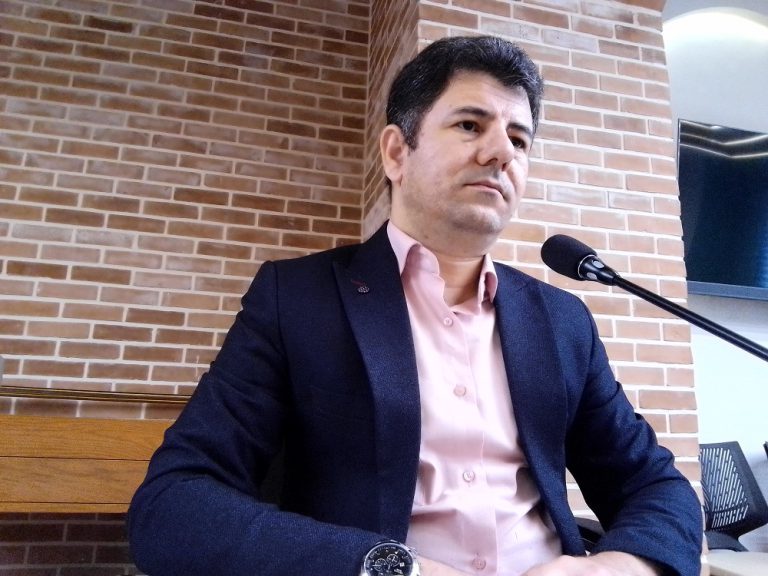
In an era where digital technologies and artificial intelligence are redefining the boundaries of war, terrorist factions, with the support of foreign powers, have become complex tools for hybrid-cognitive warfare against national security. The twelve-day war between Iran and the Zionist regime was a unique scene of the simultaneous use of artificial intelligence, advanced psychological operations, and media terrorism, in which opposition factions, using the latest digital techniques, designed and executed unprecedented attacks against the psyche of Iranian society. In this conversation with Dr. Seyed Abdolmajid Zavvari, a Ph.D. in International Relations and director of an International Relations think tank, we analyze the new dimensions of this threat. This conversation seeks to discover the hidden layers of the recent media-information war and provide strategies for strengthening cognitive immunity against new threats.
Considering the experience of the twelve-day war, which component of hybrid-cognitive warfare was executed by the enemy with the greatest effectiveness?
In the recent war, the enemy, with a combination of all tools of cognitive warfare, executed one of the most complex cognitive attacks against the people of Iran. In this war, all psychological, cyber, and media tools acted complementarily for each other; in such a way that through the analysis of internet and mobile phone user behavior, a massive amount of valuable data and information about the feelings, beliefs, geographical location, effectiveness of attacks, and generally the deepest social layers of Iran was made available to the enemy, and based on them, media scenarios were executed in the direction of intensifying psychological operations, inducing fear, promoting rumors, distrust, insecurity, calling for panic buying and creating artificial famines, calling for buying dollars and gold with the aim of collapsing the national currency, threatening some officials and military commanders, calling for declaring disavowal of the Islamic Republic, creating social war and calling for rebellion and urban warfare, creating doubt among various levels of officials, diplomats, and even military personnel about how to react to the enemy's aggressions or pursue them in international forums. On the other hand, influenced by this massive volume of poisonous news and media analyses, a huge volume of new despairing content and calls for impulsive actions were produced by users on social networks, all of which led to strengthening the cycle of fear, insecurity, and confusion, and ultimately achieving the goals of the enemy's psychological warfare.
How did terrorist factions use artificial intelligence and digital tools in the twelve-day war?
In the recent war, artificial intelligence played a prominent role in various fields, including in the production and dissemination of a massive volume of information and images, real or unreal. In my opinion, in the recent war, the most use of AI and digital tools by terrorist factions was in the field of producing a massive volume of content and the high speed of its dissemination on social networks, and ultimately turning these subjects into daily trends. Of course, this volume of operations was not possible without the direct cooperation of organizations and intelligence services.
In the recent war, how did international media institutions, in coordination with terrorist factions, help strengthen the enemy's narrative in the hybrid-cognitive war?
In my opinion, media like BBC and Iran International, primarily by inviting figures affiliated with terrorist factions, while giving weight and providing a platform for these individuals to present their views to the audience, provide these groups with the opportunity to both whitewash their past crimes and remove the stigma from their actions. Secondly, these individuals, who are introduced as experts, by presenting their poisonous views on issues such as exaggerating the enemy's power, downplaying or showing the ineffectiveness of Iran's attacks, inducing despair and hopelessness, and other techniques of cognitive warfare, ultimately seek to intensify the consequences of the enemy's psychological operations against Iranian citizens to persuade them to surrender unconditionally to the foreign enemy.
In the following, I mention examples of the news line of these media in the direction of intensifying the enemy's cognitive warfare:
Day One
• Implying Israel's superior power in confronting Iran due to the lightning attack and the elimination of a large number of the country's commanders and scientists.
• Iran's inability to respond.
Day Two to Nine
• The ineffectiveness of Iran's attacks on Israel.
• Calling for social rebellion by the people.
• Iran attacking residential areas.
• The absence of the Supreme Leader.
• Calling for panic buying of essential goods, currency, and dollars with the aim of creating artificial famine.
• Inducing fear of US participation in attacking Iran.
• Changing the system.
• Removing the stigma from the collaboration of some opposition groups with the enemy's aggression and emphasizing that "we cooperate with the enemy of our enemy (Israel) to fight the greater enemy (the Islamic Republic)."
Day Ten
• Exaggerating the US attack on Iran.
• Iran's inability to respond to the US and scenario-building about the destruction of all the country's infrastructure in case of attacking US interests.
Day Eleven
• Downplaying Iran's attack on the US Al-Udeid base and its ineffectiveness.
• Exaggerating the statements of Arab countries condemning Iran's attack.
• Creating ambiguity about the reason for Trump's tweet about a ceasefire.
• Fabricating stories that the reason for the ceasefire request by Trump and Netanyahu was their success in achieving their goal of destroying the nuclear program.
• Declaring Iran the loser without providing any specific reason.
• Calling on the people to rebel with the phrase: "We cleared the way for you, the rest is up to you!"
Last Day
• Presenting Israel's night attack as a trump card and evidence of Netanyahu's powerful victory.
• Drip-feeding the publication of Israeli casualties from Iran's heavy attack.
• Announcing the violation of the ceasefire by Iran and emphasizing the statements of Zionist officials about a severe response to Iran.
• Publishing several tweets from Trump blaming and preventing Netanyahu from any potential attack against Iran.
After the Ceasefire was Implemented
• Covering up the damages inflicted on Israel.
• Publishing several tweets and comments from Trump stating that all parties, including Iran, Israel, and the US, are winners of the battle.
• Publishing reports from US and Israeli intelligence institutions about the ineffectiveness of US and Israeli attacks in completely destroying Iran's nuclear facilities and emphasizing that these attacks only set back Iran's program by a few months.
What offensive solutions do you propose to counter the cognitive terrorism of terrorist groups? Has Iran had any successful actions in this field so far?
In general, the set of Iran's actions should be designed in such a way that the cost of cooperation with the enemy's media becomes so high that from a cost-benefit and risk calculation perspective, fewer people would be willing to cooperate with them. These actions can be through warning about the consequences of any cooperation with the enemy's media, revealing documents of their cooperation with intelligence organizations, discrediting them, and making the environment unsafe for the agents of these media.
While hacking the Iran International network, as groups like Hanzala have done, is a positive step, its true effectiveness depends on what happens next. To have a real impact, the leaked documents must be used to discredit the network with its Farsi-speaking audience. Furthermore, by raising the risks for those who cooperate with or send information to the network, its sources inside Iran can be cut off. Ultimately, increasing this pressure can lead key employees to leave, setting the stage for the network's dissolution.
Source: Farhikhtegan Newspaper