
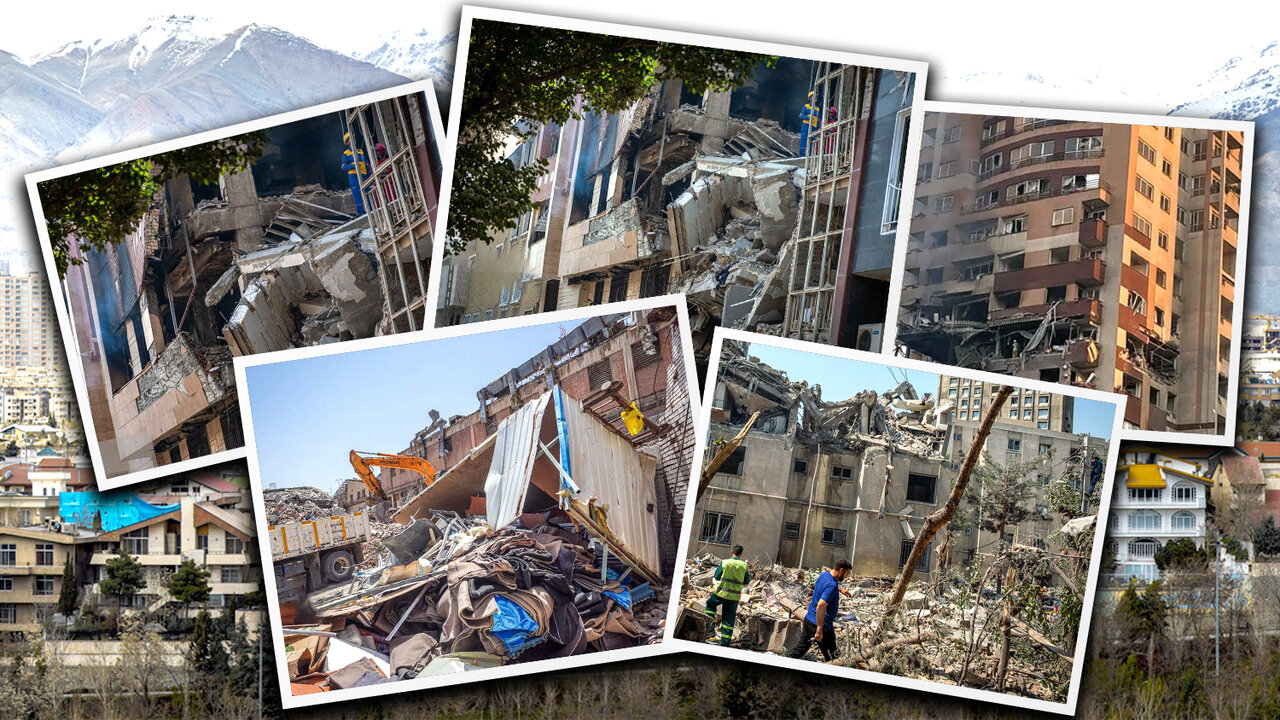
 June 13 marks the first anniversary of one of the darkest violations of international law in the region's contemporary history; the military attack by the Israeli regime which in political literature became known as the 12-day war. What distinguishes this event from many military actions is not merely the number of victims—over a thousand Iranians—but the nature of the targeting, the locations of the attacks, and the demographic composition of the victims. In this illegal aggression, a number of the country's military figures and scientists were targeted not on battlefields nor in military facilities far from residential areas, but inside their own homes alongside their families. Dozens of women and children also lost their lives in these attacks; innocent victims killed solely because they lived with individuals the criminal Israeli regime had defined as targets.
From the perspective of international law, these attacks are in clear opposition to the most fundamental humanitarian principles. The principle of distinction, stipulated in Article 48 of Protocol I Additional to the Geneva Conventions, obliges parties to conflict to always distinguish between civilians and combatants and between civilian and military objectives. Residential homes, regardless of who lives in them, are considered civilian as long as they are not directly converted into an active military base or command center. In the Israeli regime's attacks on Iran, none of the targeted residential units had a military function. Independent legal researchers who have examined this event have unanimously stated that even assuming a military person or scientist lived in that house, targeting the entire residential building along with the family without any prior warning is a gross violation of the principle of proportionality. The principle of proportionality, stated in Article 51 of the same Protocol, prohibits any attack where the incidental loss of civilian life would be excessive in relation to the concrete and direct military advantage anticipated.
Whereas in this operation, women and children under eighteen constitute a significant number of the martyrs — a proportion with no legal or moral justification. 132 women, 44 children and students, 14 scientific elites, 12 media personnel, and many aid workers and athletes... are testament to this unjustifiable, brutal, and terrorist behavior.
Another noteworthy point is the precautionary principle in attack, which obliges the attacking party to take all feasible precautions to verify the target is not civilian and to give effective advance warning. In the Israeli regime's attacks on residential homes in Iran, no prior warning was issued, whether through media, diplomatic channels, or by dropping leaflets. Families were directly hit during the night, without the slightest chance to evacuate. This pattern cannot be considered merely a intelligence error or unintentional collateral damage; evidence suggests that assassinating targets along with their families was part of the operational design. This very characteristic makes these actions analyzable within the framework of state terrorism. State terrorism refers to a situation where the governing institutions of a country systematically use violence against civilians as a tool for political intimidation, collective punishment, or achieving strategic goals. When a government uses its air power and intelligence to target a scientist in his private home next to his wife and child, and this pattern repeats in several locations, it can no longer be called a legitimate military operation; this is precisely what is called extrajudicial assassination and state terrorism in legal literature.
The international community has condemned numerous instances of such actions in past decades, including targeted attacks on residential homes in Gaza, Syria, Afghanistan, and Yemen. But what is concerning about the occupying regime's attack on Iran—both in the Second Imposed War and the Third—is the silence or neglect of international bodies regarding the dimensions of this catastrophe. While independent legal researchers have prepared legally admissible documentation of these attacks, and even instances of war crimes as defined in the Rome Statute of the International Criminal Court (including intentional attacks on residential homes and intentional killing of civilians) can be observed, there is still no serious political will to legally pursue this case. On the first anniversary of this attack, the moral and legal duty of international bodies, including the International Criminal Court and the Human Rights Council, is to open an independent file for this event and prosecute the perpetrators of this crime without discrimination among victims. Furthermore, international media that constantly emphasize human rights defense cannot remain silent in the face of documented reports of Iranian women and children being killed in their residential homes; a silence that in practice means legitimizing the pattern of state terrorism. One year after this incident, international judicial pursuit is not only a right for the victims' families but a test for the credibility of international law and the institutions responsible for its enforcement. If the international community cannot prevent the repetition of such crimes—as was repeated in the current war too—it must admit that the Geneva and Hague rules were written with double standards and designed to protect aggressors and bullies.