
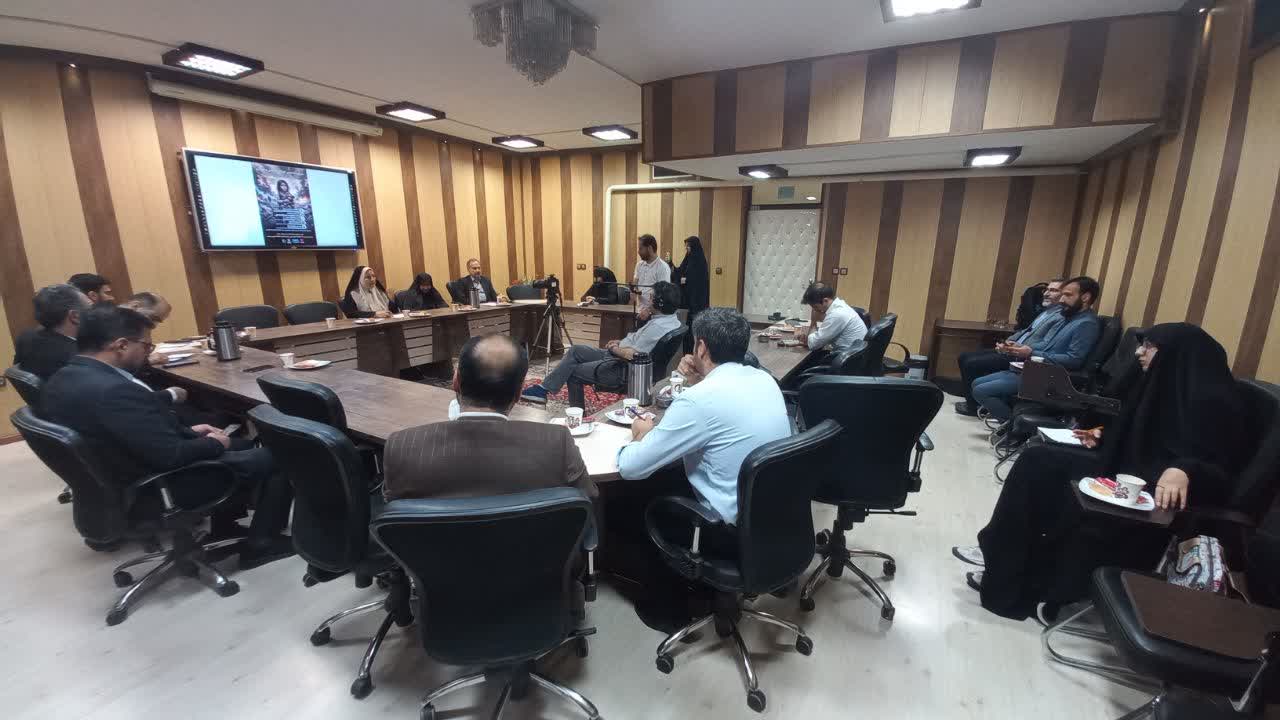
Habilian Association, on the occasion of the International Day of Innocent Children Victims of Aggression, organized the "Specialized Roundtable: Children in the Fire of Aggression: Field Experiences of Terror Trauma in Children" in cooperation with the Borsa Media Holding and the Faculty of Educational Sciences and Psychology, Ferdowsi University of Mashhad, on June 8.
This roundtable, integrating the three elements of scientific knowledge, lived experience, and media output across two panels (university psychologists/professors, and families of terror martyrs), aimed to conjoin the direct narrative of survivors with the specialized analysis of field psychologists.
The psychologists and professors panel began with a speech by Dr. Seyed Mohsen Asghari Nekah, Head of the Department of Counseling and Educational Psychology, Faculty of Educational Sciences and Psychology, Ferdowsi University of Mashhad. Welcoming the attendees as the host of the meeting, he spoke on the topic of trauma and grief from terror in children.
Following him, Dr. Mansoureh Abolhasani, faculty member of the same department, presented her field experiences of supportive and therapeutic interventions for survivors of the terrorist incident at the Shajareh Tayyebeh School in Minab. These experiences were the result of Dr. Abolhasani's mission to Minab to lead a team of psychologists from across the country aimed at healing the psychological wounds of victims in this city during the "Ramadan War."
Dr. Mahboubeh Qovadel Heidari, director of the "Bahara" Psychology Center in Zahedan, was another professor on this panel. In a speech titled "Distinctive Features of Terror Trauma in Children," she utilized her valuable observations and experiences in providing clinical services to victims of terror trauma in Sistan and Baluchestan province to explain the differences between this specific type of trauma and similar types, which was very well received by the audience.
The final speaker of this panel was Dr. Fatemeh Azar Khordad, a counselor, psychologist, and university lecturer, who shared her field experiences of supportive and therapeutic interventions for survivors of terrorist incidents at the Ali ibn Abi Talib (AS) Mosque in Zahedan and the Hosseiniyeh in Chabahar.
In the panel of families of terror martyrs, Seyed Mohammad Javad Hasheminejad, Secretary-General of the Habilian Association (and child of the martyred Ayatollah Hasheminejad); Mr. Mehdi Malazadeh Shahroudi and Mr. Seyed Hossein Kamyab, children of two terror martyrs of the 1980s martyred by the MKO; Mr. Mohammad Yaser Pardel, father of the martyred Sana Pardel (the youngest terror victim in Iran before the 2025 Imposed Wars); and Ms. Mesbah, mother of the martyred Mohaddeseh and Mohammad Reza Aghdasi and wife of the martyred Hojjat al-Islam Ahad Aghdasi, recounted memories and discussed the unmet needs of victims' families.
In the concluding part of the session, the psychologists and professors present analyzed the content expressed by the families of terror victims, discussed the responsibilities and opportunities facing the psychology community in dealing with victims of terror trauma, and read a statement addressed to the community and international institutions.