
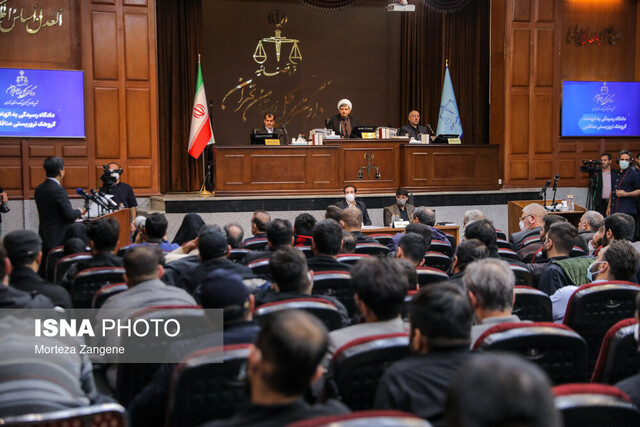
 In a stern address to the international community, the presiding judge of the 41st court session examining the charges against 104 members of the Mujahedin-e Khalq (MEK) warned European nations that harboring accused terrorists is a direct violation of international law.
Judge Dehghani, presiding over the Criminal Court of Tehran, focused his remarks on the legal contradictions evident in the foreign policy of several European states. He emphasized that these nations cannot logically or legally claim to be signatories to counter-terrorism conventions while simultaneously providing safe havens for individuals accused of heinous crimes. "It is not possible to sign an agreement to fight terrorism on one hand, and then host terrorists on the other," Dehghani stated, labeling such actions as a breach of the very treaties these countries have ratified.
The court criticized the "double standards" of Western governments, pointing to the severity of the dossier against the defendants. The charges include involvement in bombings, aircraft hijackings, and the torture of civilians. Judge Dehghani argued that allowing these individuals to operate freely, and in some cases granting them platforms within parliaments, undermines global security and contradicts the humanitarian values these host nations profess to uphold.
Concluding the session, the court issued a clear ultimatum regarding the principle of aut dedere aut judicare (extradite or prosecute). Judge Dehghani declared that if European countries refuse to extradite the accused to Iran, they are legally obligated to prosecute them in their own domestic courts. He warned that failing to do so—while continuing to offer political and media support—renders these nations complicit in the group's activities and violates their commitments to the global fight against terrorism.