 September 6 (15 Shahrivar) recalls one of the hundreds of crimes committed by the MEK terrorist group in Tehran. On the evening of that day, as shopkeepers and ordinary people were returning home from their daily work, a bombing on Khayyam Street left them in blood and ruins—from a three-year-old child to a sixty-year-old man.
"In a horrific explosion at 7:35 p.m. on Khayyam Street, opposite the Ministry of Industries parking lot and near the southern bus station, a number of humble people—tired from their daily work and heading home by bus, bicycle, or on foot—were martyred, and nearly 50 others were injured. Among the dead and wounded were people ranging from a three-year-old child to a sixty-year-old man."
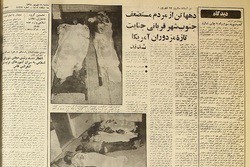
According to a report published in Kayhan newspaper on September 7, 1982 (16 Shahrivar 1361), the paper described how ten passenger cars, vans, and minibuses caught fire in the first moments of the explosion and turned into piles of twisted metal, with their passengers burning inside while trapped in the wreckage.
Kayhan quoted an eyewitness to this major crime: "The screams of several women and children burning under piles of fire, and headless and handless bodies scattered here and there, affected me so deeply that I nearly fainted and fell to the ground."
These few sentences describe one of the MEK's crimes against the Iranian people on September 6, 1982—one of hundreds of such crimes. A crime that left deep wounds on the walls of our cities.
Ettela'at newspaper also ran the headline "Details of the Bomb Explosion at Galubandak Intersection and the Massacre of Dozens of Innocent, Destitute Passersby" and reported the statement of the public relations officer of the Central Committee of the Islamic Revolution that "this bomb was handmade and extremely powerful, planted by the MEK. The explosion created a crater three meters wide and one and a half meters deep."
Seyed Mohammad-Javad Hasheminejad, Secretary-General of the Habilian Association, said the following about the MEK's crimes in assassinating innocent Iranians: "From June 20, 1981 (30 Khordad 1360) onward, the MEK officially entered its armed phase, and these assassinations continued for years. In these treacherous assassinations, 12,000 of our countrymen—including shopkeepers, ordinary people, and military personnel—were martyred by the MEK. Of course, we have identified 23,000 terror victims in the country, carried out by other terrorist groups as well as the governments of the United States and the Zionist regime."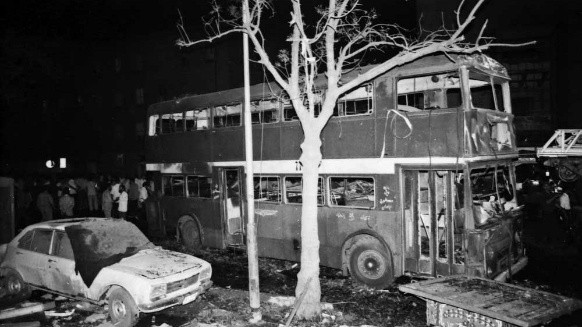
In the terrorist incident of September 6, 1982, several people were martyred. Among them were:
- Martyr Javad Ata'ati, born in 1946, married, a weaver.
- Martyr Masoumeh Aghazamani, born in 1954, educated through the sixth grade, worked as a typist in a company.
- Martyr Zahra Pejdam, born in 1956 in Mahabad, Kurdistan Province. After marriage, she moved to Tehran. She was the mother of one child and expecting her second when she was martyred at the age of 26.
- Martyr Jafar Haj-Vahidi, a member of the Islamic Revolution Committees, martyred from wounds sustained in the MEK bombing on Khayyam Street. He was the father of two daughters and one son. His grave is in the Tehran Martyrs' Cemetery.
- Teacher Martyr Azizollah Manouchehrzadeh, born in 1944 in Sanandaj. He studied in Sanandaj and entered the teaching profession through the rural teacher training college. He served the people of his region for many years and, after the Revolution, was transferred to the school renovation group. On September 6, while in Tehran on an administrative mission, he was martyred in the MEK bomb explosion on Khayyam Street.
Other victims included IRGC member Martyr Sohrab Safari, shopkeeper Martyr Ghesmat Khani Khajeh'i, worker Martyr Ebrahim Shokouh-Nikoui, and soldier Martyr Tofigh Nadai. All ascended to heaven on September 6, 1982.