
Less than three weeks have passed since the events of January 8–10, 2026, in the country. These incidents once again revealed the role of bloodthirsty elements who, for years, in the guise of foot soldiers of foreign intelligence services — from Mossad to the CIA — have been active against the security of the Iranian nation.
The presence and activity of the Mujahedin-e Khlaq terrorist group in these events recall a bitter but familiar reality: that terror and violence remain the main tools of a group with a black record of crimes against the Iranian people.
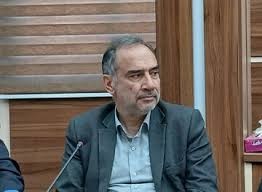
In an interview with Seyyed Mohammad Javad Hasheminejad, Secretary-General of the Habilian Association, we examined the more hidden dimensions of this group’s performance in the recent events.
How do you assess the role of the Mujahedin in the December events?
Not only in this unrest but also in previous ones, we have repeatedly witnessed official statements by Iranian officials about the MEK’s presence. Experience has shown that wherever there are complex designs, foreign interference, anti-Iranian projects, and ultimately street violence and assassinations, the Mujahedin have been one of the main pillars in implementing U.S. and Zionist policies.
In the recent unrest, this issue was even clearer. The Americans and Zionists explicitly announced their presence and interference, and naturally the Mujahedin, as one of their main tools, entered the field. Their more than four-decade history of organizing sabotage, espionage, direct cooperation with the CIA and Mossad, and their role in the assassination of nuclear scientists clearly shows that this group is a constant presence in any point where the interests of the Iranian nation are targeted.
Given this long history of terror from June 20, 1981, until today, what is the Islamic Republic of Iran’s effective strategy for confronting this group?
The Islamic Republic of Iran has learned well over the years how to confront such groups. In the early decades, the Mujahedin may have entered the field without officially announcing their dependence on espionage services, but today confrontations have become completely transparent, and we are directly facing the Zionist regime and the United States. When the country at the macro level gains the ability to neutralize enemy-designed unrest, their field operatives naturally become vulnerable — as we witnessed decisive action against Mujahedin-linked elements in the recent unrest. In addition to security measures, explaining the group’s black history, crimes, and treason to new generations is one of the most effective ways to counter them.
How effective can awareness-raising be in neutralizing the Mujahedin’s goals?
It is highly decisive. A significant portion of today’s youth did not witness the events of the 1980s or the Mujahedin’s crimes firsthand. If today’s events can be placed alongside the group’s past and a clear picture of their nature and performance is presented, a large part of the enemy’s deception project will be neutralized. Revealing what is behind the scenes and introducing the dirty hands that target society’s security and tranquility can significantly help in enlightening public opinion and preventing the repetition of such unrest.
Despite this black record, why do we still witness the Mujahedin’s narrative-building in virtual space and social networks, and why do these fabricated narratives sometimes gain attention?
Today, due to their shameful record, the Mujahedin no longer dare to appear with their official name and symbols. They operate covertly, without clear identity, under the guidance of U.S. and Zionist intelligence services. The mental deception of some young people aged 18 to 25 occurs precisely through this path of concealment.
The main solution is to increase awareness and expose these networks behind the scenes — to show the new generation how this current was formed, how it has been guided, and ultimately how it has become a tool in the hands of the enemies of the Iranian nation. Continuous awareness-raising is the most important barrier against recruitment by such groups.