On May 2, 2025, Donald Trump, then President of the United States, took an unusual step during a press conference and effectively confessed to a covert arms operation against the Islamic Republic of Iran. According to a credible report by The Guardian, Trump, responding to a question about U.S. weapons intended for Iranian protesters that had been diverted to Iranian Kurdish opposition groups in Iraq, said: "I'm not happy about the weapons being delivered. I'm not thrilled about it, but a small quantity was sent... But I'm not happy about what happened to the Kurds. The Kurds didn't hand over the weapons."
This explicit admission clarifies three key points:
1. Intent to interfere: The U.S. government intended to intervene in and escalate Iran's domestic protests by sending weapons.
2. Ultimate destination: The weapons ended up in the hands of Iranian Kurdish opposition groups—organizations Iran labels "counter-revolutionary" and "separatist."
3. Acknowledgment of failure: Trump himself confirms the operation failed because "the Kurds didn't hand over the weapons."
This is not an isolated incident but rather one link in a long historical chain of U.S. interventions in the internal affairs of other nations through military and arms assistance.
Since World War II, the United States has intervened in the domestic affairs of other countries dozens of times using military aid, covert funding, and equipment. Below are several documented examples:
- Guatemala (1954): The U.S. organized and equipped rebel forces to stage a coup against the country's elected government. The operation, code-named PBSUCCESS, was carried out by the CIA with the goal of protecting the interests of the American United Fruit Company. Declassified CIA documents fully confirm this intervention.
- Cuba (1961): The John F. Kennedy administration organized, equipped, and transported roughly 1,500 Cuban exiles to launch the failed Bay of Pigs invasion. The operation aimed to overthrow Fidel Castro's government. Although it ended in military defeat, it remains one of the best-documented cases of direct U.S. intervention against a sovereign nation.
- Venezuela (2002–2026): The history of U.S. intervention in Venezuela is long and multi-layered. These interventions include support for the failed 2002 coup against Hugo Chávez, the recognition of Juan Guaidó as "interim president" in 2019, crippling oil and economic sanctions, and ultimately, in January 2026, a direct military operation resulting in the arrest of Nicolás Maduro. Every step has been documented by credible news reports and acknowledgments from U.S. officials.
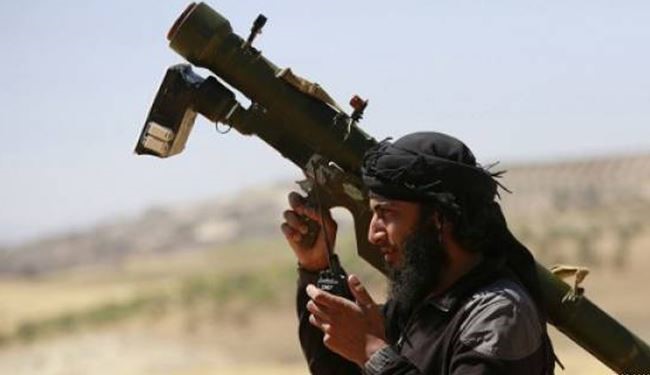
- Syria (2012–2015): According to The Washington Post's investigation, the CIA, in secret coordination with Turkey and Saudi Arabia, armed and trained groups opposed to the Syrian government. This operation, code-named Timber Sycamore, involved shipping large caches of weapons—including rockets and anti-tank munitions—to armed groups in Syria. Many of these weapons later ended up in the hands of terrorist organizations such as ISIS and the Al-Nusra Front.
U.S. Military Assistance to Terrorist and Separatist Groups Against Iran
Beyond Trump's recent confession, numerous documents and reports indicate long-standing U.S. support for terrorist groups operating against Iran.
In the Sistan and Baluchestan region, Jaish al-Adl (also known as Jaish al-Zulm) and, before it, Jundallah (Jund al-Shaytan) are active. Intelligence sources and Western reports have confirmed that Jundallah was formerly backed by the CIA, and that Jaish al-Adl maintains close intelligence coordination with the U.S. and Israel. For example, in April 2026, some sources alleged that the group participated in an attack coordinated with U.S. special operations. The Islamic Republic of Iran holds this group responsible for numerous terrorist attacks and kidnappings in the country's southeast.
In western Iran, in Kurdish regions, opposition Kurdish parties such as the Democratic Party of Iranian Kurdistan (PDKI), PJAK (Party of Free Life of Kurdistan), and Komala are active. According to credible, documented reports—including from CNN—the CIA has armed and trained these parties. The stated aim was to open a ground front in western Iran to apply military pressure alongside domestic protests. Donald Trump's recent admission in May 2025 explicitly refers to this arms operation.
The Mujahedin-e-Khalq (MEK/PMOI), which has carried out more terrorist attacks against the Iranian people and officials than any other group, has maintained close intelligence ties with the CIA despite being on the U.S. State Department's terrorist blacklist until 2012. This group has conducted espionage inside Iran—most notably by leaking details of Iran's nuclear program and contributing to the assassination of nuclear scientists.
Remarkably, some of these groups have been designated as "terrorist organizations" by the United States, yet documents show such designations have not prevented tactical and arms cooperation based on the "enemy of my enemy" principle to pressure Iran. This behavior is a clear example of double standards and jeopardizing regional stability, demonstrating that counterterrorism has always been a secondary priority for the United States.
Based on the above evidence and the explicit admission by a U.S. president, we—as the families of terrorism's martyrs—call upon the Judiciary and the Ministry of Foreign Affairs of the Islamic Republic of Iran to file a case against the U.S. government at the International Court of Justice as swiftly as possible. In coordination with other nations victimized by U.S. interventions, we urge the pursuit of the Iranian nation's legal rights—including demands for compensation, an end to armed interventions, and the prosecution of those responsible for these actions that violate international law.