
 From the perspective of international law, the deliberate targeting of civilian water infrastructure constitutes a clear violation of the Geneva Conventions.
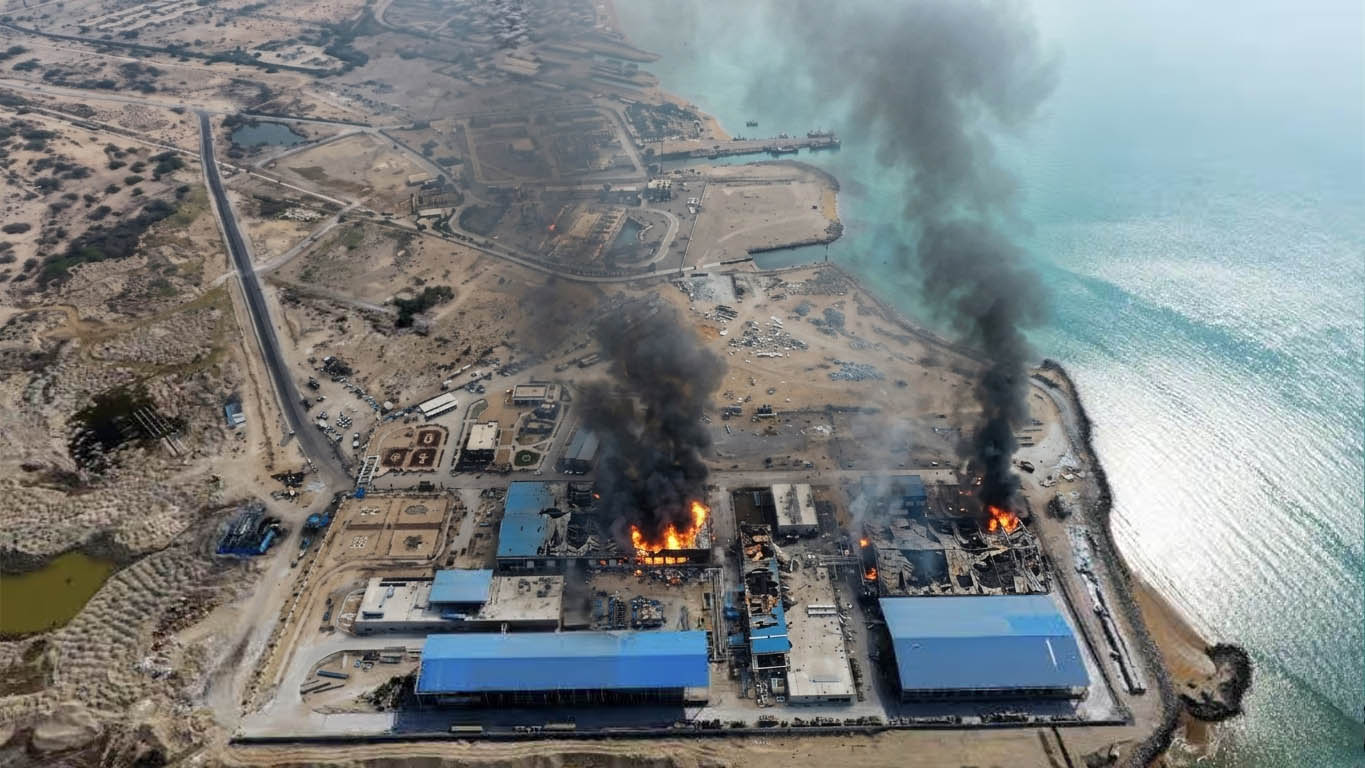
In the wake of the United States and Israeli regime's unconventional military strikes against Iran, reports of extensive damage to the country's vital water infrastructure at 300 locations — amounting to over 5,500 billion tomans — have sounded a serious alarm for Iran's national security and civil rights. According to the head of Iran's Water and Wastewater Company, water transmission lines, reservoirs, pumping stations, and even the desalination facility on Qeshm Island were hit during the airstrikes and missile attacks. This action, beyond any military justification, can be defined and prosecuted under an emerging concept known as hydroterrorism.
"Hydroterrorism" refers to deliberate attacks on drinking water sources, networks, and facilities, as well as the contamination of potable water supplies, with the intent of harming public health. Historical studies trace the roots of this phenomenon back more than 2,500 years.
The article "Hydroterrorism: A Case Study of the History of an Emerging Terrorism" (Ghamarpour et al., 2024) cites prominent examples: from the poisoning of water reservoirs during the Siege of Kirrha by Athenian Solon around 600 BCE using toxic plant roots, to the 2003 bombing of Baghdad's main water pipeline, and the cutting of village water supplies by the Tamil Tigers in Sri Lanka in 2006. The same article emphasizes that even when such attacks do not directly cause heavy casualties, they generate public terror because of water's symbolic value.
The strikes on 300 of Iran's water facilities have reproduced this historical pattern in the modern era.
From the standpoint of international law, deliberately targeting civilian water infrastructure is a flagrant violation of the Geneva Conventions. Furthermore, under the provisions of the Second Geneva Convention and its additional protocols, facilities related to meeting the basic needs of civilians — including drinking water — must receive special protection during armed conflicts.
Article 54 of Additional Protocol I (1977) explicitly prohibits depriving civilians of objects indispensable to their survival, including water, as a method of warfare. Notably, "many large dams attract tourists and declare themselves open to the public" — meaning water facilities are not only civilian but often accessible to the general public, making attacks on them a clear instance of "terrorism."
In conclusion, while the tireless, round-the-clock efforts of service personnel to prevent drinking water outages are commendable, they cannot diminish the unlawfulness and reprehensibility of the attacks themselves. This note warns that "the adverse reactions resulting from deliberate efforts to contaminate or damage public water networks may be underestimated despite their importance."
The international community, which has long claimed to protect civilians, cannot remain silent in the face of such a clear case of hydroterrorism. It is expected that, alongside documenting these attacks, the case will be brought before international legal bodies, and passive defense mechanisms will be seriously strengthened to prevent the recurrence of such incidents.