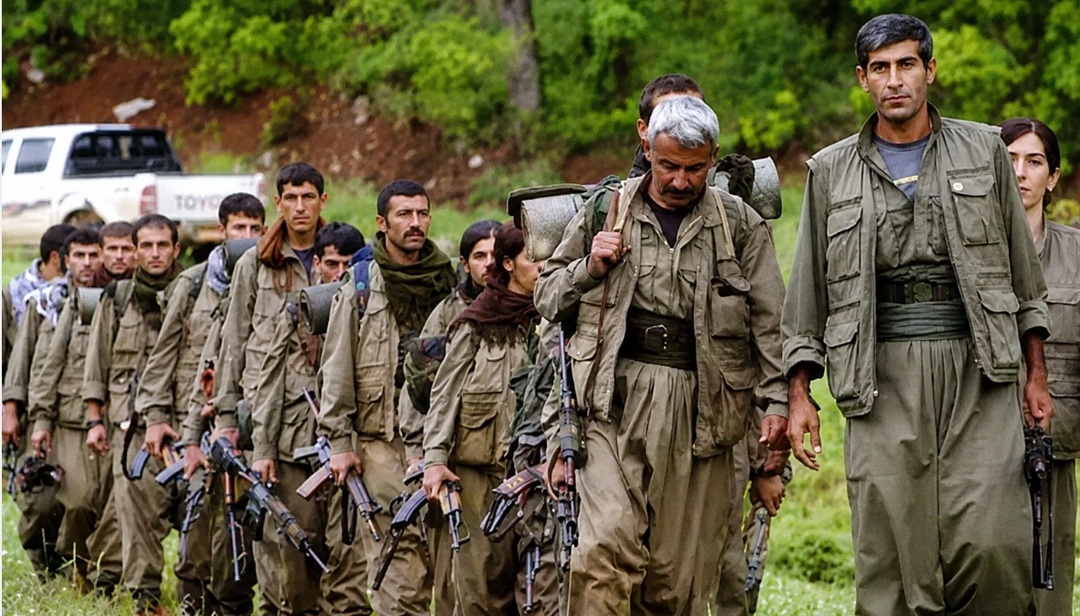
 An attorney representing a number of victims of attacks attributed to Iranian Kurdish armed groups says Iranian courts have issued judicial orders, Interpol Red Notices and extradition requests for a number of senior figures and members of PJAK, the Democratic Party, Komala and PAK.
The requests have been forwarded to Iraq and several European governments, according to the lawyer, who called on host countries to comply with their international obligations in combating terrorism.
Habilian, citing Fars News Agency, reported that the measures followed more than two years of legal proceedings and complaints filed by victims of attacks attributed to the groups.
According to documents cited in the report, the cases involve terrorism-related allegations and are intended to facilitate the international prosecution of the accused.
In an interview, Dr. Tanhayi, an attorney representing a number of the victims, discussed the status of the cases, the legal implications of Interpol Red Notices, the responsibilities of host governments and the demands of private plaintiffs.
Question: To begin, what is the latest status of the complaints filed against Kurdish armed groups?
Tanhayi: Following more than two years of continuous judicial proceedings and multiple complaints filed by victims of terrorist attacks attributed to these groups, competent courts examined the documents and evidence, heard testimony from plaintiffs, their lawyers and witnesses, and subsequently issued judicial orders against a number of senior figures and members of the Kurdish armed groups.
Following those rulings, requests were also issued for arrest, Interpol Red Notices, extradition and judicial cooperation. They have been sent to the Iraqi government and several European countries.
Question: How many plaintiffs are involved in these cases?
Tanhayi: The number is not limited to 60.
There are currently more than 60 private plaintiffs involved in these proceedings, and several additional cases remain open before the courts.
This indicates that the scale of the alleged crimes and the number of victims are considerably larger than has so far been reported publicly.
Question: Who has been named in the judicial orders and international notices?
Tanhayi: The individuals sought include senior figures from PJAK, the Democratic Party, Komala and PAK, among them Hossein Yazdanpanah, Siamand Moeini, Amir Karimi, Abdullah Mohtadi and Mustafa Hijri.
Others include Abdolghafour Sharifi, also known as Ribaz Sharifi; Khalil Naderi; Amir Sahraei, also known as Siwan; Keyvan Ghaderi, also known as Hiva Argesh; Soran Abdi, also known as Azad Oraz; Eqbal Advaei, also known as Heval Argesh; Mohammad Saeed Abdi, also known as Qazi Avareh; Ali Norouzi, also known as Rebwar Abdanan; Soran Rasoulpour, also known as Fouad Britan; Hossein Azimi Gardak, also known as Hiva Javanroud; Khodadad Mortezaei, also known as Ahun Chiako; Sayad Khamouzadeh, also known as Baran Britan; Madeh Rast-Khadiv, also known as Marwan Saqqezi; Mustafa Naqshi; Osman Tarem, also known as Amad Shaho; Afrasiab Jalilian, also known as Mazloum Haftan; Khial Taleh Jankanlou, also known as Peyman Vian; Farouq Babamiri; Abdullah Azarbar, also known as Abeh Sour; Siamak Modarresi, also known as Abubakr; Saleh Sharifi; Mustafa Moloudi; Hassan Sharafi, also known as Zanyar; Khaled Azizi; Kamal Qobadi; Arash Saleh; Teymour Elyasi; Moloud Savareh; Seyyed Abdolghasem Hosseini, also known as Shaho Hosseini; Ahmad Moradi; Zhila Mostajer; and Taher Mahmoudi.
Judicial orders, Red Notices and extradition requests have been issued in connection with these individuals, according to the case files.
Question: Who are the victims in these cases?
Tanhayi: One particularly important and painful aspect is that the overwhelming majority of the victims and plaintiffs come from economically disadvantaged sections of society.
They are ordinary people, primarily from Kurdish-populated areas, and many are themselves Kurdish and Sunni citizens who have suffered for years as a result of violent actions attributed to these groups.
Question: What charges have been brought against the accused?
Tanhayi: The allegations vary and include the killing and assassination of civilians, including women and children, through shootings and bombings; the abduction and deception of children; torture; rape; hostage-taking; extortion; destruction of public and private property; and attacks on public-service facilities.
Some cases involve allegations of particularly brutal treatment, including burning and mutilation of victims.
Question: These activities are said to have originated from the Kurdistan Region of Iraq, where a number of these groups are based. How do you assess the role of the Kurdistan Regional Government?
Tanhayi: For many years, these attacks occurred while senior figures and prominent members of the groups were able to operate, recruit and organize from the Kurdistan Region of Iraq.
Unfortunately, the Kurdistan Regional Government has not, in our view, taken effective action to stop these activities.
Some witnesses appearing before Iranian courts have also alleged that parts of the regional governing structure provided assistance or support to these groups.
Question: You mentioned that some of the individuals are also present in Europe.
Tanhayi: Yes, and that raises serious questions.
Some of these groups and their members continue to travel and operate in certain European countries despite being listed as terrorist organizations by some countries or institutions.
In our view, this reflects a contradiction in the way counterterrorism policies are applied.
Question: What is the significance of an Interpol Red Notice?
Tanhayi: Interpol applies a rigorous process in issuing Red Notices, and an allegation or complaint alone is not sufficient.
The issuance of Red Notices in these cases indicates, in our view, that the supporting criminal and legal documentation has been substantial.
Governments in whose territory these individuals are present therefore have a responsibility to address the notices and related judicial decisions seriously and to act consistently with their counterterrorism obligations.
Question: What are the plaintiffs ultimately seeking?
Tanhayi: Their demand is clear: extradition, trial and punishment in accordance with the principle commonly described as “extradite or prosecute.”
The victims are also seeking compensation and damages from those found responsible for the alleged crimes.
We expect governments and international organizations that are now aware of these cases to act responsibly and without double standards.