
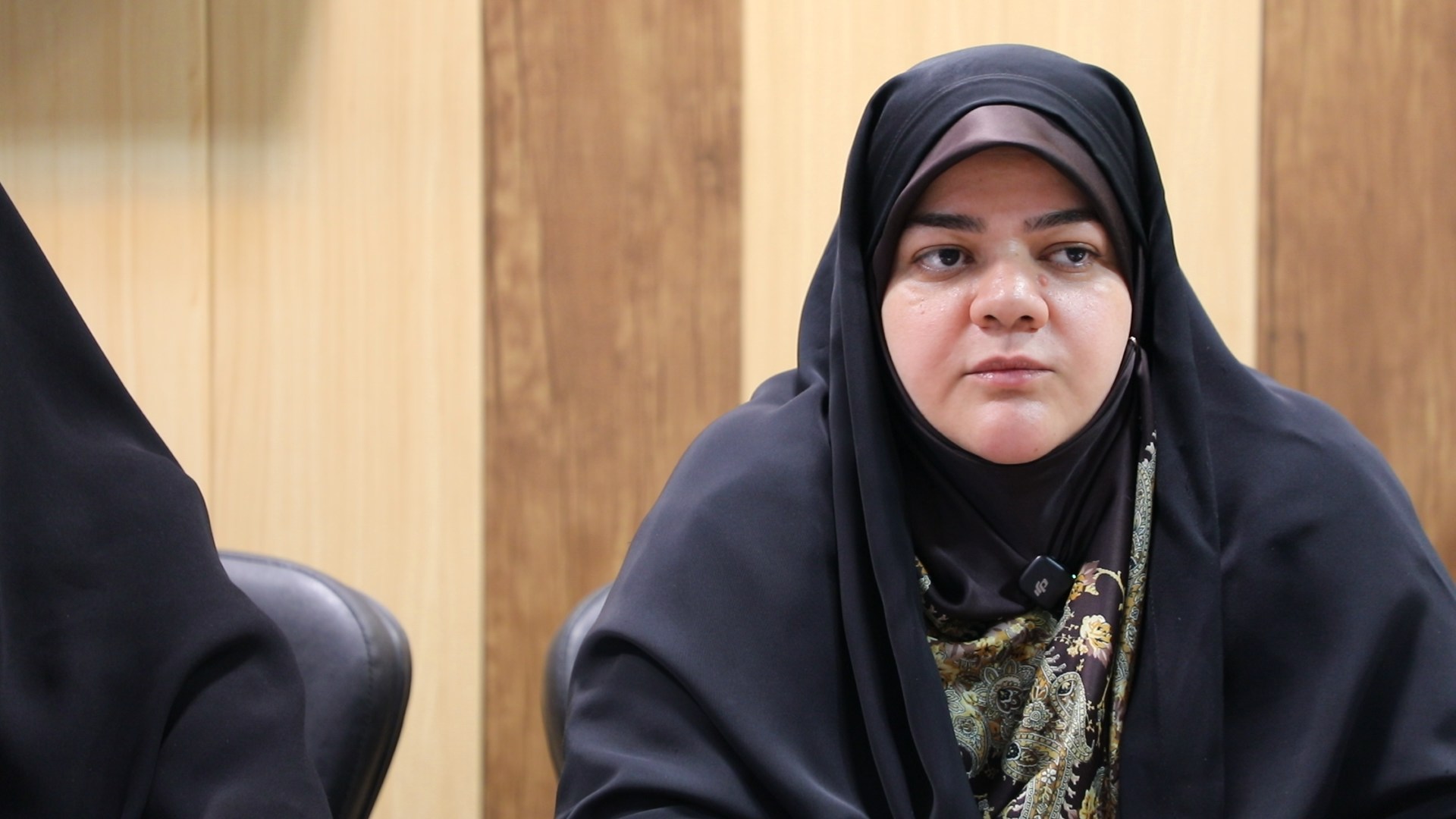
 At the “Children in the Crossfire of Aggression” roundtable, Dr. Mansoureh Abolhasani, a faculty member at Ferdowsi University of Mashhad and head of the team of psychologists sent to Minab, identified five groups affected by the terrorist attack on Shajareh Tayyebeh School: the families of the martyrs, children rescued from beneath the rubble, child eyewitnesses, the brothers and sisters of the martyrs, and children who had come to see school as an unsafe place.
Dr. Abolhasani began by reviewing the work of volunteer psychology teams since the beginning of the war. She explained that, during the first 10 days of the war, the teams that had been formed held between 15 and 20 online workshops on crisis intervention, children, adolescents and post-traumatic stress disorder. Afterward, in cooperation with the Iranian Red Crescent Society and the Crisis Management Headquarters, teams were dispatched to affected areas and began supporting families who had been left homeless. She then spoke about the Minab mission, which began roughly 40 days after the incident, in the midst of ceremonies marking the 40th day since the martyrs’ deaths.
An important point raised by Dr. Abolhasani was the unexpectedly broad circle of people affected. “At first, we thought we would be dealing only with families who had lost their children, but we very quickly realized that the scope of the harm was much wider,” she said. She identified three main groups: children who had survived but had witnessed the scene and seen their friends die before their eyes; children who had not gone to school that day but now regarded school as a dangerous place and were unwilling even to continue with the school online; and children who had never attended that school but were exposed to the atmosphere that had taken over the city, which was filled with banners and photographs of the martyrs.
Dr. Abolhasani went on to describe the children’s differing reactions. She spoke of an eight- or nine-year-old boy who had lost all his close friends before his eyes and, after the incident, stopped mentioning them altogether, as though those children had never existed. By contrast, some children developed feelings of guilt and said, “We did not deserve to survive; they were ahead of us.” She also reported aggression, depression, social withdrawal, sleep disorders, malnutrition and a lack of direction in school among some of the children.
Another challenge Dr. Abolhasani highlighted was the atmosphere in Minab after the incident. According to her, officials had covered the city with banners and photographs to commemorate the martyrs, and for children who had not yet understood what had happened, the constant exposure was traumatic all over again. Some families were not themselves bereaved, but a neighbor or relative was. Out of a sense of guilt — “I am alive, while the neighbor’s child has been martyred” — they would not allow their own children to leave the house.
Referring to pre-existing problems in the region, including early marriage, divorce and a weakened sense of identity, Dr. Abolhasani said these difficulties had intensified after the incident. She cited the example of a teenager who had lost a friend with whom they had planned to become doctors. After the friend’s death, the teenager lost both that goal and the motivation behind it, and the psychology team had to focus on restoring a sense of meaning and purpose in life.
She then explained her team’s method of intervention. “A treatment file was opened for each and every one of these children, and their treatment is still continuing,” she said. “We reached them through play centers and through individual and group play therapy. Even loud noises were still frightening to them.” She added that the team is now focused on empowering local professionals. Teams are being sent to train counselors, psychologists and relief workers in the area so that the course of treatment can continue.
Dr. Abolhasani concluded by describing a scene from the village of Zohouri near Minab. “When I went to the martyrs’ cemetery, I saw that the children came every day to visit their friends’ graves,” she said. “One of them said, ‘I come every day because my friend is alone here.’ This feeling of longing, guilt or loyalty was repeated again and again, and the children were always at the cemetery.” She ended by describing the “interconnectedness of the families and local community” as a uniquely supportive feature. Despite all the harm, she stressed, public support and the team’s collective effort had enabled them to build a strong relationship with the families, and that work is still continuing.