
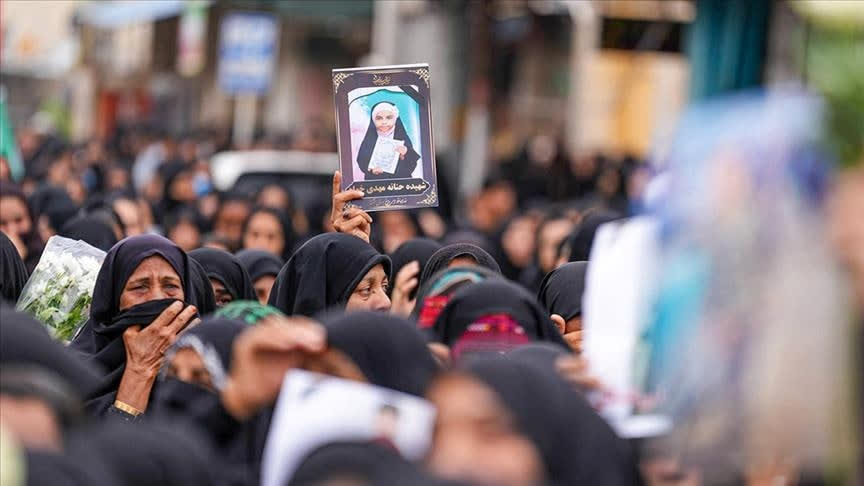
 The Chief Justice of Hormozgan Province stated that 60 sets of remains belonging to student martyrs from Minab, recovered during searches of the school premises and surrounding areas, have not yet been buried and require DNA identification.
According to Habilian, citing Fars News Agency, Mojtaba Qahramani, Chief Justice of Hormozgan Province, said at a press conference that the American crime in Minab would be vigorously pursued through international legal institutions. He emphasized that the matter is of great importance in defending the rights of the Iranian nation and seeking justice for the victims, adding that those responsible for this grave crime would undoubtedly face the consequences of their actions.
Qahramani stated that the enemy had sought to overthrow and partition Iran, but that the steadfast resistance of the people and the armed forces had thwarted those plans and defeated what he described as the enemy's sinister objectives. Referring to the attack by what he called American and Zionist forces on Shajareh Tayyebeh School, which he said resulted in the deaths of 168 students, teachers, and school staff, he stated that 60 sets of remains recovered from the school and surrounding areas have not yet been buried and are currently undergoing DNA identification.
He added that discussions are ongoing with the families to determine the appropriate course of action regarding the remains. According to Qahramani, the victims have not yet been laid to rest and will be buried during a special ceremony. He also stated that immediately after the incident, judicial officials, including the Chief Justice, visited the scene, assessed the extent of the damage, and ensured that the site was properly preserved. All physical evidence, documentation, and missile fragments, which he said are admissible as evidence, have been collected and secured in the criminal evidence archive.
He further stated that forensic authorities immediately began the process of identifying the victims. Despite staffing shortages, he said, the identification process is continuing. The bodies of several victims have already been identified and buried, and initial funeral ceremonies have been held. Qahramani emphasized that the case file is fully documented and noted that, under the applicable rules of jurisdiction and criminal procedure, all charges against the defendants should be heard in a single court so that a comprehensive judgment can be issued.
He added that, under the applicable jurisdictional rules, related cases should be tried in the court where the most serious offense occurred. He further stated that the Prosecutor General had directed that war crimes cases be heard in Tehran. According to Qahramani, the case file concerning the Minab victims has been completed and is ready to be transferred to Tehran.