
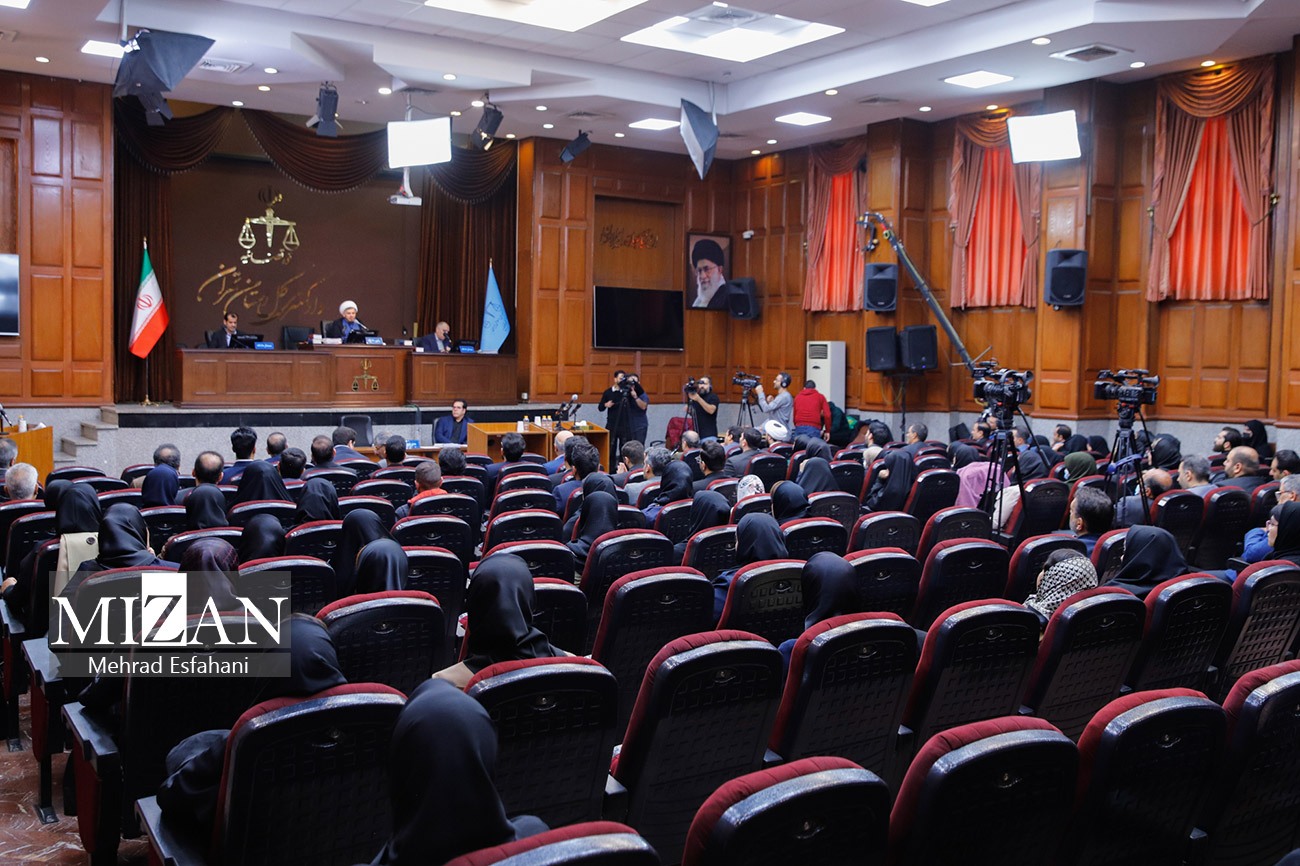
 The Criminal Court of Tehran convened for its 46th, 47th, and 48th sessions to continue examining the charges against 104 members of the Mujahedin-e Khalq (MEK). During these hearings, presiding Judge Amir Reza Dehghani issued a formal warning to the French government regarding the broadcasting of the group’s media networks. He highlighted that the organization's television channels are being hosted by Eutelsat and Hotbird, two major satellite operators owned by French entities, asserting that this arrangement places the content directly under the jurisdiction of French law and its media regulator, Arcom.
Judge Dehghani cited France's 1986 Freedom of Communication Act, arguing that satellite services originating from France or utilizing French satellite capacity are subject to state oversight. He emphasized that the French government cannot evade responsibility for the content broadcast by these networks. The court contended that hosting media outlets for a group accused of terrorism constitutes a violation of international anti-terrorism treaties to which France is a signatory, effectively providing a platform for the dissemination of hate speech and violence. The judge demanded a review of this hosting policy pending the court's final verdict.
The three-day proceedings also featured significant testimony regarding the MEK's past military activities against Iran. Hojjatoleslam Maddah, the lawyer representing the victims, took the stand to detail the group's "Mersad" operation. He presented documents alleging that the group, by its own admission, was responsible for the deaths or injuries of over 55,000 Iranians during that specific operation. He also outlined the group's extensive collaboration with the Ba'athist regime of Iraq, including intelligence sharing and direct military participation in Saddam Hussein’s campaigns against Iran.
Finally, the court heard from General Seyed Hessam Hashemi, a senior military advisor and former commander during the Iran-Iraq War. Representing the Iranian Army, General Hashemi provided historical evidence concerning the group's betrayal and military maneuvers during the war. His testimony was used to reinforce the prosecution's argument that the defendants are guilty of "Baghi" (armed rebellion) and "Moharebeh" (waging war against God), further underscoring the judge's argument that foreign nations must cease all forms of support—including media infrastructure—for the organization.