
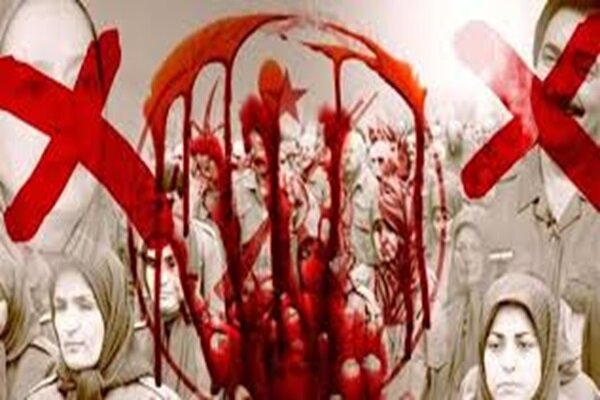
 The link between the Forqan Group — which assassinated Ayatollah Morteza Motahhari — and the Mujahedin-e-Khalq (MEK) terrorist organization has drawn attention in the accounts of several political activists. Some, pointing to similarities between the two, suggest that in the early days of the Islamic Revolution, the MEK preferred not to engage in overt terrorist activities and wished to maintain a moderate image. To that end, they argue, the organization used groups like Forqan as a cover.
Others, while acknowledging differences between the two, still emphasize their shared deviant roots, even if they distinguish the MEK from Forqan. This raises a key question: what common roots did the MEK and the Forqan Group share? One recurring trait was their tendency to turn to religious texts — particularly the Quran — without any formal religious training.
Take Akbar Goodarzi, the leader of the Forqan Group. At just 25 years old, with minimal seminary education, he authored a 20‑volume Quranic exegesis. MEK members, likewise, had no theological training, yet they interpreted the Quran arbitrarily, cherry‑picking verses and focusing on specific passages. Both groups also shared a belief in "Islam without a clergy."
For both the MEK and Forqan, the clergy was seen as an obstacle to achieving their ideal society. As a result, they actively sought to sideline and eliminate religious scholars from public life. Neither group hesitated to physically remove its opponents. For instance, Ahmad Reza Karimi, a former MEK member, revealed in his latest book, Taghi Shahram as Documented, that the organization had planned to assassinate Ayatollah Beheshti even before the Islamic Revolution's victory.
Goodarzi followed the same line of thinking. He justified the assassination of clerics like Motahhari by claiming that the clergy had "hijacked the revolution." Another shared characteristic was their eclectic thinking — a blend of Islamic and Marxist ideas.
Both groups were deeply influenced by Marxist teachings in the interpretations of Islam they put forward. This led them to present non‑religious beliefs under an Islamic guise, drawing sharp criticism from knowledgeable figures like Ayatollah Motahhari. That criticism, in turn, fueled their hatred for such figures — hatred that ultimately found its expression in assassination. In short, a close look at the ideologies of the MEK and the Forqan Group reveals that despite their outward differences, both drew from the same intellectual well.
By Seyed Mohsen Mousavizadeh Jazayeri